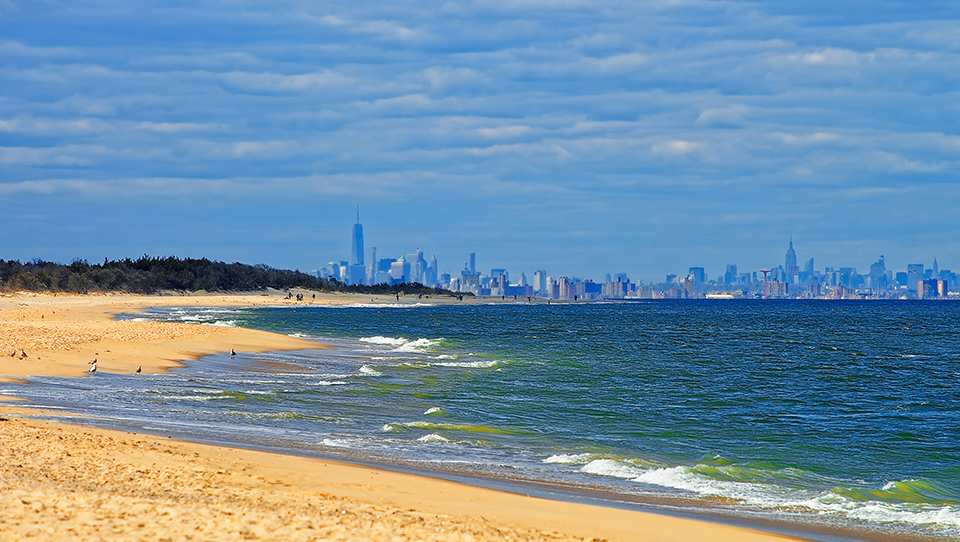
At NOAA, we tend to take things an extra step further when we go to the beach. Whether it’s tracking marine debris in citizen science apps, listening to ocean-themed podcasts in the car, or identifying critters in the tide, we want to share our beach tips to help you have the best beach days this summer.
Jump to:
1. Share the shore with marine life
2. Appreciate the small things
3. Think twice when you choose souvenirs
5. Headed offshore? NOAA has a ‘boatload’ of resources
6. If you can’t beat debris, track it
7. Explore buoy data around the world
8. Get to know the sand between your toes (it might be fish poop!)
11. Risky rip currents: Learn what to do if you’re caught in one
12. Chart the tides and keep an eye on the time
13. It’s getting hot (and humid) in here
Fun at the beach
1. Share the shore with marine life
Going to the beach can be a great way to see fascinating wildlife, whether from the shore, through a snorkeling mask, or on a boat. Prepare for your visit by looking up what types of marine wildlife can be spotted in your area and by taking the wildlife pledge from the NOAA’s National Marine Sanctuaries. By taking the pledge, you will find out how to keep yourself and the marine animals around you safe. As tempting as it may be to sidle up for a selfie or to boop a seal’s nose, you’ll have to keep your distance, so grab a pair of binoculars to take with you!
2. Appreciate the small things
Some marine life is hard to miss, like a dolphin jumping out of the water or a monk seal moseying up to the shore, but if you look in the right places, there is so much more! Tide pools form in depressions when the tide goes out, and they are full of wildlife. From sea stars clinging to rocks to darting fish, all the life in the tide pool has something in common — they must survive being buffeted by waves, shallow conditions, or even being partially out of the water until the tide comes back in. Learn more about observing tide pools safely and the wildlife you can spot.
3. Think twice when you choose souvenirs
Souvenir shops by the beach are known for their knick knacks, both silly and beautiful, but not all of them are as harmless as they appear. Coral decor or jewelry are often sourced unsustainably, with the exception of black coral from Hawaiʻi. For those who prefer to take souvenirs directly from the beach by looking for washed-up shells or other items, it is equally important to think twice. Not only can shells play a role in the beach ecosystem, but taking some washed up items can actually be illegal! Finding the perfect souvenir can be rewarding, but think twice about what you choose — maybe that mug reading “my friends visited the beach and all I got was this lousy mug” is the best choice after all.
4. Fish are friends and food
If you like seafood, there’s nothing better than a fresh catch for dinner! But as much as fishing can be seen as a spontaneous activity, the sport actually requires a lot of thought, planning, and restrictions that need to be followed to fish responsibly. Depending on where you’re fishing, you might need a permit, and you’ll want to check which fish are in season before you toss the line! Once you’ve hooked your catch of the day, check out these sustainable seafood recipes for the perfect end to your adventure.
5. Headed offshore? NOAA has a ‘boatload’ of resources
NOAA has a “boatload” of nautical products for the recreational boater! From electronic charts to weather predictions, NOAA’s Office of Coast Survey — the nation’s nautical chart maker — provides a suite of products to help make maritime transportation safe for all. And don’t forget to purchase and register a personal locator beacon (PLB) for safety. PLBs allow rescue forces to determine your position from satellite data. Learn more about emergency beacons and which one is best suited for you and your trip.
Science on the seaside
6. If you can’t beat debris, track it
Nothing puts a damper on a beach day quite as much as trash littering your view or an old cigarette butt between your toes instead of sand. One way to turn the negative experience around is to help scientists track the problem of marine debris with the NOAA Marine Debris Program’s Marine Debris Tracker App. If you feel safe doing so, you can even clean up as you document the debris. Want to get even more involved in the effort? Check out the Marine Debris Monitoring and Assessment Project. And before you leave for the day, don’t forget to remove anything you brought to the beach! Some items can be easy to miss, like wrappers, bottle caps, toys, sandals, and fishing line.
7. Explore buoy data around the world
Heading for an offshore adventure? Moored buoys — the weather keepers of the sea — measure and transmit barometric pressure, wind direction and speed, air and sea temperature, and wave data. Track how storms and other ocean events change these variables as they pass by buoys with the National Data Buoy Center map. Use this data to make sure you understand the conditions in the area before you venture out.
8. Get to know the sand between your toes (it might be fish poop!)
Sand originates from a variety of environments, usually from the breakdown of rocks. Rocks can start thousands of miles from the ocean, breaking down as they travel along rivers and streams towards the coast. Then, once they arrive at the ocean, waves and tides break them down even further. However, when it comes to the white-sand beaches in Hawaiʻi, another culprit is to blame — the parrotfish. Parrotfish grind the calcium-carbonate of coral reefs as they graze on algae and dead coral, excreting the inedible material as sand. Learn more about sand formation from the National Ocean Service.
9. Phenomena at the beach
Whatever the weather, the beach is the perfect place to keep your feet in the sand and your head in the clouds. Keep an eye out for special clouds and weather phenomena — including some that you’re most likely to see in the summer by the sea. Even though the temperature might be scorching down near the sand, the upper atmosphere is freezing cold. Ice crystals in clouds can refract or bend the light to form halos and sundogs. Halos often appear as a circle or partial circle around the sun with sundogs as bright spots on either side. The combination of cold ocean water near warmer land is also a recipe for thick fog (including fog “tsunamis”) and mirages like fata morgana offsite link that can make distant ships and low lying islands appear to tower above the sea. And if you’re taking in the sunrise or sunset you may be lucky enough to see the elusive green flash, which, as Teacher At Sea Catherine Fox explains offsite link, is not a myth (or a superhero).
Be beach smart, beach safe
Source link
kayla.smith www.noaa.gov