
You can strengthen your muscles without a gym or fancy equipment. Household items can add fun and effective resistance to your workouts. These exercises target key muscles to boost strength, balance and mobility. Orthopedists encourage these simple, practical movements to support overall musculoskeletal health.
1. Glute Bridges With a Weighted Backpack
Exercise can help manage musculoskeletal conditions by improving strength, mobility and overall function. To do a glute bridge, lie on your back with your knees bent, feet flat on the floor and arms resting by your sides. Gently raise your hips while softly activating your glutes and core, striving to create a straight line from your shoulders to your knees. If it feels good, take a short pause at the top, then lower your hips back down with control.
For extra resistance, you can place a backpack filled with books, canned goods or other upcycled household items, securely across your hips. This makes your glute bridges more challenging, while keeping your workout eco-friendly and cost-free.
2. Bicep Curls With Water Jugs or Cans
Regular exercise helps regulate hormones and reduce stress. It can also support overall muscle strength and daily movement. For this exercise, consider starting with five to 10 arm circles or light cardio to warm up.
Try standing bicep curls, or hammer curls, with light weights or household items for added resistance. Focusing on slow, controlled movements can help engage the biceps and supporting muscles safely. Ending with gentle stretches may improve flexibility and reduce soreness.
Stand upright with feet shoulder-width apart. Hold a reused 1-gallon water jug or a large soup can in each hand, with your palms facing forward. Slowly curl the jugs or cans toward your shoulders, focusing on gently contracting your biceps. Lower them back down carefully, keeping control and avoiding any swinging.
3. Hamstring Curls With a Towel
Orthopedists — also known as orthopedic surgeons — focus on caring for bones, joints and the tissues that support your musculoskeletal system. This exercise they recommend can help strengthen your hamstrings, improve knee movement and support balance.
Consider starting by standing with your hands on a stable surface like a table or chair for support. Slowly lift one heel toward your butt, squeezing your hamstring as you hold it, then lower your foot back down with control and repeat on the other leg.
You can use a dish towel or small bath towel on a smooth floor to slide your foot. This method provides a straightforward, upcycled approach to simplify this exercise at home.
4. Calf Raises Using a Thick Book or Stair
A significant benefit of working out at home is you avoid the need to travel anywhere, keeping your carbon footprint low. Calf raises can help strengthen the gastrocnemius and soleus muscles, which may improve balance, posture and everyday movements like walking, running or climbing stairs. Strong calf muscles also support ankle and knee stability, helping to protect your joints during daily activities.
You can start by standing on one leg near a wall or railing for support. Then, place the ball of your foot on a thick book or stair, letting your heel hang just below the edge. Slowly press down through the ball of your foot to lift your body upward, keeping your core engaged. Lower your heel back down gently and repeat, then switch legs. Using a thick book or a sturdy stair can help you perform this exercise safely at home.
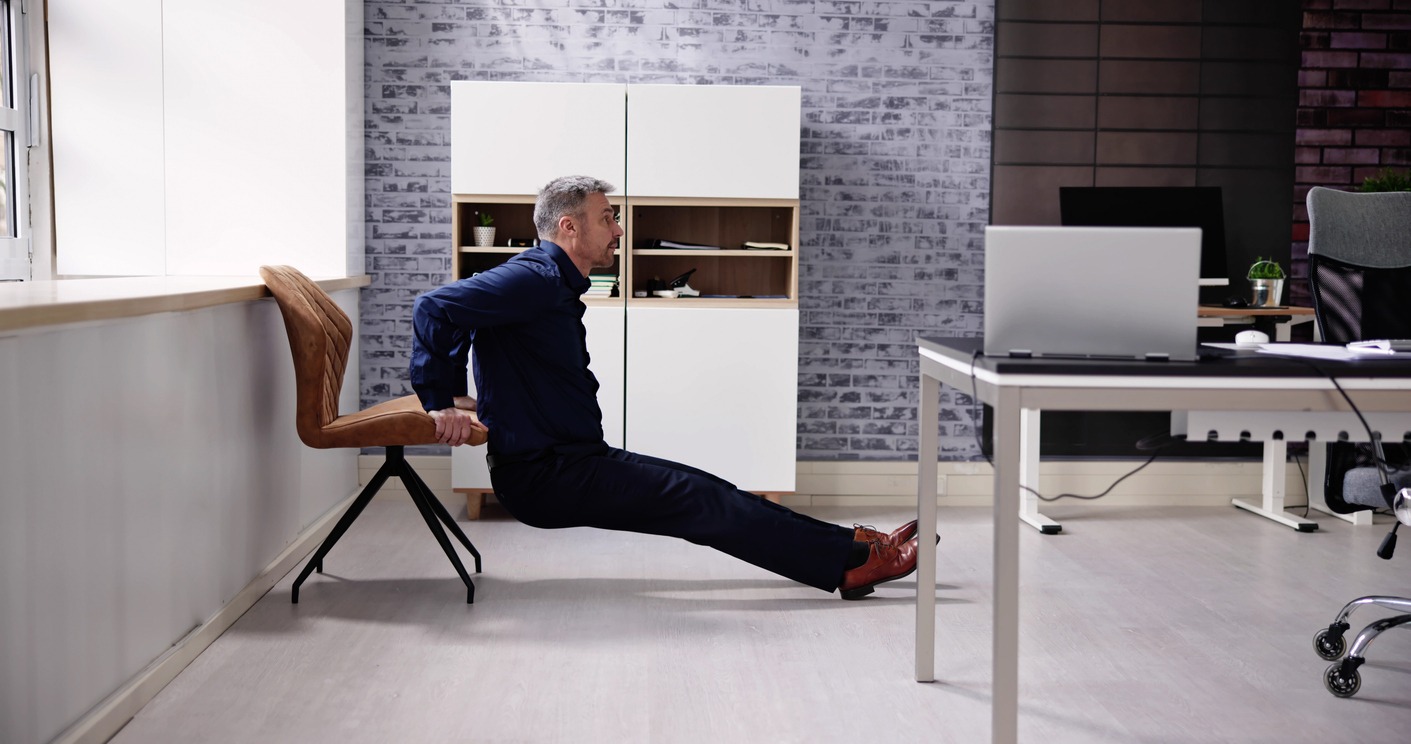
5. Tricep Dips Using a Sturdy Chair
For this exercise, consider starting by sitting on the edge of a stable chair, bench or step and grip the edge next to your hips. Then, press into your palms to lift your body, slide forward so your hips clear the edge. Lower yourself until your elbows bend between 45 and 90 degrees. Push back up slowly and repeat, keeping control throughout the movement.
Tricep dips — like the other exercises in this list — show how simple, at-home movements can counteract the effects of sedentary behavior. Regular practice helps strengthen your muscles, support joint stability and improve functional movement, making everyday tasks easier while contributing to overall musculoskeletal health.
Building Strength With Simple Items at Home
Start small and see progress over time. You might notice improved strength, stability and movement in daily activities. Using upcycled items can also make your workouts more convenient and sustainable.
These exercises can complement professional advice and therapy for joints and muscles. Consistency may help reduce the risk of injury while promoting functional strength. Always ensure movements feel safe and adjust intensity as necessary.
Source link
Mia Barnes biofriendlyplanet.com
