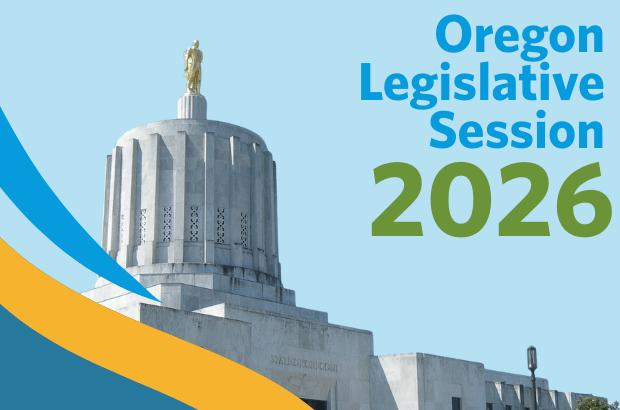
After a tough year for climate progress and unprecedented federal retreat from climate, clean energy, and environmental justice protections, state leadership has never mattered more.
Oregonians are already feeling the impacts of climate change and rising energy costs. At the same time, Congress and the Trump administration are dismantling essential clean air and climate protections and slashing federal incentives that help families lower utility bills and communities build resilient infrastructure. President Trump’s so-called Big Beautiful Bill (H.R. 1) and the unraveling of federal clean energy incentives threaten to raise household costs, weaken local economies, and harm public health across Oregon.
That makes Oregon’s role clear: defend hard-won progress and deliver near-term solutions that protect affordability, jobs, and community resilience.
What to expect from Oregon’s 2026 short session
Oregon’s 2026 short session is a pivotal moment to protect our climate and affordability progress and ensure those wins actually reach Oregonians’ front doors. With federal support eroding, we must close the funding gaps that put our energy affordability, local jobs, and community safety at risk. Fortunately, Oregon already has a roadmap.
By following the state’s new Energy Strategy and building on Governor Kotek’s recent climate directives (EO 25-29), legislators can take practical, cost-effective steps right now to protect Oregonians from rising costs while positioning the state for long-term energy reliability and economic vitality.
Our focus in 2026 is on near-term tools that:
- Lower household energy costs
- Address financing gaps left by federal funding cuts
- Protect and grow local clean energy and construction jobs
- Strengthen resilience, especially for rural and frontline communities
This is a “defend and deliver” session: defending Oregonians from federal rollbacks while delivering tangible, near-term benefits.
Defending and delivering climate progress for Oregon: Climate Solutions’ 2026 policy priorities at a glance
Climate Solutions is advocating for a focused set of priorities designed to shield Oregon families and workers from federal rollbacks while keeping clean energy progress moving. These policies begin to put Oregon’s new State Energy Strategy into action, offering a clear path to protect affordability, support local economies, and strengthen community resilience statewide. By passing these measures, Oregon can lead the way even as federal support recedes:
- Climate Resilience Superfund: Ensures major fossil fuel polluters–not households–pay their fair share for climate damages, funding wildfire response, resilience, and local jobs.
- Upgrade & Save: A proven tool to lower utility bills by enabling energy efficiency and electrification upgrades with no upfront cost to households.
- Distributed Power Plants: Expands local energy resources like rooftop solar and batteries to reduce peak costs, improve grid reliability, and support clean energy jobs.
- Measure What We Drive: Improves transparency and accountability in transportation spending to ensure taxpayer dollars deliver safety, maintenance, and climate benefits.
Together, these policies help Oregon step up where federal support has stepped back, protecting affordability today while keeping long-term climate goals within reach.
Defending the budget that defends Oregonians
Policy alone isn’t enough. Oregon’s natural resource, energy, and environment agencies are the last line of defense for public health and climate protection amid federal rollbacks, yet they account for a mere 2% of the state budget. As the Legislature works to balance the state’s budget in response to federal funding impacts, it is vital to protect Oregon’s clean energy leadership by preserving our state natural resource agency staff and programs.
Investing in Oregon’s energy, environment, and natural resource agencies is not only vital for climate protection, it is also a proven driver of local economic growth and job creation. State agencies’ work to support Oregon’s transition to clean energy keeps dollars circulating locally, stabilizes household energy costs, and reduces exposure to global fossil fuel price volatility.
We’re urging lawmakers to protect our core climate agencies’ capacity and programs and focus on advancing alternative financing tools, like the Climate Resilience Superfund, Upgrade & Save, and green bank structures, to sustain momentum without shifting costs onto households.
Looking ahead
The roadmap exists. The Energy Strategy provides direction. The Governor’s executive order provides momentum. The 2026 Legislature has the opportunity–and responsibility–to translate that into real results for Oregonians.
By pairing practical near-term solutions in 2026 with strategic planning for 2027, Oregon can continue to lead on climate, affordability, and clean energy, even as federal leadership falls away.
Source link
Nora Apter www.climatesolutions.org