This story is made possible through a partnership between Flatwater Free Press and Grist, a nonprofit environmental media organization.
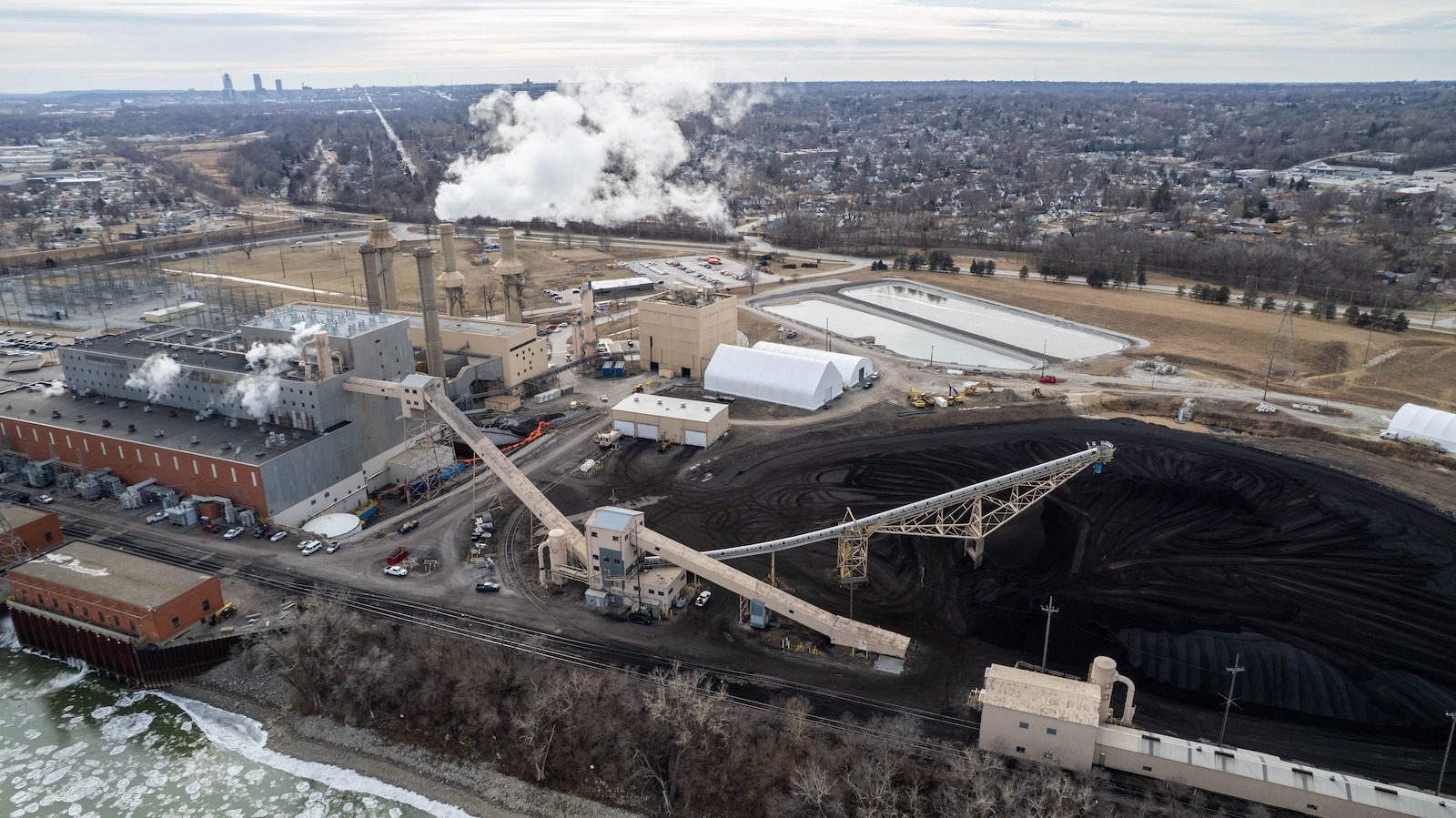
On paper, the public power district serving much of eastern Nebraska has been trying to quit coal at its North Omaha plant since 2014. That June, its board voted to retire three of the plant’s five coal units in 2016 and convert the final two to natural gas in 2023.
The almost 12 years since then, however, have been marked by delays that have kept coal units running at the aging plant, while power demand continues to rise. Then, in late 2025, as the public utility’s management recommended the board delay retiring the two remaining coal units, board members received some reassurance.
Omaha Public Power District CEO Javier Fernandez told the utility’s board members that a human health risk assessment, commissioned by management, showed that the plant poses no additional significant “negative impact on the health of people in the vicinity.”
But that’s not exactly what the report — which focused on a specific type of air pollution, not all the potential harms to human health — shows, according to six public health and environmental science experts who reviewed the study at the request of the Flatwater Free Press and Grist.
Asked about the utility’s reason for commissioning the health assessment, OPPD said the utility wanted to provide “the best information possible” about a top-of-mind form of pollution to its board and stakeholders.
Nebraska Governor Jim Pillen responded to news coverage of the study, writing on social media: “The science confirms it: OPPD’s North Omaha coal-fired power units — which generate some of the cheapest and most reliable electricity in Nebraska — are safe.”
Rather than assuaging concerns, though, the report and the subsequent mischaracterizations of its findings have fueled criticism from community members, experts, and at least two of the utility’s board members.
“So the health assessment, I think, was a smack in the face,” said State Sen. Terrell McKinney, a Democrat from North Omaha. “It didn’t speak of the historical impacts. It didn’t speak of the disproportionate amount of asthma, respiratory issues that community has or health impacts, and also the community in which the coal plant is situated is a community that’s been historically minority.”
Naomi Delkamiller / Flatwater Free Press
In the wake of the study’s criticisms, OPPD board member Craig Moody said he is looking at opportunities to partner with the Douglas County Health Department to look at environmental health impacts to North Omaha residents.
Still, the report — and news coverage of its supposed findings — added fuel to an already simmering debate. In October, the Nebraska Attorney General’s Office sued OPPD, arguing its plan to phase out coal in North Omaha threatened the utility’s mandate to provide affordable and reliable electricity. Nationally, the Trump administration has moved to block other utilities from retiring coal plants for similar reasons.
Ultimately, OPPD delayed retiring and refueling the coal units, with management citing a variety of reasons supporting this decision. In December, the board outlined steps and a timeline for management to work toward a future retirement, which could take at least another two years — though that timeline is not binding. And even as they did so, at least two board members were not impressed by the health study.
“I generally understand why staff wanted to do the study, but to put it bluntly, it was a big miss,” Moody said at the December board meeting. “And I’m not going to go into the details. I will simply say the science is clear: Burning coal is not good for human health, and it’s really that simple.”
North Omaha residents, 68 percent of whom are people of color, are no stranger to pollution. The historically redlined community is situated near a major highway and the city’s airport, and part of the community is also included in the city’s lead Superfund site. The North Omaha Station plant has operated since the 1950s.
North Omaha residents suffer from higher rates of asthma, COPD, heart disease, and stroke, said Lindsay Huse, the Douglas County Health Department director.
“What’s special to Omaha is the fact that we have a population who’s already experiencing many, many more negative health outcomes due to a number of variables, and if this is something that we can remove from that risk profile for them, I think that that is only a good thing,” said Huse, who sent a letter to OPPD that opposed the continued burning of coal in North Omaha after the health assessment’s release.
Despite its stated desire to do so, OPPD has struggled to wind down coal in North Omaha. After meeting its 2016 goal to convert three of the coal units to natural gas — also a source of powerful greenhouse gas emissions — OPPD signaled it wouldn’t meet the 2023 deadline for the remaining two coal units.
Challenges with supply chain, construction and the federally regulated generation interconnection process hindered OPPD’s ability to build and connect part of the replacement power generation. Further complicating those efforts, OPPD needed to ensure the new power sources met requirements established by the Southwest Power Pool, a regional transmission organization.
OPPD set a new target of 2026 to stop burning coal at North Omaha. But some of the new power generation didn’t come online until 2025 and the utility was waiting on final agreements with the Federal Energy Regulatory Commission that management said were submitted years ago.
In August, OPPD management hired the Electric Power Research Institute, an energy research and development nonprofit, to conduct a human health and environmental risk assessment associated with the operations of the two coal units at the North Omaha Station.
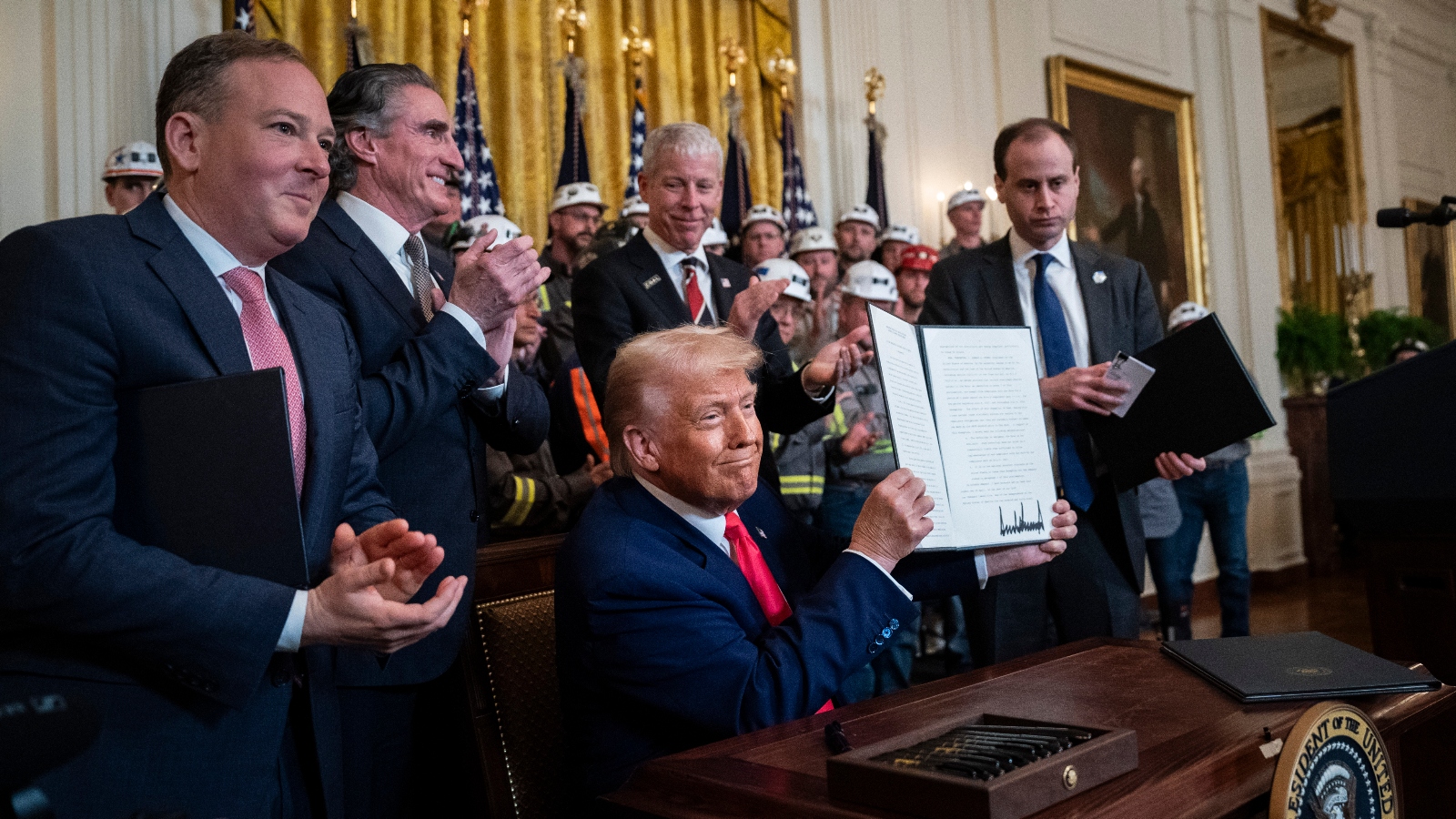
Some critics have questioned the use of EPRI, whose board of directors includes utility industry executives from across the country, including the CEO of the Nebraska Public Power District. EPRI is funded by hundreds of energy and government sector organizations across the globe, according to its website. OPPD paid more than $431,000 in membership dues in 2024. It’s unclear how much the utility paid for the health assessment — OPPD denied a public records request seeking a copy of the contract with EPRI, though it acknowledged a contract exists.
Jonathan Kim, a research associate at the Energy and Policy Institute, a watchdog organization, said that EPRI does “a lot of research that is good and useful.”
“But when EPRI is asked to conduct some specific research inquiry, like in this case,” Kim continued, “it has every incentive to tell the utility that is requesting that, what the utility wants to hear. That is in our minds how you end up with this EPRI health assessment for North Omaha Station.”
EPRI spokesperson Rachel Gantz said in an email that the organization is “rigorously objective” when conducting research and does “not advocate for any specific company, sector or technology.”
“EPRI receives funding from a range of collaborators, including national labs and government grants, so that we can help provide the critical research and development necessary to help society power toward a reliable, affordable, and resilient energy future. Because that’s who we are — a research organization, not an advocacy organization,” Gantz said.
OPPD said it chose EPRI because of its proven track record in research and conducting such assessments.
“EPRI was the right choice for this work,” OPPD said in an emailed response. “EPRI is an independent research organization that does not advocate for any specific company, sector, or technology.”
Fernandez, OPPD’s CEO, noted to board members at one of the December meetings that he viewed the report as a way to address residents’ ongoing concerns about potential health impacts from the North Omaha plant.
“It was important for me … morally, personally to know whether or not we were missing something,” Fernandez said.
The report, released in November, almost immediately received scrutiny. Academics at Creighton University organized a public meeting where a panel of public health and utility experts largely panned the study.
Public comments posted on OPPD’s website and made at meetings largely criticized the report and the looming decision to keep the coal units running.
“The North Omaha community can no longer accept the mediocre things that y’all do for us at the risk of the health in our community,” said Precious McKesson, president of the North Omaha Neighborhood Alliance and executive director of the Nebraska Democratic Party, at the December OPPD board meeting.
“Every time we get close to getting this coal plant closed, y’all put another goalpost, y’all move it, and y’all do it strategically.”
While public health experts did not invalidate the report’s findings about air toxics — the specific form of air pollution evaluated in the study — they disagreed with the interpretation that it shows the plant does not significantly contribute to negative public health impacts. The focus of the study, they said, was simply too narrow to determine this.
OPPD said the study used the Environmental Protection Agency’s methodology to examine air toxics, and found that the risks from the coal units are below EPA thresholds.
However, there are a number of pollutants that can come from coal plants and enter the environment in various ways besides air toxics, including wastewater that coal plants discharge into rivers and coal ash that is generated by plants. The EPRI study did not explicitly look into whether these forms of pollution are at play.
When asked why the report did not investigate these other forms and types of pollution, OPPD stated, “Air emissions are a focus of our community and other stakeholders.”
Experts also noted the EPRI assessment took a narrow approach to which air emissions to study. Experts said the study did not look deeply at all the criteria air pollutants, which are dangerous emissions that could come from the plant.
OPPD said that because the region meets federal standards that govern the criteria air pollutants, their study focused on providing “further clarity around air toxics and the community.”
However, just because the city meets EPA’s air quality standards for these pollutants does not mean there are no health impacts, said Corwin Zigler, a professor of biostatistics at Brown University School of Public Health.
Zigler and Lucas Henneman, an assistant professor of environmental engineering at George Mason University, stressed that a full health assessment would need to take into account existing scientific research showing coal plants can make people sick and are linked to asthma, early death, and low birthweight. Zigler also said that one of the known drivers of negative health impacts from coal plants is fine particulate matter, which the EPRI report did not assess beyond attesting that the region is within EPA’s thresholds. Moreover, Omaha’s ozone levels have been on the edge of EPA compliance, according to EPRI’s own data, said Jun Wang, a professor of chemical and biochemical engineering at the University of Iowa. If the national standards were to tighten, as they have before, Omaha could fall out of compliance.
OPPD noted that criteria air pollutants can come from a number of sources, including cars, airport activities, wildfires, and industrial activity, and that North Omaha Station’s emissions have generally fallen by 40 percent since 2013.
In discussing the health assessment and delayed retirement of the North Omaha coal units last month, Fernandez said the utility remains committed to its goal of net-zero carbon emissions by 2050.
But in the meantime, the North Omaha plant will continue to depend on coal — much to the frustration of residents and even a couple OPPD board members.
“The frustration and anger that’s in this room, I feel very viscerally, and I share it,” Moody said during OPPD’s December board meeting. “I am disappointed, I am frustrated, and I agree that it’s unfair and unjust for North Omaha to shoulder this burden.”
Source link
Anila Yoganathan grist.org