
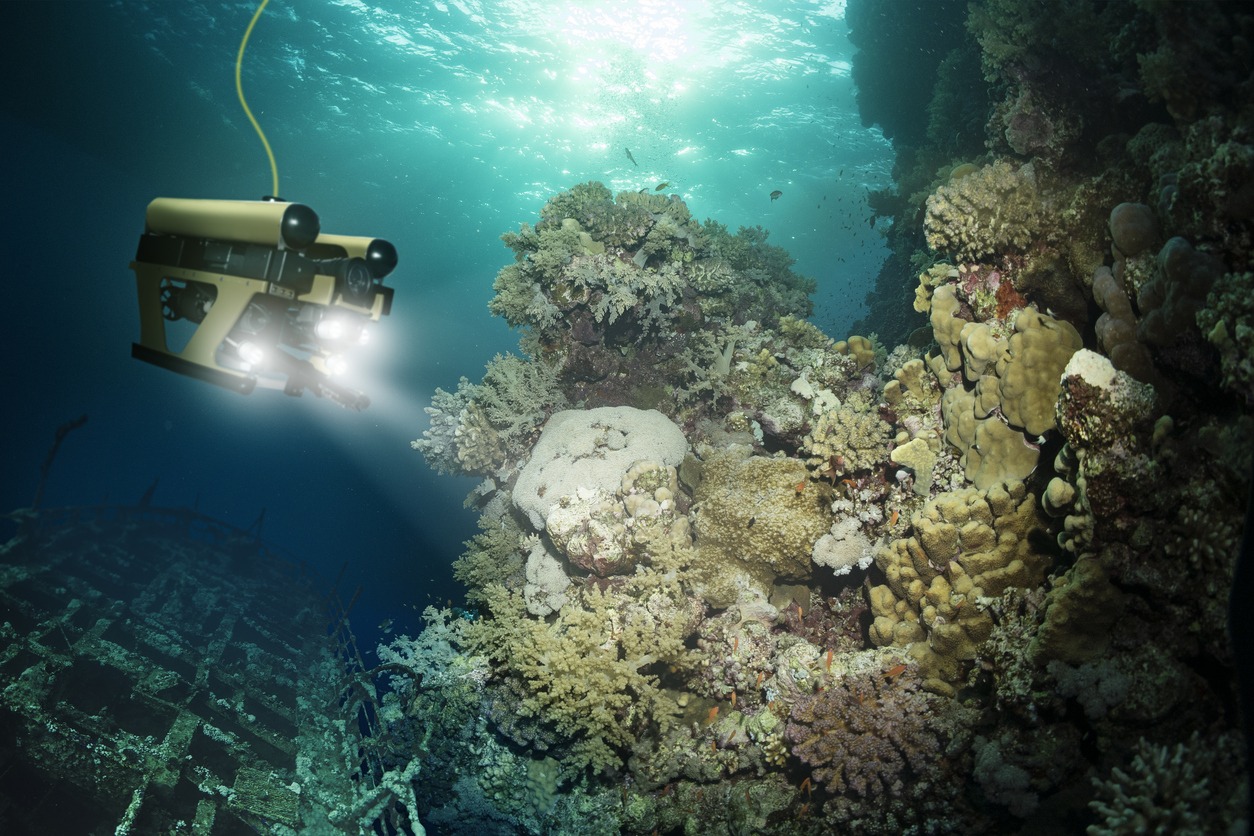
Due to climate change, underwater ecosystems are depleting on a massive scale. Tiny robots might be the answer. With their smart capabilities and maximized efficiency, they are replenishing damaged ecosystems.
Problems With Underwater Ecosystems
Underwater ecosystems are struggling. Climate change causes the ocean to absorb so much carbon dioxide its pH lowers, which leads to ocean acidification. Seaweed and shellfish are suffering because of this, dwindling their populations and hurting shellfish companies. Many other species are worrisome, too.
Coral reefs experience bleaching and pollution at an alarming rate thanks to climate change, overfishing, industrial pollution and invasive wildlife. Such reefs are homes for numerous species that rely on them for survival. Seagrass and eelgrass are also in danger, and the loss of these vital areas is damaging to the ocean’s ecosystems and humans who frequent the beach.
The Traditional Method
Traditionally, divers would survey coral reefs and replant seagrass and eelgrass. The process is often tedious and risks human error. It is also expensive since trained scientists must fly to locations with the necessary gear to perform the dive.
The certification itself costs between $500 and $1,000 — a hefty price for scientists already requiring high-grade equipment for research. Certain areas are also left unexplored, because of the danger to human divers, leaving research gaps. The planting process is slow because the diver handles each seed manually.
Clearly, scientists need a new method to help the ocean’s ecosystems. They might have found it in tiny, AI-powered robots.
How Robots Help
Scientists separate underwater robots into two categories. Autonomous underwater vehicles automate tasks previously performed by a team of scientists during a dive. However, they are often expensive.
The other type — remotely operated vehicles — are cheaper. Despite their lower price, these robots are robust and perform best in time-critical situations. A human operates them, so training is required.
Robots offer a much-needed solution for data collection and replenishment efforts. They collect data through careful surveys of marine life and by taking accurate, quick pictures in succession. Scientists use the photos to create 3D maps of the terrain and get an essential view of the stressed areas for conservation efforts.
The machines also replenish the environment by planting seagrass, eelgrass and coral. The planting process is much faster than using manual divers, heightening efficiency. Scientists also use robots to survey seagrass beds and determine whether the site is worth a manual dive.
The benefits of using robots for underwater research and replenishment are numerous. Robots can provide more accurate data by venturing into previously undiscovered, dangerous and polluted waters. Because they cannot get tired, these machines are also faster than their human counterparts. They are more efficient, too, using AI to automate certain tasks for a smoother expedition.
Issues With Robots
While the benefits of robots are numerous, they also have some drawbacks. Marine robots are often so expensive it deters many scientists. However, the advantage of using these robots and restoring ocean ecosystems might outweigh the initial spending, especially since divers sometimes cost more.
Another issue is long-term monitoring. Robots are essential in surveying whether the conservation efforts are successful. However, they also require special add-ons and diving logistics that are complicated to repeat over time. Still, with some modifications by manufacturers, the ongoing monitoring process could improve.
Scientists in many fields must collaborate to ensure these robots’ success. This can be difficult for a diverse array of studies. The fields of biology, social science, chemistry, politics, physics, economics and engineering must all work together to use these effectively. Environmental efforts are becoming increasingly popular, so perhaps it will inspire the experts.
Robots Save the Ocean
With climate change on the rise and underwater ecosystems depleting, tiny robots are saving the ocean through data collection and replanting efforts. If implemented widely, they could create a healthier ocean for us all.
Source link
Ellie Gabel biofriendlyplanet.com
