
Celebrating a decade of climate progress in Oregon
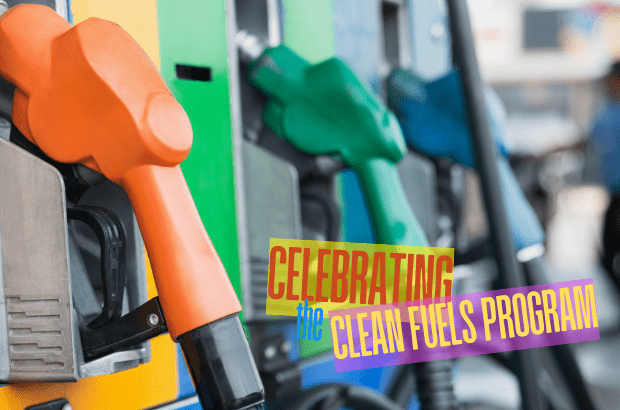
A decade of progress deserves to be celebrated, especially right now. In a moment when climate headlines can feel like a constant stream of bad news, Oregon’s Clean Fuels Program (CFP) turning 10 is a win worth celebrating. It is one of those rare public policies that has quietly, consistently done exactly what it was designed to do: cut pollution, improve health, and drive investment into cleaner transportation choices across the state.
The results are massive. Oregon’s Clean Fuels Program has displaced more than 1.5 billion gallons of petroleum fuel, cut 14.6 million metric tons of climate pollution, and driven roughly $100 million annually in investment in clean fuels, electrification, and related economic activity between 2015 and 2024. It has also saved Oregonians about $100 million each year in avoided health costs. These results mean cleaner air for communities that have historically borne the heaviest burden of transportation pollution, as well as practical economic benefits for households, schools, and local businesses.
To make that impact easier to picture, let’s put it in terms of cross-country driving trips. The equivalent pollution from that 1.5 billion gallons in fuels is roughly the same amount of climate pollution as almost 11 million cross-country drives in a typical Ford F-150, traveling from New York to Los Angeles.
How the Oregon Clean Fuels Program works
Clean Fuels starts with a simple premise: Oregon sets a standard for the amount of climate pollution that can come from transportation fuels sold in the state. Not every gallon of fuel is the same, and through innovation, we can produce fuels that cause significantly less climate and health pollution. That means we can drive the same miles on Oregon roads and make those miles cleaner.
Companies that provide cleaner-than-required fuels earn credits that they can sell to other companies. Companies whose fuels are more polluting must either clean up their fuel mix or buy credits from others to comply. This approach lets the market determine the cheapest way to cut pollution. Meanwhile the Department of Environmental Quality (DEQ) is in the background, enforcing the rules and checking the math. How companies meet the goals and how they use credits to invest is not decided by DEQ. Those choices are made by the companies themselves.
Investing in communities across Oregon
One reason the Oregon Clean Fuels Program has been so effective is that it produces real-world benefits, not just compliance on paper. Those extra “clean up points” generated through the program are now the primary funding source for critical projects that Oregonians can actually see and use, including electric school buses and electric vehicle (EV) charging in small towns and rural electric co-op territories across the state. In turn, these investments help utilities and businesses create a positive feedback loop in which the ways they reduce pollution generate even more momentum to reduce it.
This support is vital because these projects target the state’s key growth areas, which often lack dedicated funding. The Oregon Clean Fuels Program helps close that gap, bringing cleaner transportation options beyond major metro areas and into communities that are too often left behind in infrastructure transitions.
The program’s design also matters. The Clean Fuels Program creates a market signal that rewards lower-carbon fuels and technologies over time, but is neutral on how to do that. In plain terms, it gives companies a reason to invest in cleaner options and the systems needed to deliver them. This is one of the reasons Oregon is often seen as a climate leader: The Clean Fuels Program has shown that strong action and practical implementation can coexist, and that climate policy can deliver measurable outcomes at scale.
A cornerstone of Oregon’s climate and energy strategy
Oregon’s track record as a climate leader matters now more than ever. Oregon’s 2025 Energy Strategy reaffirmed that policies like the Clean Fuels Program are essential to meeting existing state climate and pollution goals, and among the most cost-effective tools available. Governor Kotek’s Executive Order 25-29 directed agencies to prioritize implementation of the Energy Strategy, including by doubling down on and strengthening the Oregon Clean Fuels Program to better align with other jurisdictions.
Hope as a practice for climate action in Oregon
Reflecting on a decade of progress, including seeing three other states (including Washington) adopt similar programs, Meredith Connolly, Climate Solutions Director of Policy and Strategy, sees the program as a testament to the power of state leadership and putting smart policy into effect to create better outcomes for Oregon. “In the fight for our climate, persistence is key,” Connolly says. “The Oregon Clean Fuels Program is the proof of what happens when we have courage to lead and stay committed. Over the last decade, we’ve turned hard-won policy into cleaner air for our kids and real investments in our communities. It shows that when we stick together and stay the course, we can build a stronger, cleaner Oregon for everyone.”
Ten years in, Oregonians can point to cleaner air, lower climate pollution, and meaningful investment in transportation solutions that deliver for communities across the state. That is exactly the kind of long-term policy success we should be building on. That success matters even more in the face of federal rollbacks, like the EPA’s repeal of the endangerment finding, which means states now carry an even greater share of responsibility for protecting public health and climate progress.
At 10 years, the takeaway is simple: The Oregon Clean Fuels Program works. It reduces pollution, supports healthier communities, and helps modernize transportation infrastructure. In a world full of climate setbacks, this is a milestone worth celebrating and protecting.
Source link
Brett Morgan www.climatesolutions.org
