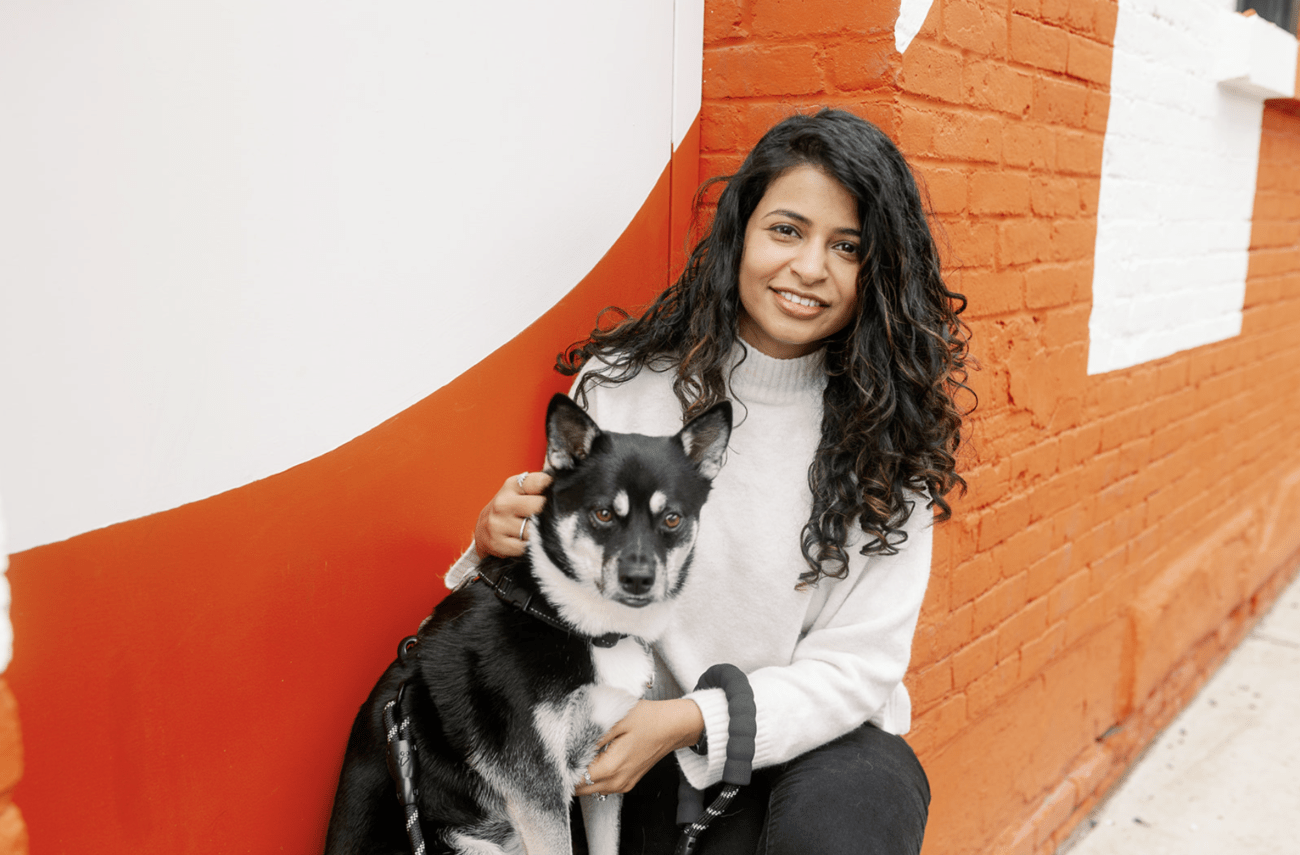
Sanketa Kadam didn’t set out to study climate science. After pursuing architecture as an undergraduate in Mumbai, India, and receiving a master’s in urban and regional design at the New York Institute of Technology, Kadam found herself constantly wondering about how climate impacts would affect her projects as an architect and urban designer.
These underlying questions, she realized, were the ones she wanted to spend her time focusing on. On this new path, Kadam enrolled in the M.A. in Climate and Society program at the Columbia Climate School and worked at the NASA Goddard Institute for Space Studies Climate Impact Group for two years.
Now, as a Ph.D. student in the Department of Earth and Environmental Sciences at Columbia, she works with Alex Ruane and Mingfang Ting to research compound extreme events in India and their impacts on crops and farmland. Kadam shares more about her journey in the Q&A below.
How did you get into science?
I had what you might call an unconventional pathway into science. I trained and worked as an architect and urban designer, and in that work, I kept running into questions like extreme heat, flooding risk, energy use and air quality. Over time, I realized, I didn’t just want to design around those impacts; I wanted to understand the underlying physical processes driving them. That curiosity pushed me to pivot into science, where I could connect real world problems to the data behind them.
Is there a woman in science, from Columbia or otherwise, who inspired you?
I’ve been fortunate to have several women, and women of color, as mentors who have not only inspired me but also consistently supported me with concrete advice and advocacy. I wouldn’t have felt as confident or comfortable in this field without Mingfang Ting (my Ph.D. co-advisor), Deepti Singh, Sonali McDermid and many more. I also want to shout out Sulochana Gadgil, who passed away recently, a celebrated Indian monsoon scientist and a huge inspiration to me. I’m equally grateful for my peers and friends, who continually make this work feel collaborative and sustainable.
“This field can feel intimidating, especially when you’re in rooms where you might be the minority. But science at its core is unassuming; just ask good questions unabashedly.”
How can we continue to support and mentor women scientists?
We can keep supporting and mentoring women scientists by making it normal. That means checking in consistently, but most importantly being transparent about expectations and credit, and helping people navigate stuff like networking and negotiating. It also means stepping up and actively putting women’s names forward for talks, awards, collaborations and leadership roles, and backing them up in rooms where decisions get made. And on the structural side, it’s making sure the opportunities are fair; that life disruptions don’t quietly derail careers.
Do you have any advice for younger women or girls who are interested in entering the field?
Have fun. No, really—have fun. This field can feel intimidating, especially when you’re in rooms where you might be the minority. But science at its core is unassuming; just ask good questions unabashedly. You are allowed to be a beginner; your job is to learn. Find people who make you feel brave and supported. Let your excitement for the topic, the work and the questions lead you—you will be surprised how far it will take you.
Source link
Olga Rukovets news.climate.columbia.edu