
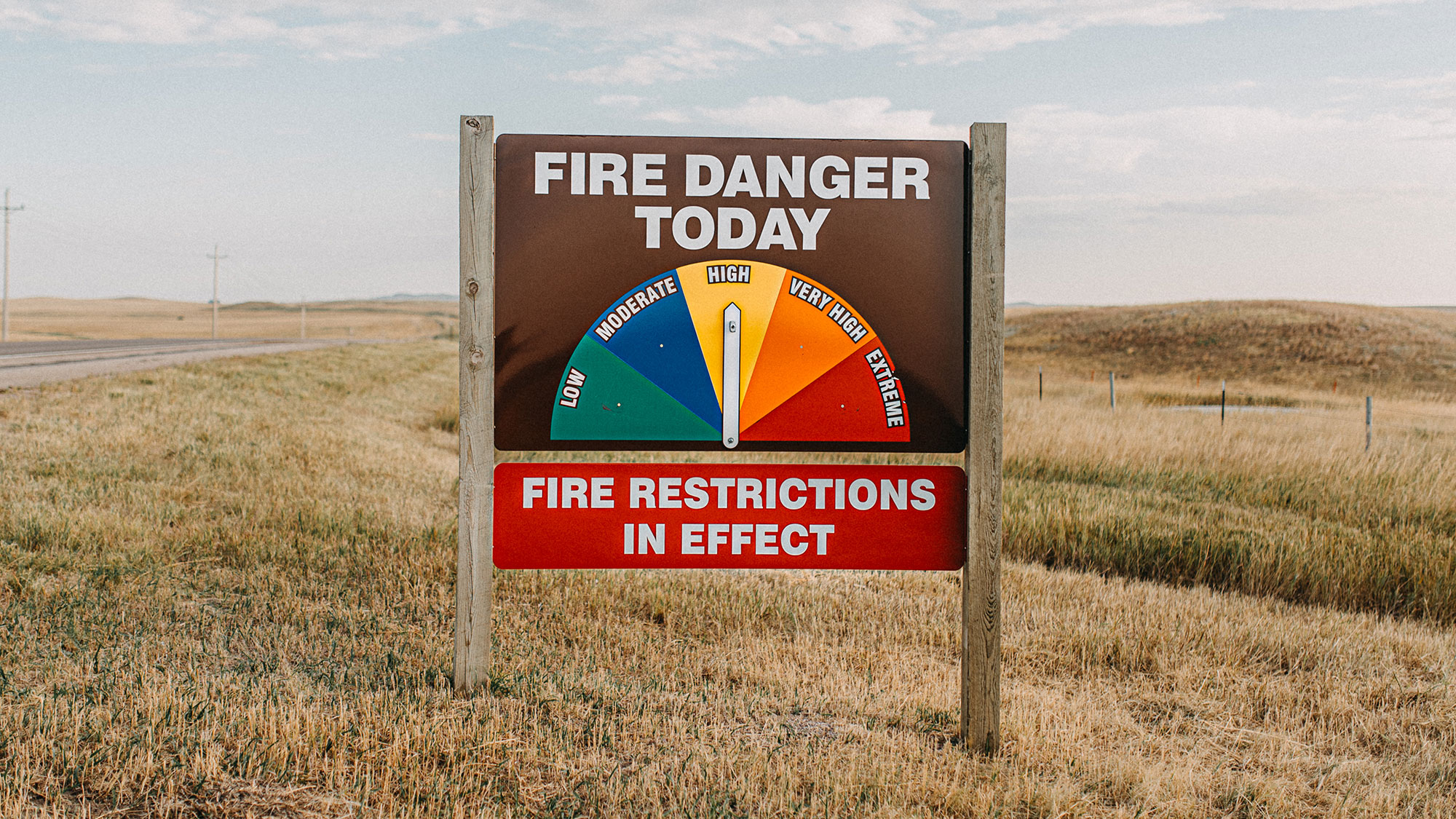
In the summer of 2023, more than 19,000 people were forced to evacuate as wildfires swept through Yellowknife, the capital of Canada’s Northwest Territories. Emergency alerts were issued in French and English, but not in the nine Indigenous languages that are recognized as official languages in the territory, forcing some Indigenous families to rely on friends, radio broadcasts, and social media for critical information.
A new white paper argues that the lack of translated disaster warnings is emblematic of a much broader problem: Climate change information, from emergency alerts to scientific research, is overwhelmingly produced only in English. The research, published by Climate Cardinals, a youth-led climate advocacy organization focused on language access, found that 80 percent of scientific papers are published in English, which is spoken by just 18 percent of the world’s population. The researchers argue that most of the world is excluded from the information needed to understand how climate change is reshaping the planet, including people in positions of power.
“Language is not just about inclusion, but I think really determines what would count as climate reality,” said Jackie Vandermel, research co-director at Climate Cardinals. “Language is not just about who receives the information, but also what is allowed to even exist in climate governance.”
The report puts particular emphasis on the need for Indigenous language translations, including in emergencies like those in Yellowknife. Indigenous languages, researchers note, are increasingly threatened not only by colonialism but also by climate change itself. Forced migration can sever ties to ancestral lands, making it more difficult to teach languages to new generations. At the same time, Indigenous languages embed detailed understandings of local ecosystems and weather not captured elsewhere. Indigenous peoples are also disproportionately exposed to climate impacts, like melting Arctic ice and Pacific typhoons. The result can mean that Indigenous peoples face heightened climate risks and get less access to relevant information while struggling to preserve languages that could be critical to fighting climate change.
“Indigenous observations are the earliest climate signals, but science tends to flow where Indigenous knowledge gets extracted, and then scientific findings aren’t returned to them in accessible form,” said Jackie Vandermel, research co-director at Climate Cardinals.
That has implications beyond the affected communities because it shapes what policy decisions are made. News organizations, Vandermel added, can play an important role. “By choosing whose voices are heard, in what languages, and in what formats, journalism can reproduce existing gaps, or help make Indigenous and multilingual climate realities legible to the systems that govern response and funding.”
The report calls for an urgent expansion of climate information in languages other than English and recommends the creation of a global climate language access fund that would support multilingual dissemination of climate information. Such a fund could support translations of scientific research, government reports, international negotiations, and extreme weather alerts. Researchers at Climate Cardinals said that, to their knowledge, the United Nations has never considered establishing such a fund, though some U.N. agencies have begun exploring translation options through machine learning.
But funding may be difficult in the current geopolitical climate. Governments have consistently fallen short on finance commitments, like climate reparations. At last fall’s global climate conference in Brazil, known as COP30, negotiators agreed to increase funding for climate adaptation measures, like building sea walls to guard against rising seas, but left final figures vague. Even the most ambitious estimates fell well below the estimated $400 billion annual need to fight climate change. In the United States, the Trump administration has cut funding for domestic and international climate initiatives and slashed funding for non-English weather warnings, despite research showing that such cuts can be deadly.
But a climate language access fund remains a worthy goal, said Laura Martin, an associate professor of environmental studies at Williams College.
“The hiring of translators, multilingual educators, and local reporters should be embedded in policy and financial structures,” she said. “Language is a matter of climate justice.”
Source link
Anita Hofschneider grist.org
