Think about your favorite hiking jacket with a torn pocket, or the backpack with a broken zipper that’s traveled with you to so many National Parks. Maybe your boots have carried you for thousands of miles but now need new soles. Before you throw them away, consider the many outdoor gear brands that now offer repair programs to help give your well-loved equipment a second life.
Fixing your gear instead of buying new is one of the best ways outdoor lovers can help the environment. The textile and apparel industry creates 8-10% of global carbon emissions, which is more than international aviation and shipping combined.
Making just one polyester jacket produces about 5.5 kg (12.13 lbs.) of CO2. By repairing your jacket instead of replacing it, you save money, reduce the need to produce polyester from oil, cut down on manufacturing emissions, and keep useful materials out of landfills.
The Environmental Case for Repair
Research from the Ellen MacArthur Foundation shows that $500 billion is lost each year because clothes are barely worn and rarely recycled. In 2025, people bought 60% more clothing than in 2000, but each item was kept for only half as long. This fast-fashion mindset has even reached outdoor gear, even though technical apparel is made to last.
If you use a product for just 3 more months, you can reduce its carbon, water, and waste impacts by 10%. Big outdoor brands have noticed this. For example, Arc’teryx says its ReBird repair program saved over 30,000 kg of carbon in one year. Patagonia also runs one of the largest repair centers in North America, fixing tens of thousands of items each year through its Worn Wear program.
The circular economy, in which products are made to be repaired, reused, and eventually recycled instead of thrown away, is becoming more popular in the outdoor industry. More brands are designing gear that’s easier to fix, with parts that can be swapped out and materials that hold up to repeated repairs.
What Can Be Repaired?
Most outdoor gear repair programs fix the usual problems that come from regular use. For example, technical jackets can be upgraded with waterproof patches for rips, zippers replaced, waterproofing reapplied, and seam repairs. Backpacks often need new buckles, hardware, strap repairs, or zipper fixes. Tents might need pole repairs, new zippers, or patches. Footwear can be resoled, new straps added to the upper, or the hardware replaced.
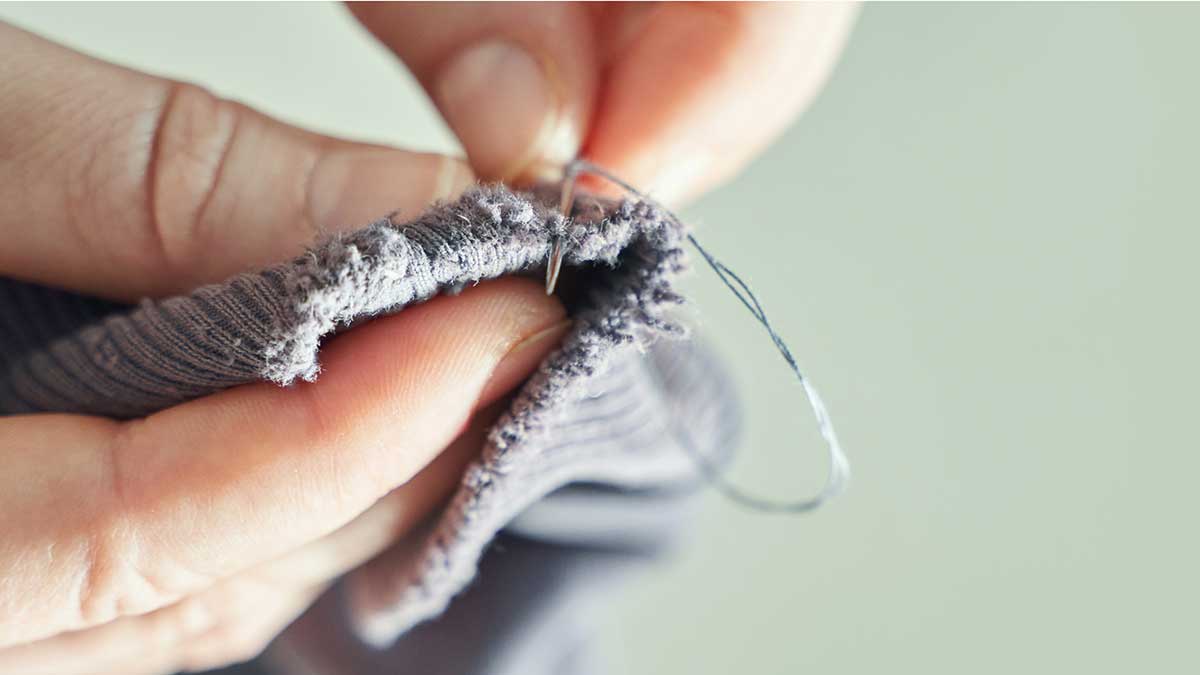
Some repairs are simple enough to do yourself. For example, Patagonia works with iFixit to offer over 100 repair guides for their products. You can often replace zipper pulls, add patches, or clean and reproof waterproof gear at home if you have the right instructions and materials.
Outdoor Brands with Repair Programs
Patagonia Worn Wear
Patagonia’s Worn Wear program, launched in 2013, set the standard for outdoor gear repair. The company operates one of North America’s largest garment repair facilities and will attempt to fix any Patagonia product for a $15 round-trip shipping fee. Repairs include fabric, stitching, buckles, zippers, and more for apparel, packs, jackets, snow gear, waders, and wetsuits. If an item can’t be repaired, Patagonia will recycle it. The company also offers mobile repair tours, bringing sewing machines to stores and events for free on-site repairs.
Arc’teryx ReBird
Arc’teryx’s ReBird platform encompasses care, repair, resale, and upcycling initiatives. The program operates service centers in New York, Vancouver, Toronto, Beijing, Tokyo, Boulder, and London, with plans to expand to 25 stores globally. Services include complimentary on-site assessments, GORE-TEX washing and reproofing, zipper repairs, buckle replacements, and fabric patching. In 2023, Arc’teryx completed over 20,000 repairs and achieved a 127% increase in resale revenue through the program.
The North Face Renewed
The North Face Renewed program accepts used gear through online trade-ins or in-store drop-offs, offering $10-$50 in credit depending on item condition. Products are inspected, cleaned, and repaired before being resold through the Renewed online store. The brand’s Warranty & Repairs Department has operated since 1969, repairing approximately 40,000 items per year. Items that can’t be repaired are recycled or donated. The company has also launched circular design initiatives, training designers to create products that can be more easily repaired and recycled.
Osprey’s All Mighty Guarantee
Osprey’s All Mighty Guarantee is among the most comprehensive in the industry, promising to repair any damage or defect for any reason, free of charge, regardless of when the product was purchased—whether in 1974 or yesterday. Customers pay only for shipping to Osprey; the company covers repair costs and return shipping. If a pack can’t be repaired, Osprey will replace it. The program covers torn fabric, worn-out buckles, broken zippers, and virtually any other damage. Replacement parts are also available if you want to do DIY repairs yourself.
REI Co-op
REI offers in-house repair services for outerwear, tents, sleeping bags, and more, with expert technicians who can fix items from any brand. The venerable co-op also provides extensive care and repair guides through its Expert Advice page. REI’s Re/Supply program allows members to trade in used gear for store credit, and items are either resold at a discount or recycled. The company partners with third-party repair specialists for more complex work.
LOWA Boots
LOWA offers resoling and repair services for its backpacking, mountaineering, and hunting boots. In the U.S., repairs are handled by Daub’s Cobbler Shop in New Hampshire, which received factory training in Germany. Services include resoling (for cemented construction boots like the Tibet GTX, Camino GTX, and Ranger GTX), heel renewal, seam repair, heel lining repair, and hook replacement. Resoling includes new footbeds, laces, and leather reconditioning. We can attest from personal experience, that there is nothing like feeling a familiar and improved boot back on your feet after a repair.
Danner Recrafting
Danner’s Recrafting program, in Portland, Oregon, can restore boots to like-new condition. Services range from basic resoling ($100) to complete rebuilds ($280+) that include new midsoles, outsoles, heel counters, shanks, liners, and hardware. Craftspeople recondition leather uppers, repair stitching, and finish boots with new laces. The program covers over 150 different Danner models, including the Mountain 600 series. Turnaround time is typically 5-6 weeks.
Chaco’s ReChaco
Chaco’s ReChaco program operates out of Rockford, Michigan, and offers lifetime repairs for Z-series sandals. Services include resoling, strap replacement (with options to customize colors and patterns), buckle replacement, strap length adjustment, and toe tightening. The program has repaired over 323,000 pairs of sandals since its inception, keeping them out of landfills. The average turnaround time is about two weeks after the sandals are received.
Deuter Pack Repair
Deuter’s Promise guarantees free repairs on any Deuter pack, regardless of age or reason for damage. The company will attempt to repair any pack and, if deemed irreparable, will replace it with the closest comparable model at no cost. Repairs are performed in Boulder, Colorado. Deuter also sends replacement parts to customers for DIY fixes when possible, including buckles and patches. Peak season turnaround is 8-12 weeks; off-season repairs are faster.
Cotopaxi is Guaranteed for Good
Cotopaxi’s Guaranteed for Good program covers manufacturing defects for the lifetime of the product and offers repair services even for damage outside warranty coverage. The company provides DIY patches for small holes, in-store repair assistance at Cotopaxi retail locations, and partners with Rugged Thread for extensive repairs requiring deconstruction and reconstruction. Cotopaxi also partners with ThredUp on its Mas Vida resale platform for pre-loved gear, and accepts trade-ins for store credit.
Fjällräven
Fjällräven offers repair services at its flagship retail locations and through a mail-in program for customers who don’t live near its stores. The company provides a Limited Lifetime Warranty covering manufacturing defects and will assess items for repair throughout the product’s lifetime. Flagship stores have in-store tailors who can perform repairs on the spot. Fjällräven also operates a Takeback Program at select stores, offering $10-$25 vouchers for used gear kept out of landfills.
NEMO Equipment
NEMO repairs nearly all of its products at two U.S. facilities and two third-party facilities in Canada and Europe, so you don’t have to ship your fixer-uppers halfway around the world. From repaneling tents to replacing sleeping bag valves, the repairs take four to six weeks. Unlike many brands, NEMO offers comprehensive hardgoods repairs in addition to softgoods. The company also sends replacement parts with how-to tutorials for DIY repairs. The company recommends sending gear during the off-season for faster service.
Big Agnes
Big Agnes’s repair team patches tent tears, straightens poles, fixes zippers, and addresses other common issues with camping gear. In 2022, the team repaired gear for more than 6,000 customers and shipped 1,500 parts for DIY repairs. The company also operates a Used Gear Trade-In program where customers can send in old Big Agnes gear for credit toward new purchases; traded items are recycled, converted to repair parts, or donated. Most zipper repairs cost $20 per door.
Rab
Rab’s Service Center provides washes and repairs for Rab gear in the USA, UK, Netherlands, and Canada, completing over 22,000 repairs in 2024. The Second Stitch program uses end-of-life fabric rolls and offcuts in contrasting colors for repairs, reducing environmental impact while giving gear a distinctive patched look. Repair costs typically range from $10 to $55. Rab also offers gear rental programs as an alternative to purchasing new equipment.
Mountain Hardwear
Mountain Hardwear’s Repair Over Replace program aims to fix gear whenever possible rather than replacing it. Customers can submit gear for inspection by experts, who assess whether repair is feasible. The company believes their gear is worth more on the mountain than in a landfill and has structured their warranty and repair services to maximize product lifespan.
Third-Party Repair Services
In addition to brand-specific programs, several independent repair shops specialize in outdoor gear.
Rugged Thread in Bend, Oregon, works with over 30 outdoor companies and offers repairs on all four seasons of outdoor clothing, tents, backpacks, and technical gear.
Gear re-Store operates repair centers in Denver, Calgary, and Philadelphia, partnering with brands including Patagonia, The North Face, and Norrøna.
Rainy Pass Repair in Seattle has over 30 years of experience and offers comprehensive tent, sleeping bag, and outerwear repairs, including down refilling and DWR reapplication.
How to Get Started
Before you send your gear in for repair, make sure to clean it well. Most brands will either turn away dirty gear or charge extra to clean it. Take photos of the damage and check the brand’s website for any special instructions.
Many companies have online forms to help you start the repair process and get shipping details. If you want to fix things yourself, brands like Patagonia and NEMO have detailed guides and offer patch kits and replacement parts. Simple repairs, like adding waterproofing, replacing zipper pulls, or patching small holes, can often be done at home with products like Gear Aid’s Tenacious Tape or NoSo Patches.
Repair Is Reuse That Lowers Your Impact
Each time you repair a jacket, resole your boots, or patch a tent, you help save resources and cut down on emissions.
The outdoor industry’s growing focus on repair programs shows that both the environment and customers want products that last. By using these services, you can lower your environmental impact and keep your favorite gear going for years, or even decades, longer than if you just threw it away.
So, the next time your gear starts to wear out, see if the manufacturer offers repairs before you buy something new. Your well-used equipment could still have plenty of adventures ahead.
Source link
Earth911 earth911.com