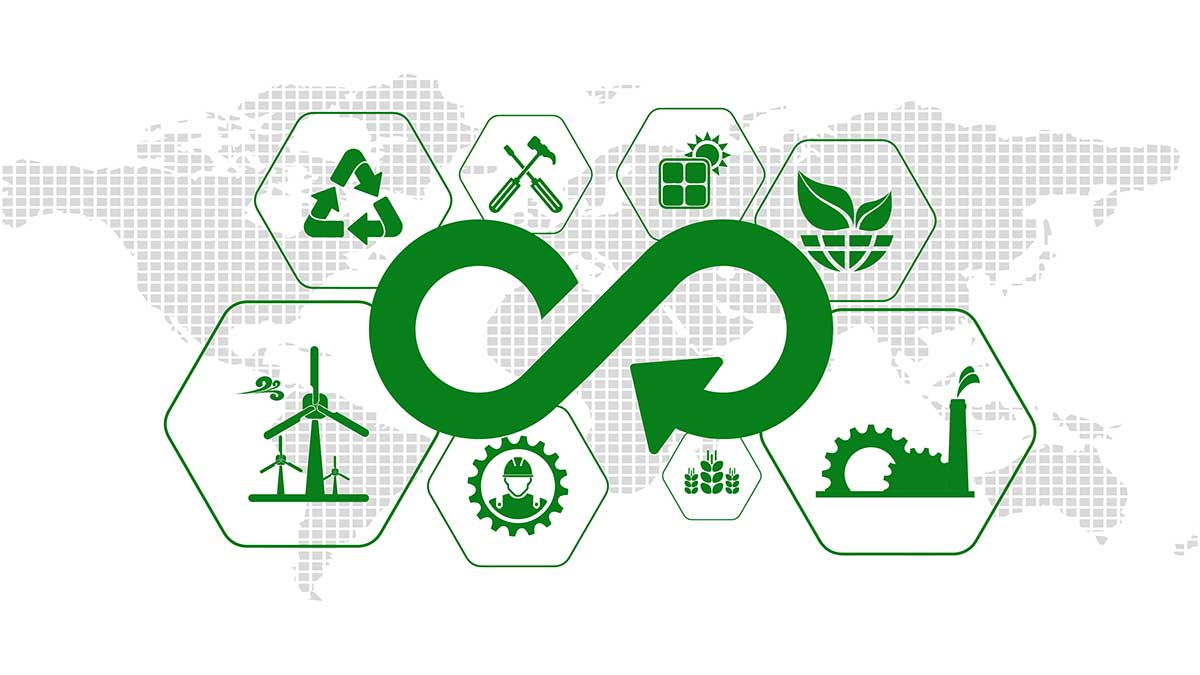
The global economy faces a challenge with circularity. The Circularity Gap Report 2024 from the Circle Economy Foundation and Deloitte shows that just 7.2% of materials used worldwide are recycled or reused, a drop from 9.1% in 2018. Even as awareness grows, the amount of recovered and recycled materials has actually decreased by 21% in the last five years.
However, some companies are showing that circular business models can be both good for the environment and profitable. Research in the journal Business Strategy and the Environment finds that circular economy strategies can bring real financial benefits while also cutting environmental impact. The Ellen MacArthur Foundation notes that $400 billion has been invested recently to help the circular economy grow.
Patagonia has set a high bar for circular practices in clothing with its Worn Wear program and lifetime repair guarantees. But circular economy ideas go beyond outdoor gear. Here are five consumer goods companies from different industries that show circularity can work on a large scale, with data to prove it.
IKEA (Ingka Group): Furniture’s Circular Pioneer
Ingka Group, the biggest IKEA franchisee with 574 stores in 31 countries, has changed furniture retail by offering a range of circular services. In 2024, IKEA bought back more than 495,000 used furniture items through its Buyback and Resell program. These products get a second life in the As-Is sections and through the new IKEA Preowned marketplace, which is being tested in Oslo and Madrid.
IKEA’s repair system is also notable. In 2024, the company gave out 25.8 million free assembly parts to 2.2 million customers, helping keep furniture in use and out of landfills. Trellis reports that from 2016 to 2024, Ingka cut its climate footprint by 24.3% and grew revenue by 30.9%, showing that circular practices and business growth can go hand in hand. By 2030, the company plans to invest €7.5 billion in sustainability, with €1 billion set aside for circular economy startups.
Nike: Three Decades of Footwear Circularity
Nike started its circular economy efforts in 1992 with the Nike Grind program, which turns old athletic shoes into materials for playgrounds, running tracks, and new products. So far, the program has recycled more than 148 million pounds of manufacturing scrap and used shoes, handling about 1.5 million pairs each year through the Reuse-A-Shoe collection program.
Nike’s sustainability work now covers its whole manufacturing process. The company diverts 98% of waste from its distribution centers, headquarters, and finished goods manufacturing away from landfills. For four years in a row, Nike reached 100% waste diversion from its main footwear manufacturing sites. In 2024, the Textile-to-Textile recycling program collected over 135 tons of high-PET textile scraps to turn into new materials. Nike Refurbished also gives gently used shoes a second life by cleaning them up for resale in select stores.
HP Inc.: Closing the Loop on Electronics
HP was named the 2024 North America Company of the Year for its circular economy achievements, and the results back up this honor. Since 2019, HP has used over 4 billion pounds of reused, recycled, or renewable materials in its products and packaging. The company’s circularity rate is now 43%, with a goal of reaching 75% by 2030.
HP’s Planet Partners program collects devices and ink cartridges in 76 countries, and 85% of the devices collected are refurbished for reuse. HP was also one of the first to use ocean-bound plastics, gathering over 1 million pounds from Haiti alone for use in products like the HP EliteBook 1040 G11.
HP has also cut greenhouse gas emissions across its value chain by 27% since 2019, and emissions from product use are down 46%. Through the HP HOPE program, the company has provided refurbished devices to over 40,000 young people, showing that circularity can also support digital equity.
Interface: The Carbon-Negative Carpet Company
InteInterface, the world’s largest maker of commercial carpet tiles, started its Mission Zero initiative in 1994, led by founder Ray Anderson. The company was one of the first to commit to the circular economy. It reached its goal of zero negative environmental impact in 2019, a year early, and now aims to become carbon negative by 2040.
According to Interface reporting, Interface has reduced its cradle-to-gate (full life cycle) carpet tile carbon footprint by 76% since 1996, and 50% of materials used today are recycled or bio-based. Manufacturing waste sent to landfill has been reduced by 92%, water use per unit is down 89%, and greenhouse gas emissions have declined by 96%. These efficiency gains generated over $450 million in avoided waste costs.
The ReEntry Reclamation and Recycling program helps keep Interface flooring out of landfills. Through its Net-Works partnership with the Zoological Society of London, now called Coast 4C, the company collects discarded fishing nets from coastal communities in the Philippines and Cameroon. This effort restores marine habitats and provides income for local people.
MUD Jeans: Fashion’s Lease-and-Recycle Model
Dutch denim brand MUD Jeans shows that circular business models can succeed even for smaller companies. The company was founded on the idea that jeans, which use a lot of resources, should not end up in landfills. In 2013, MUD introduced the Lease A Jeans concept. Customers pay a monthly fee, get free repairs, and can return their jeans for recycling or exchange them for a new pair after a year.
MUD Jeans’ environmental impact is clear. The Ellen MacArthur Foundation reports that each pair of MUD Jeans produces 7.14 kg of CO2e, much less than the industry average of 23.45 kg. The company uses 581 liters of water per pair, compared to the industry’s 7,000 liters, and its biodiversity impact is 51% lower than regular denim. MUD’s fabrics now have up to 55% post-consumer recycled cotton. In 2022, the company made the world’s first jeans from 100% post-consumer recycled cotton, working with Saxion University. B Lab named MUD Jeans “Best for the World” in the environment category, placing it in the top 5% of B Corporations worldwide.
These Companies Prove Circularity Works
These five companies cover furniture, footwear, electronics, flooring, and fashion, showing that circular business models can succeed in many industries. What they have in common are long-term commitment, investment in take-back systems, designing products to be recyclable from the beginning, and clear reporting of results.
Academic research backs up what these companies’ decisions to embrace circularity. A 2024 review in Production Planning & Control found that companies using circular economy principles create value by developing new products, offering service solutions, and working together across supply chains. The main challenge now is to scale these successes. With global circularity at only 7.2% and dropping, more companies need to follow these leaders.
For consumers, supporting circular businesses means thinking beyond the first purchase. Ask questions like: Does this company take back products? Can items be repaired? How much of the material is recycled? Companies such as IKEA, Nike, HP, Interface, and MUD Jeans have made these questions a key part of their business, and their financial results show that the model works.
The choices you make when shopping can show your support and help reshape entire industries, turning linear take-make-waste products into circular stars.
Source link
Earth911 earth911.com