
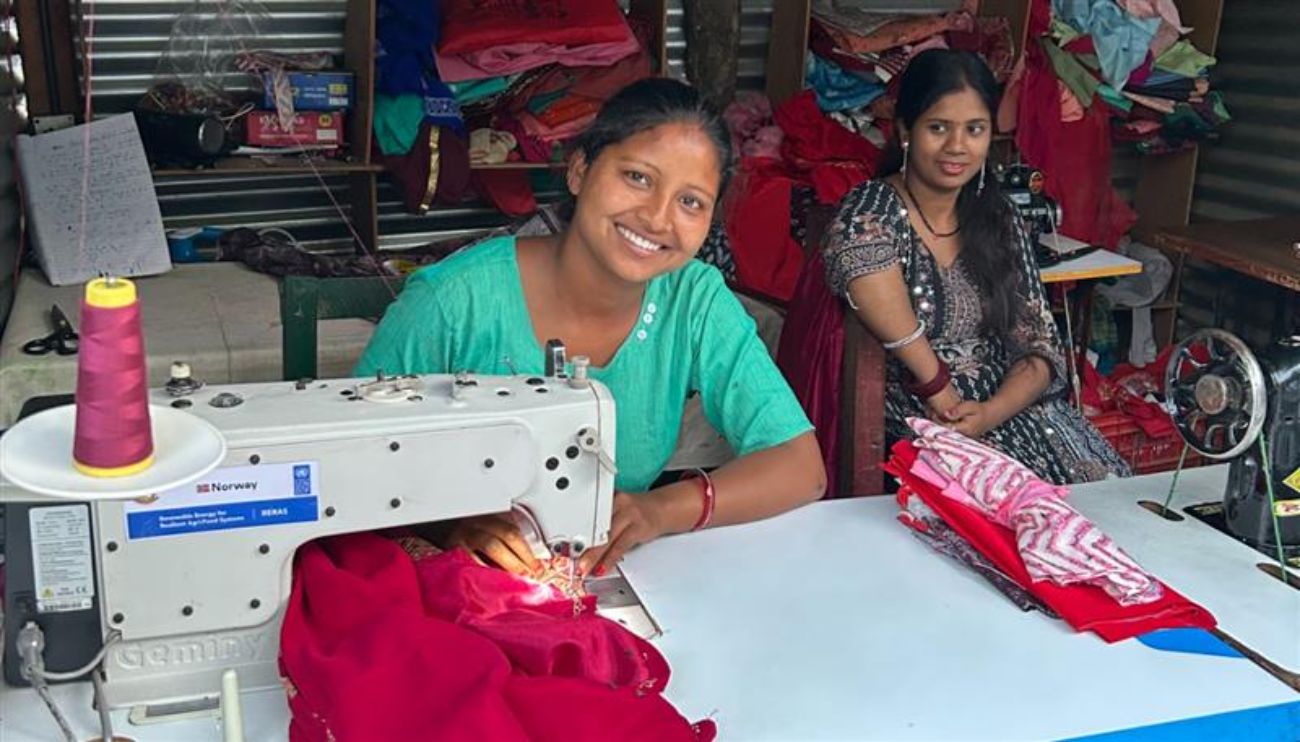
For Lakshmi Kumari Sunar, reliable electricity from micro hydro-power (MHP) does not only mean breathing in cleaner air, but also increasing her income. Living in the remote mountain area of Bajura, Nepal, Lakshmi is one of the villagers whose lives changed by the new power plant.
Nepal is a landlocked country in South Asia with diverse geography. Around 80% of Nepal’s total population – over 29.6 million by 2024 – lives in rural areas, with some in the mountain regions. Remote mountain communities in Nepal often face challenges due to their isolation, including lack of access to electricity. With the majority of the population lacking electricity – over 666 million globally – living in remote, lower-income, and fragile areas, decentralised renewable energy (DRE) solutions have been increasingly promoted and adopted to serve last-mile communities. Readily deployable by tapping into a local clean energy source, technologies like micro and mini-hydro power plants (MHPs) play an important role to accelerate universal access to affordable and modern energy while reducing communities’ reliance on imported fossil fuels and increasing resilience.
These small-scale hydroelectric projects operate independently of the main power grid by harnessing the energy of local rivers and streams to generate reliable electricity. They also open the door to alternative livelihoods and improved income. This is transformative – especially for these remote mountain communities in Nepal – as they rely heavily on agriculture and animal husbandry for their livelihoods, which are now negatively affected by climate change. |
By 2024, Nepal’s off-grid hydropower capacity only reached 36 544 megawatts, connecting 921 000 people in rural areas to electricity. To promote greater adoption of DRE across remote communities, the Government of Canada via Natural Resources Canada (NRCan) and the International Renewable Energy Agency (IRENA) continued its joint Global Initiative for Transitioning Remote Communities to Renewable Energy launched at COP26 in Glasgow, 2021.
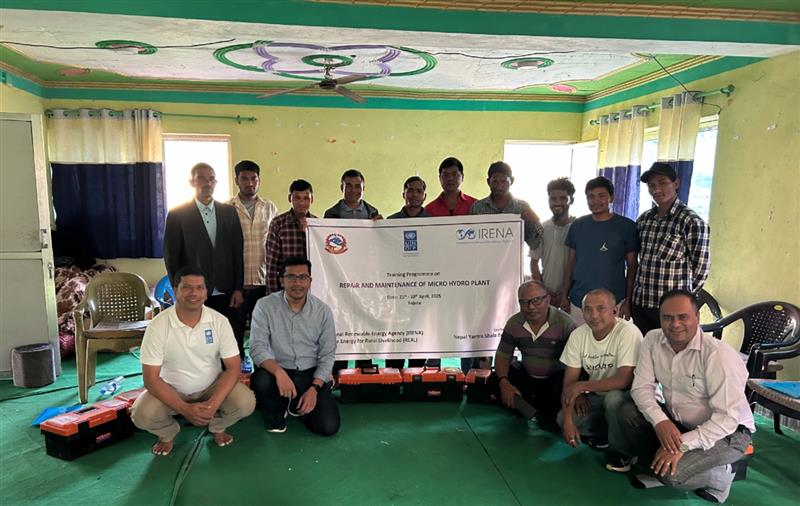
Now with a larger focus on facilitating implementation with communities, IRENA collaborated with United Nations Development Programme – Renewable Energy for Rural Livelihood (UNDP-RERL) in Nepal to organise a series of trainings to improve capacity of the local technicians in operating and maintaining MHPs, as well as to build business development skills, powered by DRE.
Lakshmi is one of the beneficiaries from the area where the trained technicians help ensure that she, and her community, continue to get uninterrupted electricity from the MHP. Furthermore, the MHP has allowed her to switch from manual to electric sewing machine, breathing new life to her small tailoring business.
“The lasting electricity from the micro hydro power and the electric sewing machine have changed my life,” she says. “The electricity from MHPs allows me to work at a time when it is dark during overcast days. Electric power has reduced my workload and increased productivity. I can now stitch more clothes with less effort compared to when I was using manual sewing machine, which takes double the time for me to finish my job. With less time, my monthly income has increased to around NPR 30,000 (USD 200) now.”
Lakshmi also noticed how MHP has not only changed her life, but also her neighbours and the community, adding “The MHP has provided reliable lighting and electricity to my community, which people use to charge their phones easily, allowing us to keep connected with each other. I also see people start to use appliances like fridges and washing machines.”
In addition to the change in the villagers’ daily lives, there is also an emergence of small shops and businesses, proving the role of DRE in creating job opportunities and fostering economic growth in remote communities.
Commenting on this, Lakshmi expresses her hope for her community, “It is great to have power 24/7. Most people here would normally look for jobs in bigger cities or overseas. Hopefully with more productive uses of this sustainable energy, we can have more opportunities locally.”
Source link
www.irena.org
