When it happens, on a quiet weekend in January, there will be no fireworks. No ship horns will sound in harbours. Stock market tickers in financial districts will scroll as usual and satellites will hover silently in space, oblivious.
On Saturday 17 January, all anyone will hear will be the sea, doing what it has always done, breathing patient swells at the shores of the world, folding over itself, as if nothing ever changed.
It will look like a ripple – and, in a way, it will be, because that is how the mightiest waves always begin. But on this day, humanity’s relationship with what covers two thirds of our planet will profoundly change.
A historic moment
When the Global Ocean Treaty was agreed in 2023, it was hailed as historic. The ‘biggest conservation victory ever’, people said. A ‘once in a lifetime’ achievement and ‘a sign that in a divided world, protecting nature and people can triumph over geopolitics.’ When Morocco became the 60th country to ratify the Treaty in September, starting a countdown for it to become international law, it was a ‘turning point for humanity’. World leaders called it an ‘immense victory for the planet’, while others said it was ‘the most important accomplishment’ for international cooperation in decades, the greatest achievement for our climate since the Paris Agreement, and ‘the transformation our world needs’. It now gives countries the tools to expand ocean protection through marine protected areas beyond their borders.
© Pierre Larrieu / Greenpeace
A movement of millions
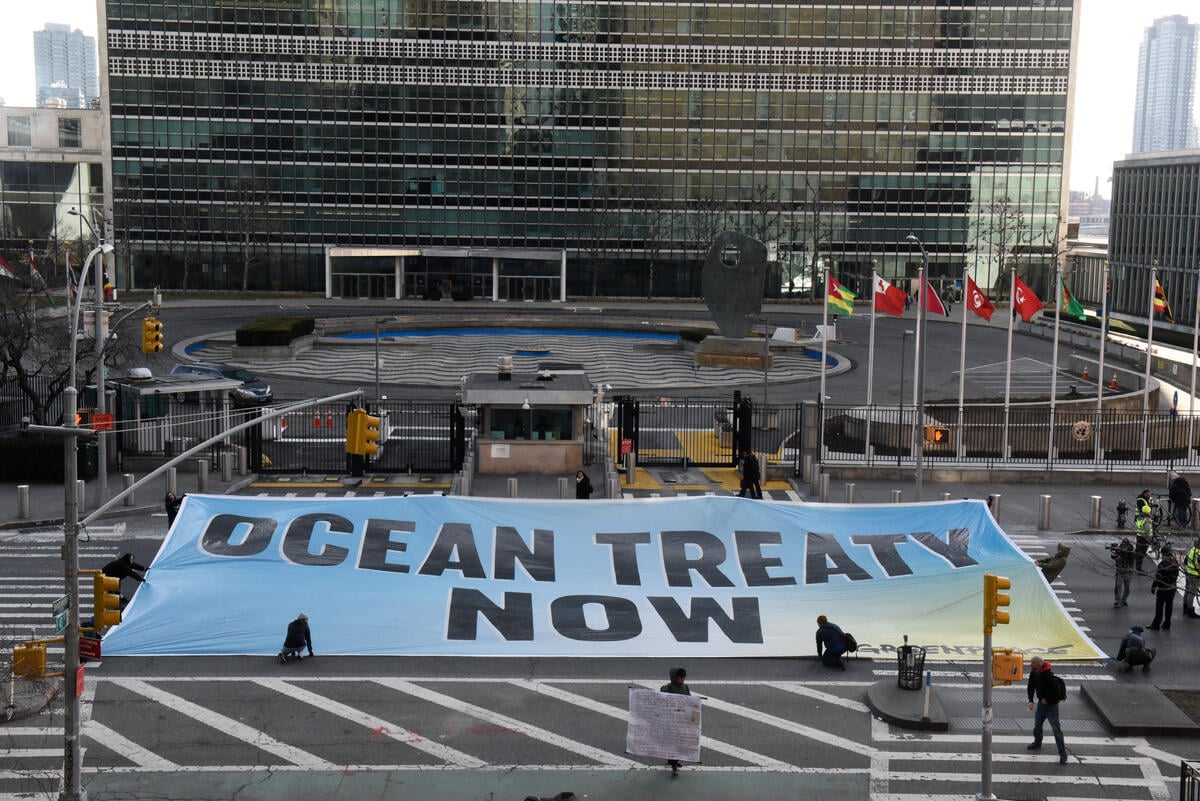
It certainly wasn’t a prize that was won fast – or easily. For over two decades, the mission to obtain the Treaty (also known as ‘BBNJ’ or the ‘High Seas Treaty’) brought together a diverse global movement of Indigenous Peoples, small-scale fishers, NGOs, activists, scientists, lawyers, musicians, actors, artists, campaigners, politicians, coastal communities, mariners, environmentalists, families, businesses and other humans who love and depend on the ocean.
An astonishing diversity of campaigning advocacy was involved – movement building, mass demonstrations, lobbying, research expeditions, losses, failures and obstacles – with people young and old, from every continent, gender, creed, faith and economic background, working together. It took two decades since calls for a treaty, including four years of formal talks, to secure that common goal, which will shape the health of planet Earth for generations to come. But when it came, the billions of people whose lives depend on the ocean had something else to celebrate: hope.
Hope in Action
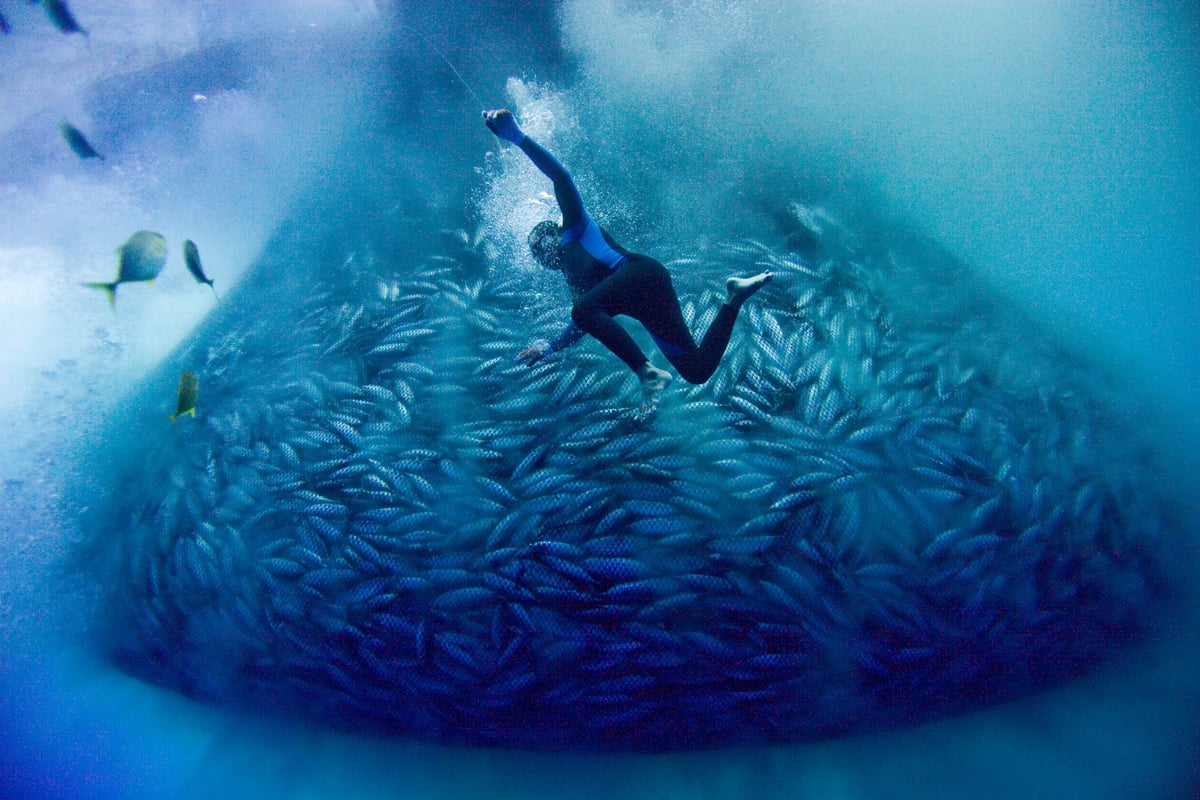
The Treaty’s environmental and human rights significance cannot be overstated. The high seas are one of the major global commons – the Earth’s shared natural resources – intrinsically linked to the health and happiness of every human on the planet. The ocean captures and stores carbon, generates half of the oxygen we breathe and regulates the climate. It provides food, energy and a livelihood for billions of people and is home to around a quarter of a million marine species that are known to humans – with perhaps twice that number that we’re yet to discover.
But perhaps as important, the Treaty represents a powerful symbol for what humanity can achieve. As 2026 awakens to an accelerating reality of naked extractivist imperialistic aggression, spiralling militarisation, corporate overreach and soaring inequality, the international cooperation and human ambition behind BBNJ is a shining beacon of hope for multilateralism, diplomacy and the human ambition for working together.
© Alex Hofford / Greenpeace
Last year, there were mixed outcomes at the COP30 climate conference – a forum that created the Paris Agreement in 2015 but where climate action since has sometimes been marked by a lack of ambition – and the US was accused of ‘thuggery’ at the International Maritime Organisation for intimidating countries into postponing green levies on shipping. Other multilateral fora such as the ongoing quest for a strong Global Plastics Treaty will be watching the way in which governments apply the Global Ocean Treaty keenly.
© Noel Guevara / Greenpeace
When it was agreed at the United Nations headquarters in New York, the conference president declared ‘the ship has reached the shore’ and the collective achievement met wild celebration. This was a ship that has been sailed by a cast of millions. That those millions managed to steer the ship of international cooperation to its destination is a triumph of people power and the international community’s ability to defibrillate multilateralism at this scale could change the world.
The ripple that became the wave
Artists all over the world are celebrating the entry into force of the Global Ocean Treaty, also marking the beginning of a crucial four-year countdown to protect 30% of the world’s ocean by 2030 and stop deep sea mining before it begins.
What began as a ripple is now a wave in motion, but it will lose its force if governments around the world do not act now. They must move fast to submit proposals for the first-ever sanctuaries under the new Treaty, where biodiversity can recover, rise and thrive, and to ensure the first ever ‘Ocean COP’ can see the start of their implementation. Our ocean can’t wait, and neither can we.
Ratifications of the Treaty in December by Brazil and China were another welcome boost, adding the countries’ massive diplomatic counterweights to controversial US actions on the ocean, which last year included bypassing international law on deep sea mining – and complementing the many Small Island Developing States (SIDS) that have also provided leadership in the diplomatic arena. Meanwhile, there is important work ahead. Some countries have signed and not ratified – but all countries now need to set the tempo and propose first High Seas sanctuaries.
Multilateralism and international cooperation may seem a highwire act, but it is on that tightrope where the urgent solutions of our time can be unlocked to counteract corporate political capture and autocracy. Humanity has proved it can rise to the challenge – but a new clock is now ticking. Who will be the first to make more history?
Source link
Greenpeace International www.greenpeace.org