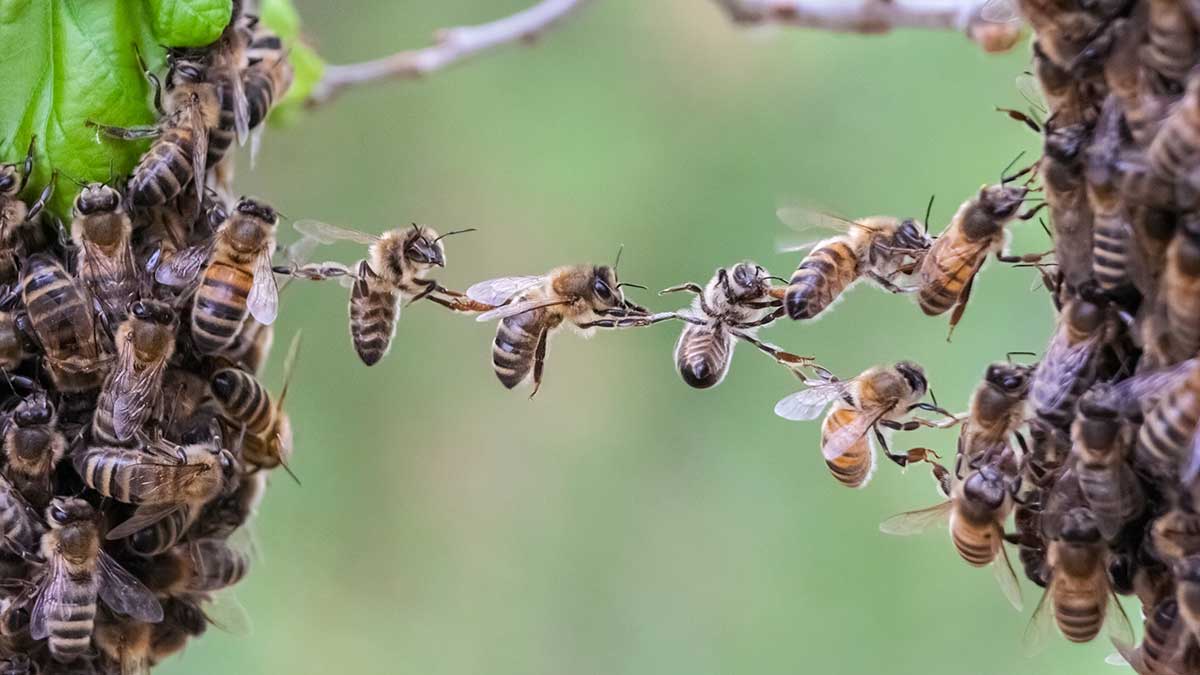
If we expect bees to survive the next century, education must start early. Kids are already learning about recycling, oceans, and rainforests. So why aren’t bees on that list? Bees are not just honey producers. Their role in ecosystems is indispensable. So, it’s time we start caring for them too. After all, they pollinate about one-third of our food crops. Remove them, and our diets, farms, and wild landscapes collapse.
With two growing kids in the household and as a beekeeper, I have seen curiosity transform fear into fascination. When kids start to understand bees, they stop seeing danger and get curious, and that is what I like. A classroom can ignite that shift with hands-on learning and direct observation.
Here’s how you can build that awareness in your kids in ways that stick.
Make them curious, not scared
First step is going to be removing the fear. Many kids grow up hearing that bees sting, swarm, and chase you down till you are tired. The first lesson you need to instill is frankly quite simple: bees don’t attack without a reason. Only female worker bees sting, and doing so costs them their life. This fact alone will tell students a lot about them and teach them that bees defend their home, not themselves.
In the classroom, start by comparing bee behavior to human work. A hive has clear rules set for every member. Every bee has a task to do. When kids see bees as workers, not threats, the fear slowly dissolves.
Demonstrations help too. Move slowly when showing bee videos, explain how careful you need to be when handling hives, and explain how and when a defensive action is triggered. Teach kids to respect and understand their responses, and in turn, protect the bees.
Use the senses: See and taste
Bees connect directly to human senses, and that makes them perfect for multisensory learning. A honey tasting session of different types of local honey can be super insightful for them. Explain why the differences exist. Nectar from each flower gives each type of honey its very unique chemistry. Light honey tends to come from early-blooming flowers with delicate sugars.
Darker honey, from plants like buckwheat, holds more minerals and complex compounds.
Students quickly realize that honey is not just a product but an index of local biodiversity.
Leverage active, ongoing learning
Like bees, bee conservation education should also revolve around the routine rhythms of bee life. Instead of a one-day presentation, build a short recurring segment into the term. You can call it the “Bee Time.” Spend ten minutes a week revisiting all the facts, observing weather patterns that affect bee activity, or updating a “pollinator calendar.”
Trivia works well for review. How many eyes does a bee have? (Five.) How many times does it flap its wings each second? (About 230.) What fraction of a teaspoon of honey does one worker make in her life? (Roughly 1/12.) Numbers like these easily hook into memory.
You can expand the concept into a small research project for the little ones. Ask them to track which flowers bloom around school across months, sketch them, and note which insects visit. This trains children to observe ecological changes.
Bring experts and let them become one
Nothing beats seeing real tools and stories from the field. Most regions have a beekeeping club or a local extension office with volunteers who enjoy outreach. Ask one to visit the class with spare equipment like smokers, hive frames, etc.
Let the kids handle the gear. A frame filled with capped honey can weigh several kilograms, surprising even adults. Physical experience grounds the conservation in reality. Live bees are not always possible, so use magnified photos of bee anatomy to help students with the technical details.
If local expertise is scarce, online ones work too. Universities will often host entomology programs along with virtual sessions for kids. What matters is giving kids direct access to people who work with bees daily. When they hear passion in someone’s voice, information sticks.
Connect lessons to real conservation
Information means nothing without action. Encourage students to make choices that help pollinators beyond the classroom. They need to learn that even the smallest changes add up.
For older students, citizen-science projects are a great option. Platforms like Bee Spotter or Bumble Bee Watch allow anyone to upload photos and location data. Scientists can use these submissions to track population shifts and identify threatened species. When a child sees their photo logged in a research map, conservation becomes personal.
Even classroom art can double as awareness work. You just need to know where to look.
Teach them to celebrate the bees
Teaching kids about saving the bees isn’t a hobby project. Think of it as more of an ecological insurance. Every informed student transforms into a possible advocate for pollinators and biodiversity. When they understand that the success of a bee colony relies on precision, cooperation, and respect for natural systems, they learn principles that apply at scales much larger than a bee colony.
If we can help a single generation see bees as a partnering member of our ecosystem, we will ensure the hive and ecosystem are humming along as well.
About the Author
This sponsored article was written by George Brooks, an enthusiastic hobbyist beekeeper for some years now. I love spending hours delving into the world of our fuzzy bee friends. Even today, I still get excited when I come across something new which I can share with you, our bee-loving readers.
Source link
Earth911 earth911.com