
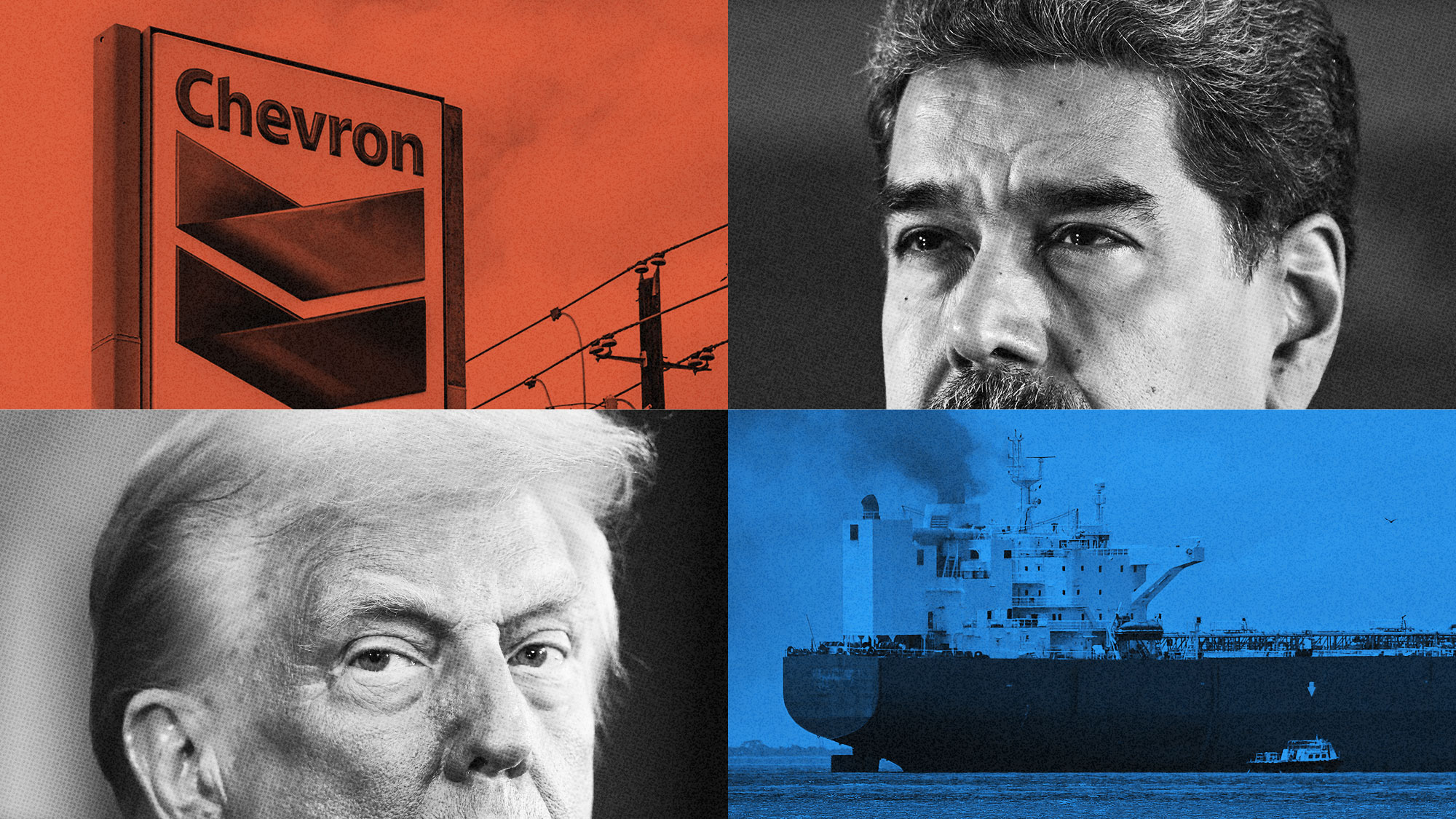
On Saturday, hours after U.S. forces in Caracas killed at least 80 people and kidnapped Venezuelan President Nicolás Maduro, Donald Trump sounded less like a wartime commander than a developer surveying a newly acquired property. The country’s future, he told reporters at his Mar-a-Lago resort, belonged to “very large United States oil companies,” which would soon be pumping “a tremendous amount of wealth out of the ground.”
The land in question includes the largest proven oil reserves on Earth — at some 300 billion barrels, roughly 17 percent of global totals. But after years of political turmoil and U.S. sanctions, Venezuela accounts for barely 1 percent of global crude production. “It’s true that they know the oil is there,” said Samantha Gross, the director of the Energy Security and Climate Initiative at Brookings. “But the above-ground risks are huge.”
Chevron is the only major U.S. firm still operating in Venezuela, after other oil giants pulled out in 2007 when former President Hugo Chávez nationalized the industry. By continuing to operate as a minority partner under the state oil company’s terms, Chevron preserved its infrastructure, personnel, and legal foothold — giving it geopolitical leverage in the ongoing tug-of-war between the United States, China, and the Maduro government. “We play a long game,” CEO Mike Wirth explained in November at a U.S.-Saudi investment summit in Washington.
Today, Chevron is uniquely positioned in the aftermath of the invasion: Its leadership and board have long orbited Republican circles, with deep ties to the Trump administration and a history of big GOP donations. “Chevron’s in [Venezuela],” Trump said on Saturday, but “they’re only there because I wanted them to be there.” The company did not respond to requests for comment.
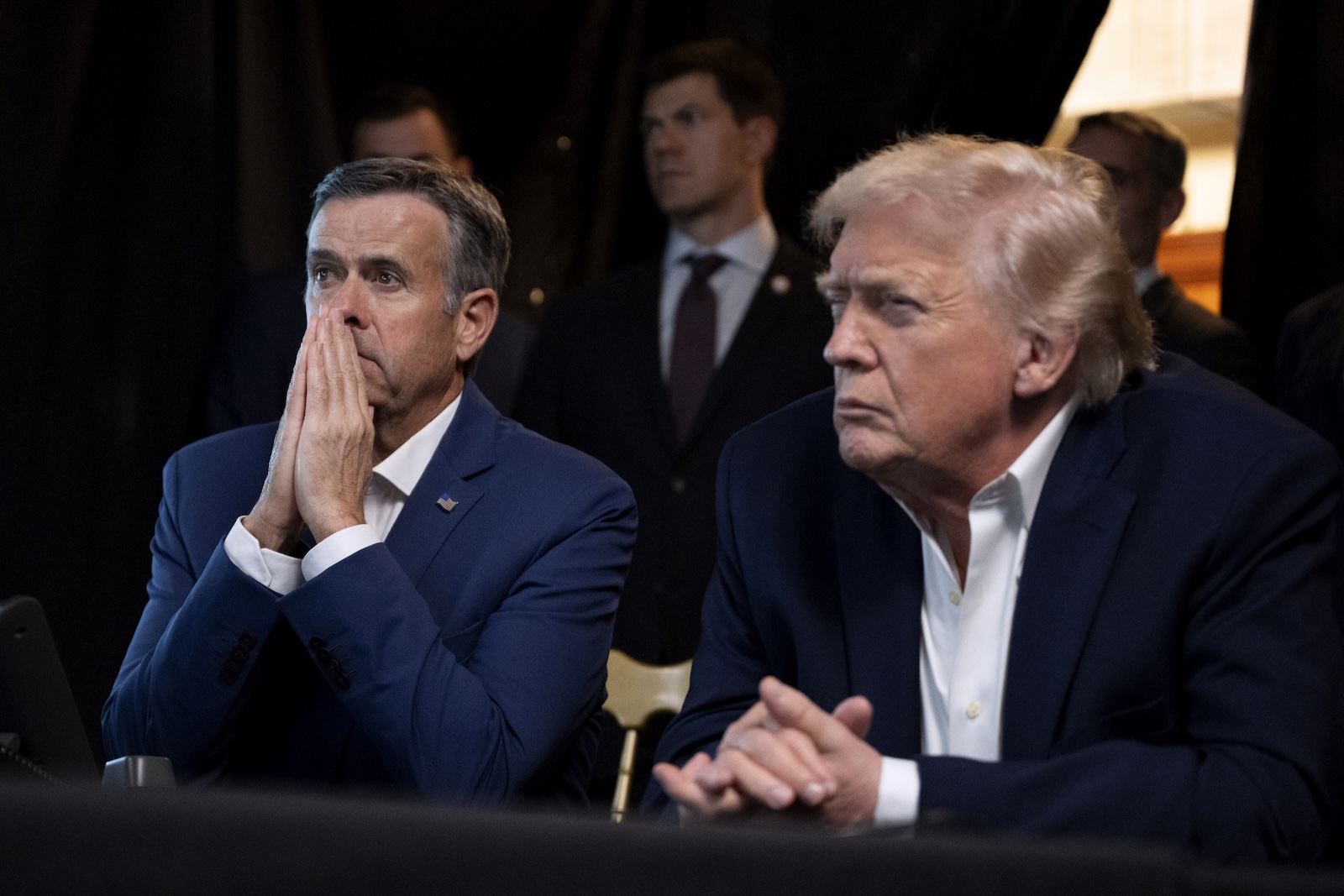
Molly Riley / The White House via Getty Images
When Trump returned to office, his administration revoked Biden-era licenses that had allowed the oil major to operate in Venezuela despite the sanctions. Though told to stop producing by April, the company made no attempt to wrap up contracts, pull out personnel, or wind down supply chains. Francisco Monaldi, director of the Latin American energy program at Rice University, said in March that it appeared “Chevron is very confident it can obtain an extension.”
Behind the scenes, executives were busy meeting with Trump and top officials, spending almost $4 million on lobbying in the first half of the year to keep their Venezuelan foothold alive. In March, Wirth joined Trump in the Oval Office, hashing out how to tweak or extend Chevron’s license. The president finds Wirth’s TV appearances entertaining, regularly calling him after cable news appearances. The CEO followed that blitz up with private sit-downs with Secretary of State Marco Rubio, Treasury Secretary Scott Bessent and staffers from the National Security Council, making the case for his company’s continued presence in the country.
By July, the gamble had paid off. The administration issued a new license, letting Chevron resume operations in Venezuela. As it did so this fall, the company saw record-breaking production and earned $3.6 billion in its last reported quarter. Though Venezuela accounts for just 100,000 to 150,000 barrels daily — a sliver of Chevron’s production — that oil is heavy, the kind the company’s Gulf Coast refineries are designed to process. Having access to Venezuelan crude can help those facilities run more efficiently, increasing supplies and reducing costs.
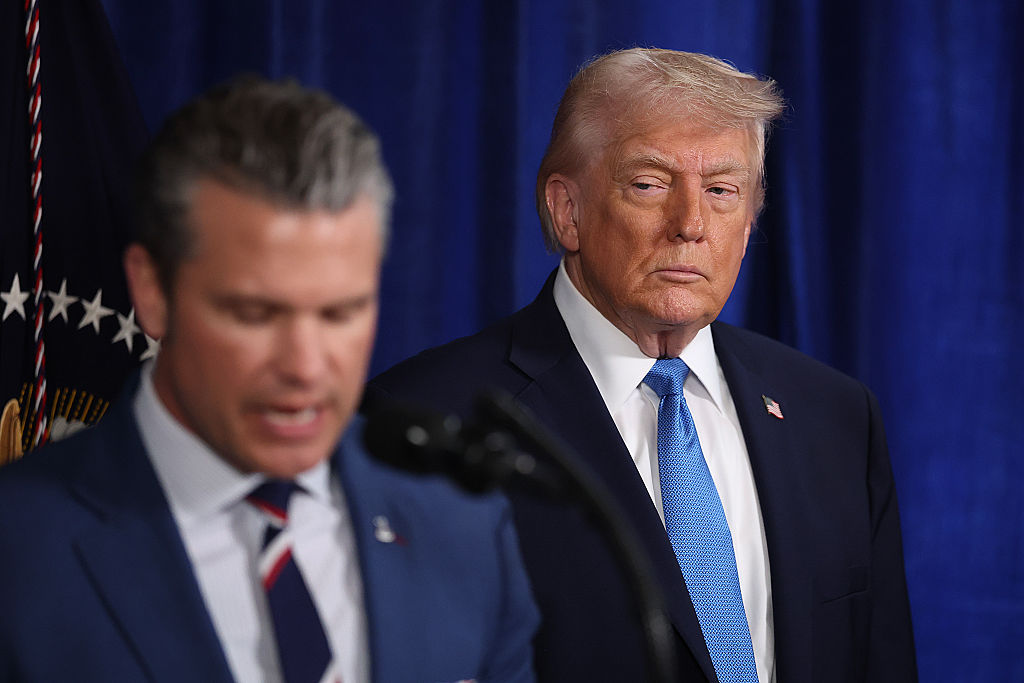
Just before Chevron celebrated its renewed lifeline, it scored another victory: After years of wrangling with the Federal Trade Commission, it finally acquired Hess Corporation, one of the biggest independent oil producers in the United States. Last year, the agency had banned CEO John Hess from joining Chevron’s board as part of its anti-trust review, alleging that he had colluded with OPEC representatives to fix oil prices.
That victory, however, did not occur in a vacuum. The Hess family is a major donor to the Republican party, and contributed more than $1 million to Trump’s first inauguration. (Chevron, for its part, donated $2 million to the president’s 2025 ceremony.) Hess — whom Trump has called “a friend of mine for a long time” — petitioned the FTC to revisit its decision. The agency later reversed course, unlocking the deal. On July 18, Chevron officially closed its $53 billion merger, and Hess took his seat on the board.
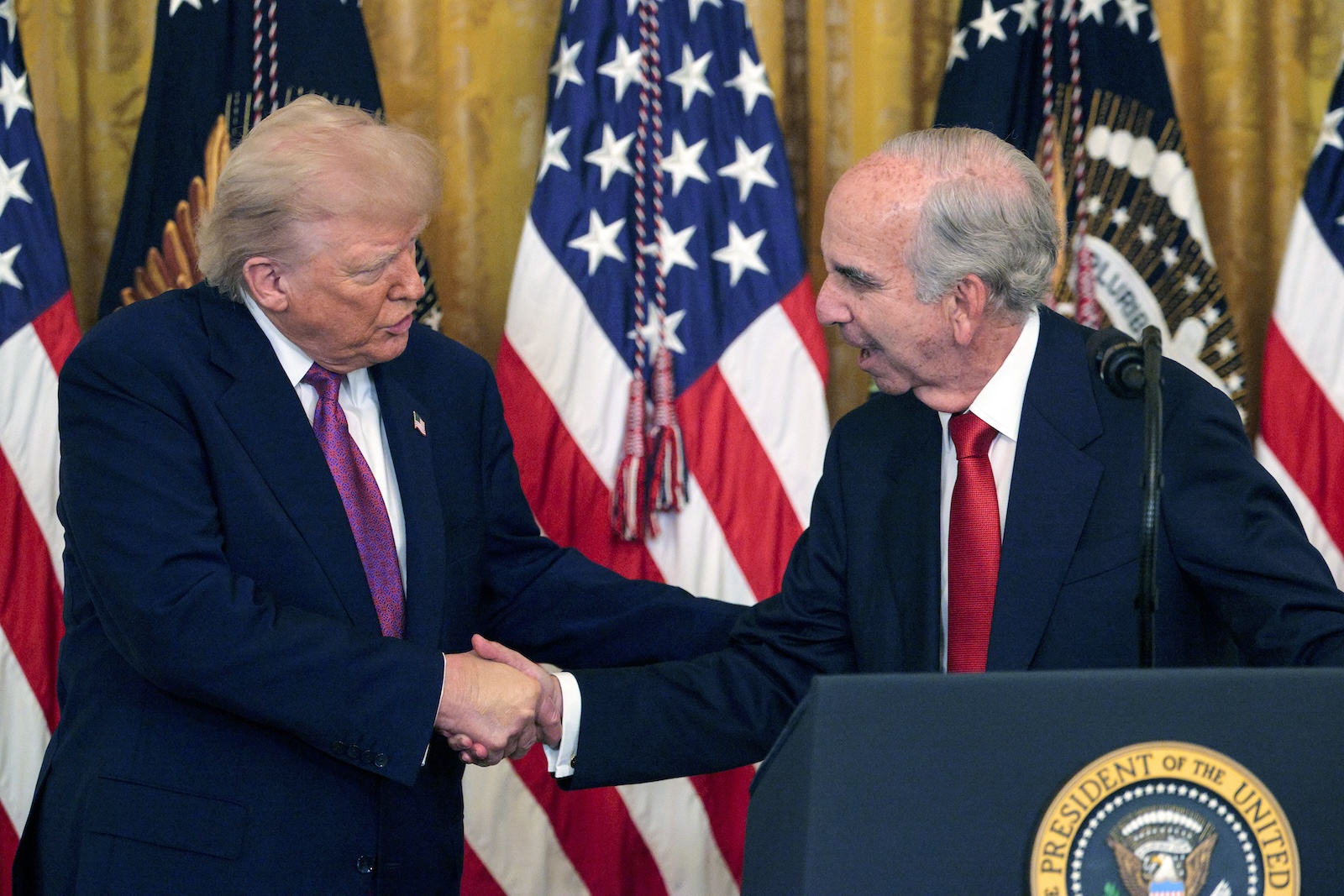
Chip Somodevilla / Getty Images
This bought Chevron’s entry into what many analysts call the decade’s most consequential oilfield, in Guyana, Venezuela’s neighbor. In 2015, Exxon Mobil announced a huge reserve off the tiny country’s shoreline. That discovery catapulted Guyana — a nation of fewer than one million people — into the petroleum spotlight. Hess’ 30 percent stake in the project was a key part of Chevron’s recent acquisition.
Thanks to Trump, one of the largest remaining political obstacles to the Guyana project was just removed. Maduro had challenged Guyana’s control over the offshore area. Venezuela has periodically claimed the territory since the 1960s under a long-running border dispute. As production in the region ramped up in 2019 and as Venezuela’s own industry faltered, Maduro escalated his attacks, sending naval ships into Guyanese waters and vowing Venezuela would take “all necessary actions” to stop its development — rhetoric remarkably similar to what Trump used to justify his own actions against Maduro this week.
But though Trump claims he spoke with oil companies before and after the invasion, taking over the Venezuelan government may have been more than the industry bargained for. “There aren’t oil companies just running to get rid of tens of billions of dollars right now to rebuild the Venezuelan industry,” David Mares, the former Institute of the Americas Endowed Chair for Inter-American Affairs at the University of California-San Diego, told Grist. “It’s not even clear there’s a legitimate government in place to make the contracts they sign for legal.”
Then there’s the question of Venezuela’s tangled debt. Petróleos de Venezuela, S.A., the state oil company, has racked more than $150 billion in liabilities over decades of defaults and expropriations. Creditors — from energy companies like ConocoPhillips to so-called “vulture funds” that bought defaulted contracts at deep discounts — have pursued arbitration against the country, and won court rulings for damages that remain unpaid. China has been the country’s largest foreign lender, loaning it more than $60 billion over the years. Only some of that has been repaid, mostly in the form of oil exports. As Mares notes, “As soon as Venezuelan oil starts to flow, some of those claimants can attach the proceeds, and they’re going to demand their money back.”
Experts warn that returning to even modest levels of production would require upgrading Venezuela’s aging infrastructure, a process that would require massive investment and political stability — conditions that have eluded Caracas for years and seem unlikely to materialize anytime soon. “There is no realistic prospect of immediately increasing Venezuela’s crude output,” Gus Vasquez, the head of oil pricing in the Americas for commodity markets analyst Argus Media, wrote in an emailed statement. “Venezuelan oil infrastructure would take years and possibly hundreds of billions to bring up to something close to its former capacity. Repairing refineries would be even harder.”
Chevron’s existing assets give the company a very different calculus than newcomers would face. But the timing could not be worse: Global crude oil prices have steadily declined over the last several years, recently dropping below $60 a barrel — approaching the break-even point for many American operators. That’s been driven by global supply surpluses and by weakening demand, as renewable energy prices drop. “I think what we’re seeing is that the days of the oil and gas industry being the growth engine of economies is well behind us,” said Trey Cowan, an oil and gas energy analyst at the Institute for Energy Economics and Financial Analysis.
Despite these structural shifts, Gross notes, “Trump has a very old-school way of thinking about resource economics,” as a blunt lever of power. As companies like Chevron have found, aligning with his priorities can bring financial and regulatory advantages, even if they are not supported by broader market conditions. This week, the company’s stock jumped 6 percent.
On TruthSocial on Tuesday, Trump announced that Caracas would be “turning over” between 30 and 50 million barrels of “Sanctioned Oil.” that will then be sold. “[T]hat money will be controlled by me,” he wrote. Trump hopes to lower oil prices to $50 a barrel, which would squeeze shale producers and destabilize the U.S. oil industry. On Wednesday, the Department of Energy issued a brief announcement elaborating, as Chevron entered talks with the administration to increase its operations and resell oil to other refiners. The statement declares the U.S. will sell the sovereign nation’s crude on the global marketplace, and describes the proceeds as going to “U.S. controlled accounts at globally recognized banks,” an unusual setup that bypasses the U.S. Treasury. The money is vaguely promised to serve both Americans and Venezuelans, and the arrangement will be indefinite. “You’re going to see, probably, a growth in Chevron activities there quickly,” Secretary of Energy Chris Wright said on Thursday.
Senate Democrats have launched an investigation into the Trump administration’s communications with oil companies, which they claim occurred 10 days before the invasion, while Congress was not briefed. “The suggestion that taxpayers could pay the cost of rebuilding Venezuela’s oil infrastructure raise serious concerns about how the Trump Administration engaged with the oil companies prior to his decision to use military force,” they wrote. Gross says to the extent Trump can be described as a populist, it is largely a performance — one “he might play on TV” — but she added that typically, “when you see populist governments take over oil industries, it doesn’t usually turn out well.”
In all the turmoil, what no one appears to be asking is what is good for Venezuela. “The saddest part of this is that unwinding the Maduro regime does not seem to be a part of what Trump policy is aiming for,” said Cynthia Arson, former director of the Woodrow Wilson International Center’s Latin American Program. In its statements after the strike, the White House has largely overlooked questions about a democratic transition, sidelining concerns about human rights abuses and the treatment of political prisoners.
Even when oil starts flowing, a new Venezuelan government will likely struggle to meet public expectations while attracting foreign investment. Before Chávez, the country’s oil contracts typically gave the government around 50 percent of revenue, helping fund social programs and the middle class. U.S. oil majors, by contrast, often offer royalties around 12 percent.
The contrast highlights just how fragile and uncertain the path ahead is: Years of economic collapse, which have driven millions abroad, have left those remaining struggling with profound political and social upheaval that can’t be solved by oil alone. “If good things happen, they’re going to take time,” Gross said. “Bad things could actually happen pretty quickly.”
Source link
Lois Parshley grist.org
