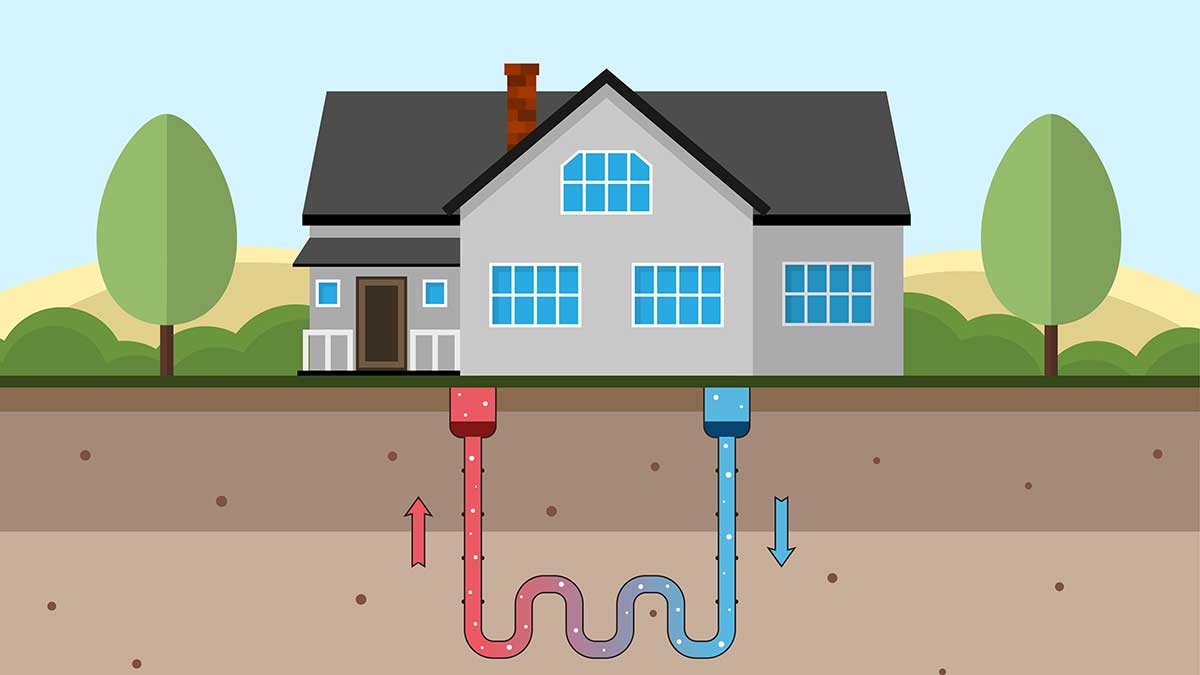
Geothermal energy comes from heat just below the earth’s surface, where temperatures stay steady between 45 and 75 degrees Fahrenheit all year.
Geothermal power plants use this heat to make electricity, but homeowners can also use it to heat or cool their homes with a geothermal heat pump, which exchanges heat with the ground. These systems are good for the environment and can save money. Geothermal energy is clean, always available, and a reliable low-carbon choice.
Geothermal heat pumps usually use 25% to 50% less electricity than regular heating and cooling systems. They are quieter, last longer, and need less maintenance. Homeowners can save up to 60% on heating and up to 50% on cooling costs each year.
A January 2025 U.S. Department of Energy analysis found that if geothermal heat pumps were widely used, the country could avoid building 24,500 miles of new power lines by 2050—enough to cross the U.S. eight times. If about 70% of U.S. buildings were retrofitted with geothermal heat pumps and building improvements, electricity demand could drop by up to 13% compared to decarbonizing without geothermal technology.
A DOE report called Pathways to Commercial Liftoff, which was later retracted by the Trump Administration, estimated that geothermal heating and cooling could save enough energy to power 36 million homes by 2050 if the industry grows by 10% each year.
Slow Progress To Date
Currently, only about 1% of U.S. homes—approximately 1.3 million, many in the Southeast—use geothermal heat pumps, compared to 13% that use air-source heat pumps. The EPA considers geothermal heat pumps one of the most energy-efficient, environmentally clean, and cost-effective space conditioning systems available, with about 70% of the energy used coming from renewable energy stored in the ground.
In a recent Sustainability In Your Ear interview, Dandelion Energy CEO Dan Yates explained the efficiency advantages: “Geothermal is four times more efficient than a furnace and twice as efficient as an air-source heat pump. A geothermal system uses 25% the peak demand of an air-source heat pump system—that is a gargantuan gap.”
Yates described the earth as “a huge thermal battery.” He explained that geothermal systems store heat underground in the summer for use in winter, and send extra heat into the ground during summer. This helps reduce strain on the electrical grid when demand is highest.
A Surprising Geothermal Unlock In The “Big, Beautiful Bill”
One big challenge for geothermal has been the upfront cost, which can be $20,000 to $31,000 for a home system. But in 2025, new changes started making geothermal more affordable and accessible.
The One Big Beautiful Bill Act (H.R. 1), passed in July 2025, kept the 30-50% federal Commercial Investment Tax Credit for geothermal heat pumps through 2034. For the first time, it also allowed third-party leasing of home geothermal systems. This means builders and finance companies can now offer geothermal systems through leases, much like how rooftop solar became more available through leasing.
Dan Yates from Dandelion Energy said this change is the key to making geothermal common in the next decade. Dandelion has teamed up with Lennar, a major home builder, to build 1,500 new homes with geothermal systems in Colorado over the next two years.
“We are putting geothermal into brand new homes and townhomes that start in the $400,000 range,” explained Dandelion CEO Dan Yates. “This is no longer a product that is only available to a wealthy homeowner.”
Can You Add Geothermal In An Existing Home?
For homeowners in existing homes, retrofit installations are more expensive than new construction—typically about twice the cost—due to logistical challenges.
“When we drill a single borehole, it takes us less than a day to drill,” Yates explained, “but it takes us three to four days to do it in a residential setting, because we have to get all this stuff loaded up, drive to the house.” These mobilization costs add up quickly compared to new developments where crews can efficiently drill dozens of homes in sequence.
In states like New York and Connecticut, where Dandelion offers retrofit leasing, homeowners pay $200 to $300 per month, which offset by energy savings, especially in colder climates where geothermal delivers the greatest benefits.
Choosing The Right Geothermal System
Which geothermal system to consider for your home depends on the local climate, how much land you have, and the soil on your property. Learn about the different options: closed-loop, open-loop, and hybrid systems.
See how a residential geothermal system works in this video from the U.S. Department of Energy:
Closed-Loop Systems
This type of geothermal energy system is the most common. It usually has two loops made of plastic tubing. The refrigerant loop goes inside your home, and the water loop is buried underground.. Then the fluid enters the home, where it exchanges heat with the refrigerant loop. There are three types of closed-loop systems:
- Vertical Loop System. Tubing is placed straight down into the ground. This is a good choice if you have little land or want to protect your landscaping. But if your soil is rocky, digging deep holes (100 to 500 feet) can be hard. Vertical systems are usually the most expensive closed-loop option, but the final cost depends on things like the environment, rules, and the size of your home.
- Horizontal Loop System. Tubing is laid out side-to-side in the ground, which can be more effective than vertical systems. This option needs more land. Since the tubing is closer to the surface (about 3.5 to 6.5 feet deep), weather can affect it more. It’s usually not recommended for areas with long or cold winters. Horizontal systems are usually cheaper than vertical ones.
- Pond/Lake Loop System. If you have a pond or lake, you can put the tubing at the bottom. The tubing is coiled, or made into a “slinky” shape, and placed at least 8 feet below the surface to keep it from freezing in winter. This system is a good choice when possible because it usually costs less than other types.
Open-Loop Systems
Like the pond/lake system, an open-loop system uses water from a well or surface water. The water goes through the tubing and heat pump, where it exchanges heat with the refrigerant loop to cool the home. Afterward, the water returns to the ground through the well or a surface outlet.
Open-loop systems usually cost less to install than closed-loop systems, saving you up to 60%. However, they need more maintenance, like changing filters, softening water, and testing wells. This option works best if you have enough clean water and can follow all local rules.
Hybrid Systems
Hybrid systems use a mix of geothermal resources, such as standing column wells and cooling towers. They are mainly used for cooling, so they are a good choice for people living in warmer areas.
The Residential Clean EneThe Residential Clean Energy Tax Credit, which ended on December 31, 2025, gave a 30% tax credit for ENERGY STAR-certified geothermal heat pump installations. There is hope that this credit will return in the future.still offer incentives. Check the Database of State Incentives for Renewables and Efficiency (DSIRE) to find the tax credits, grants, and rebates available in your state or community for geothermal heat pumps.
For existing homeowners: Reach out to a certified geothermal installer or designer in your area to see if your property is a good fit. Important factors are your land, soil, and climate. Get quotes from several installers and ask about any federal, state, or utility incentives.
For new home buyers: Ask your builder if geothermal options are available. In Colorado, Lennar now offers geothermal heating and cooling in several communities, such as Aurora, Brighton, Parker, Lafayette, Erie, Commerce City, and Centennial. With leasing, you pay little upfront, and your monthly payments are usually less than what you save on energy bills.
Geothermal heat pumps have the lowest running costs of any heating and cooling system. The underground loops can last 50 to 100 years, and the heat pumps last 20 to 25 years with little maintenance. They don’t need noisy outdoor units, give steady comfort all year, and can lower water-heating costs by using waste heat.
Before you switch, look into which system fits your needs best. Closed-loop, open-loop, and hybrid systems all have their pros and cons, but each can help you save on energy bills, lower your carbon footprint, and keep your home comfortable.
With new leasing options removing the upfront cost and big homebuilders using the technology, 2025 could be the year geothermal heating and cooling becomes a mainstream choice for American homes.
Editor’s Note: This article was originally published on May 12, 2020, was substantially updated in January 2026.
Source link
Earth911 earth911.com