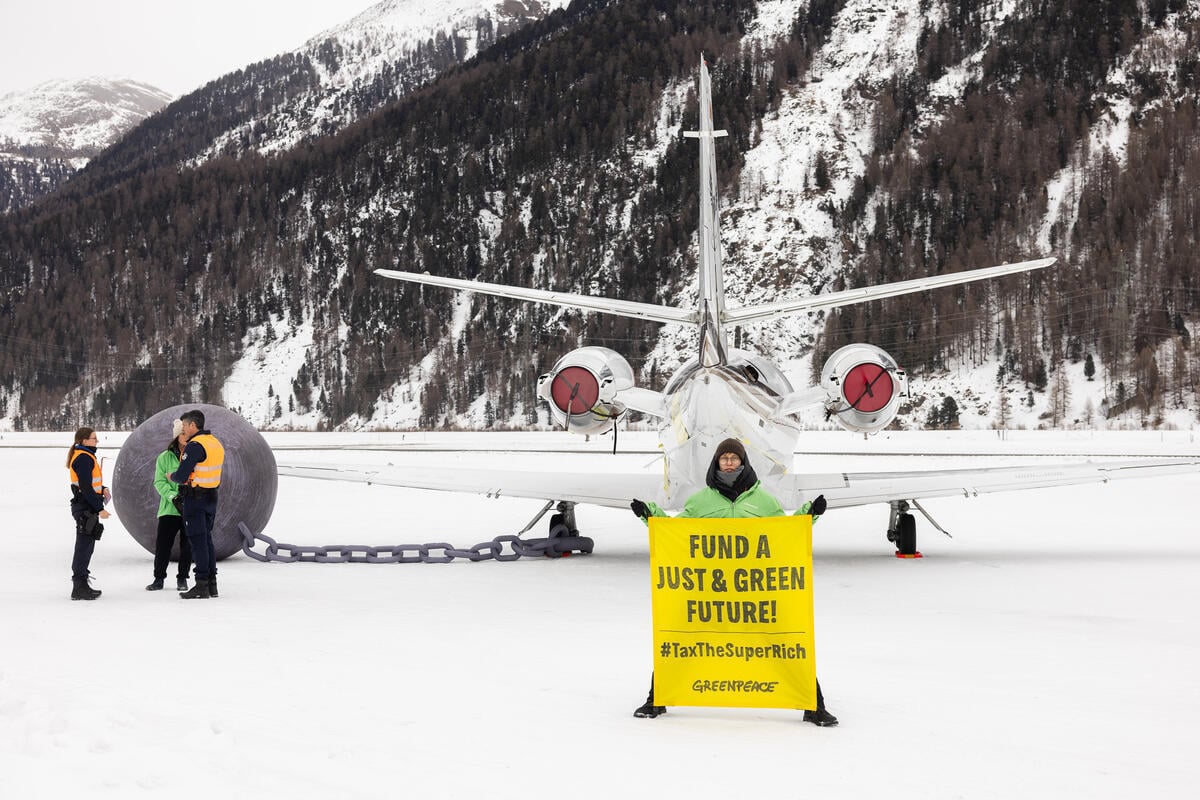
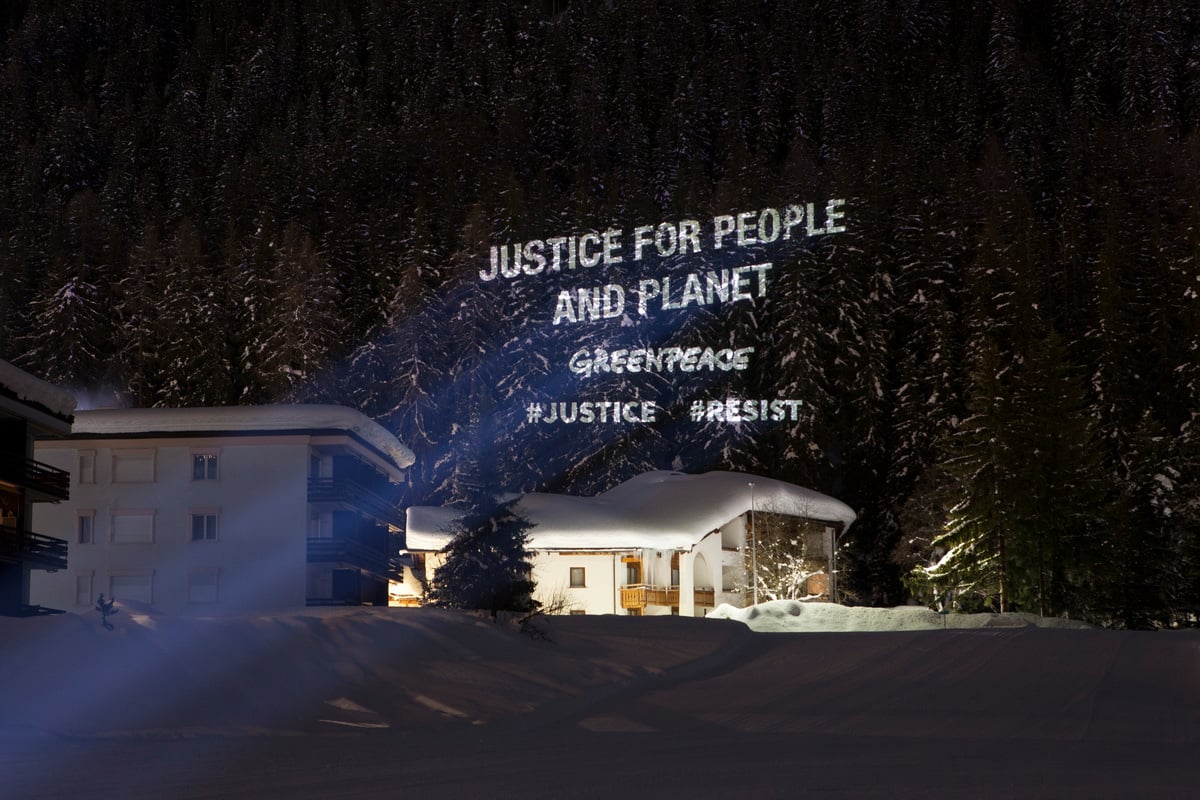
While families around the world are facing the impacts of the climate and nature crises in their communities, some of the world’s most powerful leaders are attending the World Economic Forum (WEF) in Davos, Switzerland in the most polluting and most unequal form of transport: private jets. What does this teach our children about responsibility and fairness?
© Daniel Müller / Greenpeace
What happens at Davos?
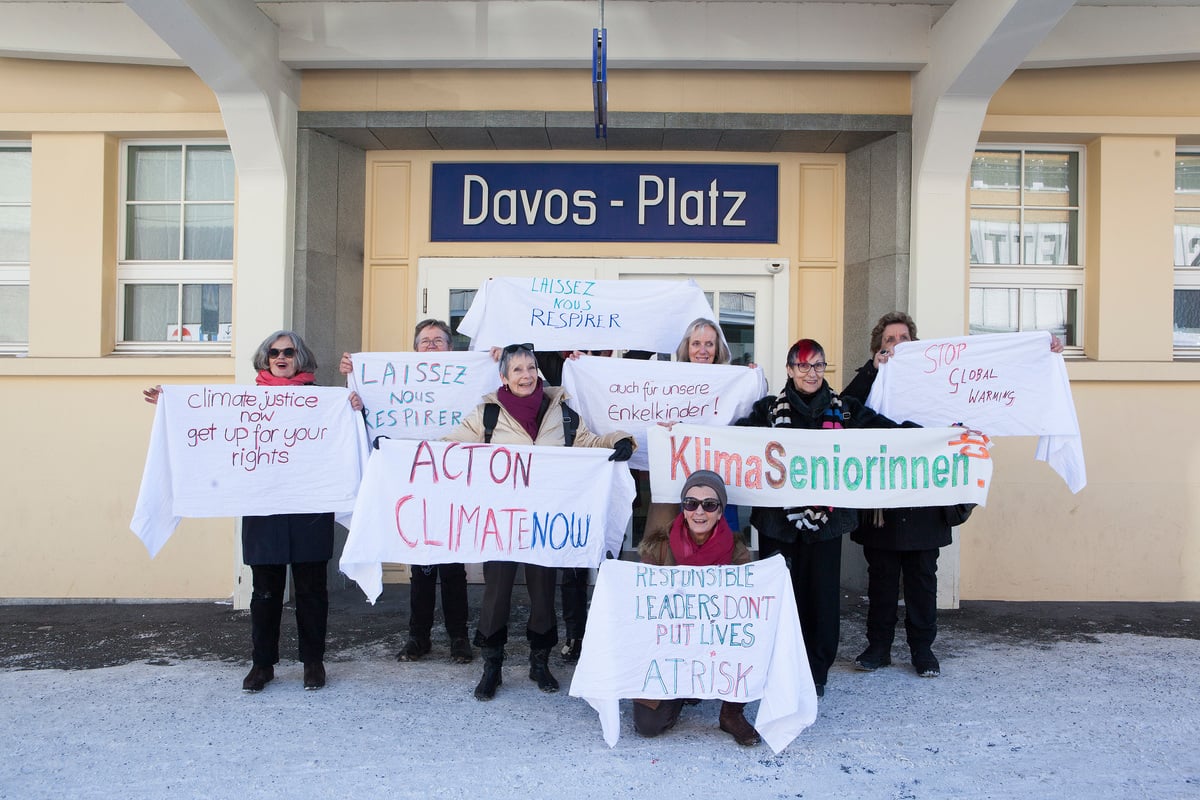
Every January, world leaders and corporate figures meet for the World Economic Forum to discuss the issues facing our world. This year, the main themes are climate and inequality. Attendees are mostly delegates from global businesses, governments, civil society and academia representatives. Ultimately, the goal of Davos forum is to have a dialogue on global challenges and develop tangible solutions to “improve the state of the world.” On paper it sounds good, right?
However, before the climate talks even begin, many of these leaders are arriving to the Davos forum on private jets. The number of these flights is increasing every year at an alarming rate. New analysis from Greenpeace CEE reveals that private jet flights to Davos have tripled since 2023 and risen 10% compared with last year. Around 70% of the private jet routes could have been travelled by train within a day or with a night train and connection train.
© Greenpeace / Miriam Künzli
Mixed signals and misplaced money
When world leaders arrive by hundreds of private jets to a forum meant to protect the future of younger generations, they send a heartbreaking message to kids everywhere: that our children’s tomorrow does not matter as much as adult convenience today.
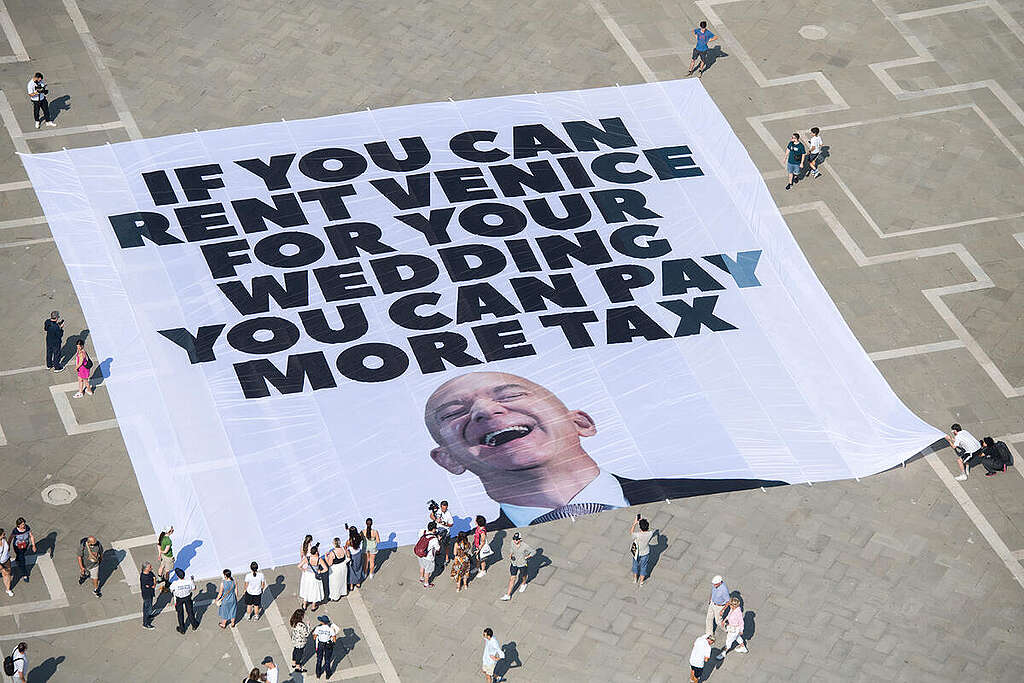
Even worse, many of the private jets swarming Davos are reportedly chartered or owned by ultra-wealthy individuals. Data shows that billionaires, on average, pay much lower effective tax rates than the rest of us, meaning the richest people often contribute less proportionally while benefiting from systems that impact our children’s future. According to Oxfam, the number of billionaires surpassed 3,000 for the first time last year, and the level of billionaire wealth is now higher than at any time in history. Meanwhile, one in four people globally face hunger and children around the world are significantly impacted by extreme weather events and climate change.
Taxes can fund sustainable public transport, classrooms, doctors, and a liveable planet, yet through loopholes and special breaks, the super-rich are allowed to give far less than they can and should. This leaves families around the world to shoulder the cost through punitive taxes and austerity measures that cripple social services, while young people are learning that greed and self-interest comes before community and integrity.
When governments don’t tax the super-rich fairly they are allowing resources to be drained from the younger generations and the systems that are supposed to keep them safe and allow them to thrive.
© Greenpeace / Ex-Press / Miriam Künzli
It doesn’t have to be this way
When world leaders fail to lead by example, we have a responsibility to hold them accountable.
We urge governments to support fair global tax rules to protect the future of children and the planet. Billions in public funds generated from a modest 1-2% tax on the ultra-wealthy could fund universal basic services such as green affordable housing, sustainable heating and cooling, quality healthcare, and public transport, creating a safer, cleaner world for everyone.
Educational resources for parents and educators
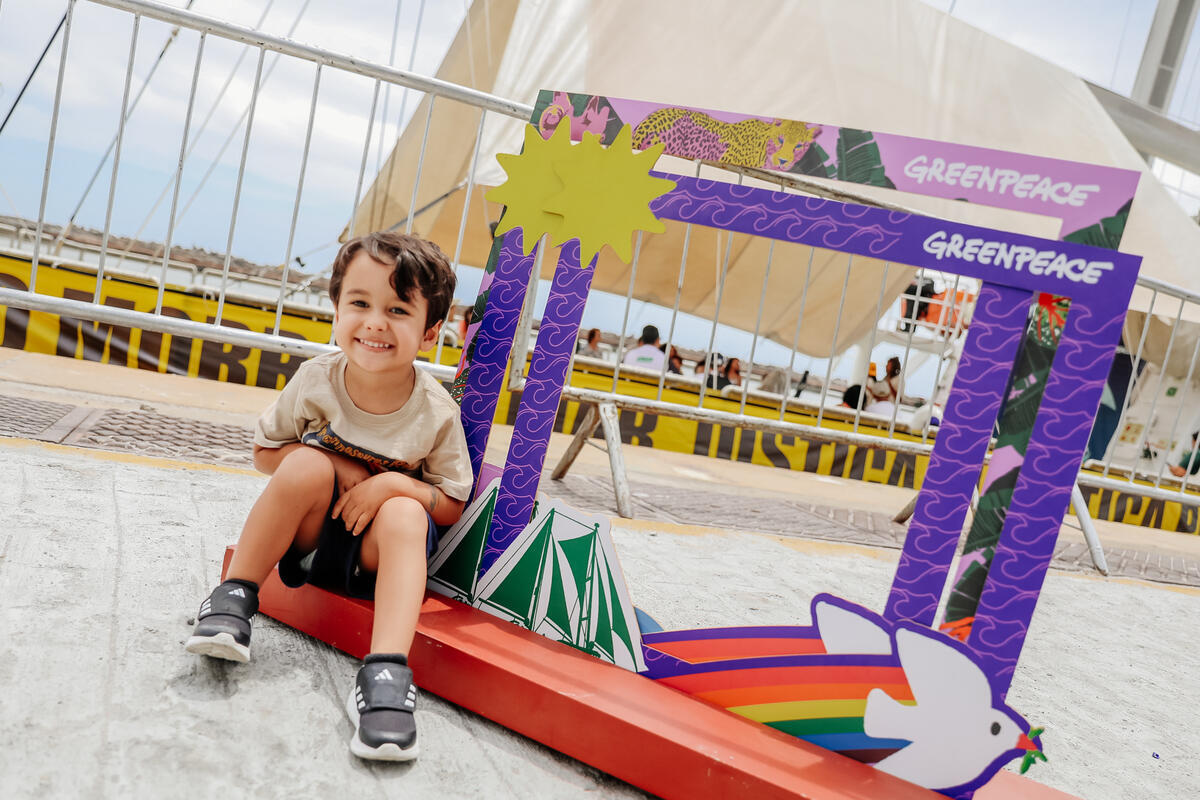
Children are intelligent and perceptive. They see, hear and feel everything that happens around them, and they are trusting us grown-ups to do the right thing: to be courageous, to keep them safe and to stand up for protecting the planet they will inherit.
It’s important that our kids know that many young people are making themselves heard for our planet, and they can too! If they show interest or curiosity, we have free educational resources available to them to learn, explore and take action.
© Vanessa Alcântara / Greenpeace
We must not give up, and there is still time to act! Discuss with them positive and inspiring stories around the world or in your own community. Together we can act for fairness and achieve a future they can look forward to with hope.
Jackie Zamora is the Engagement Lead for the Greenpeace Fair Share campaign.
Tax the super-rich
Together, let’s urge governments to tax the super-rich and fund a green and fair future.
Source link
Jackie Zamora www.greenpeace.org