In rural Mexico, climate change doesn’t just bring more frequent and extended droughts or increasingly unpredictable rain. It also reveals the fractures beneath the surface: the corruption, the inequality and the everyday barriers that shape who benefits and who is left behind. When the government tries to address a big challenge like water scarcity, the underlying problems rise with it, making clear that climate adaptation isn’t only about technology or policy. It’s about the systems that determine who gets access in the first place.
(The interviews for this piece were originally conducted in Spanish and translated for publication.)
“I don’t know how to use a computer.”
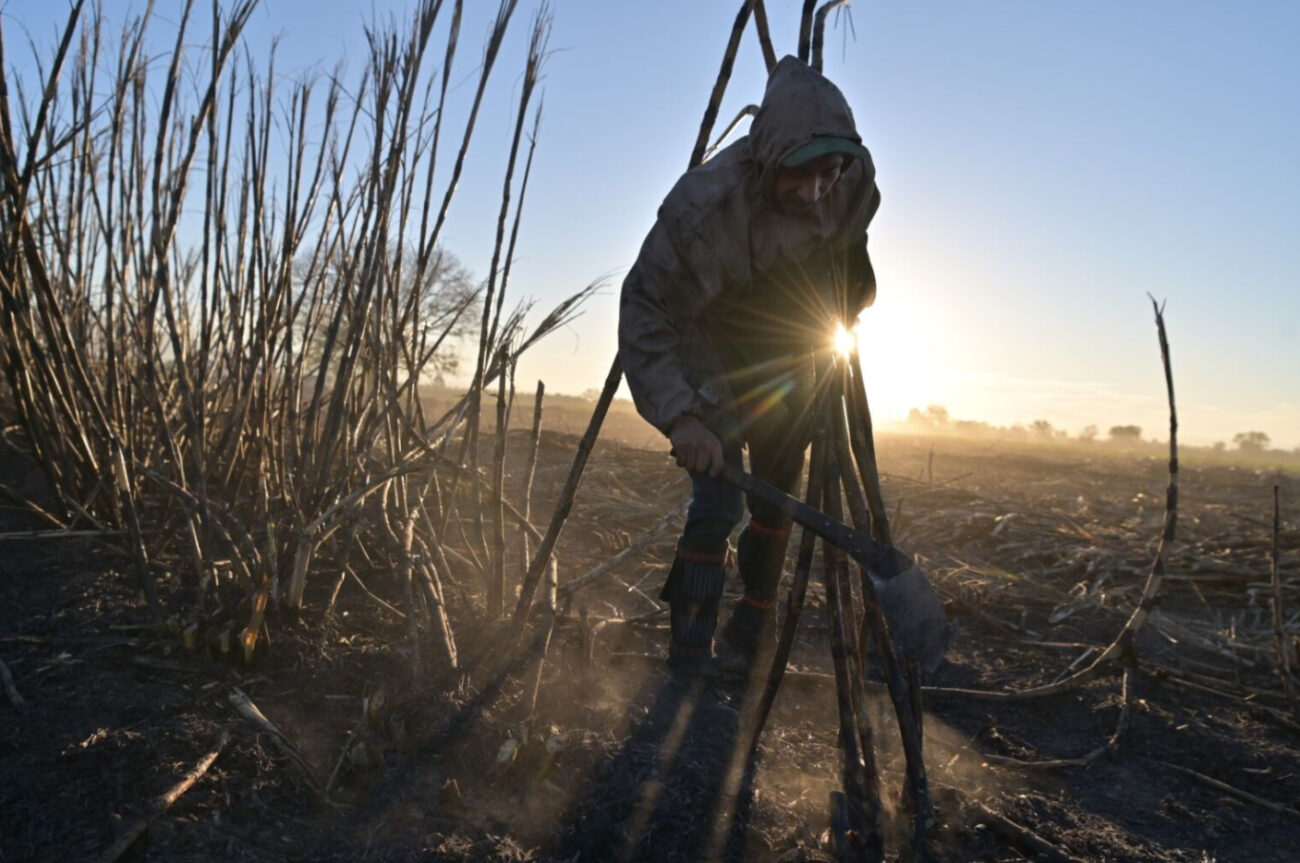
This is what Vicente Santana tells me. He is a 42-year-old sugarcane farmer and owner (third generation, inherited) of six hectares in the small town of Tala, Jalisco in Mexico. We talk in the shade of a tree on the edge of his field. He is wearing dusty jeans and boots, a sweat-stained hat and a long-sleeved hoodie, despite the intense heat. At first, it seemed counterintuitive, but he tells me the layers keep the sweat in to cool his body down, while protecting him from spiders, snakes and the midday sun.
Though optimistic, he seems confused. He doesn’t know how to access the recently announced subsidies for irrigation technology: one of the new administration’s flagship policies meant to help small-scale farmers increase yields.
Technified or smart irrigation systems, like drip or sprinkler systems, allow for more efficient and consistent water use, reducing waste and helping crops grow better in dry conditions.

neighboring fields. Photo: Fernando Rangel
The policy was officially rolled out nine months after being a central campaign promise that helped the incumbent party (Morena) secure a six-year term in last year’s national elections. For millions of farmers like Santana, part of a rural workforce where poverty, informality and limited schooling are the norm, access to irrigation isn’t a luxury.
That policy was the main reason he cast his vote for the current government, and he has been waiting enthusiastically ever since.
“Higher yields and efficient water use to benefit those who need it most,” said President Claudia Sheinbaum during the program’s presentation.
For Santana, even a small increase in productivity could change everything by paving the way toward escaping generational poverty. “With it, I will be able to put my daughter through college,” he tells me.
“It’s very complicated,” says Gustavo López, a seasoned project manager working for an agro-industrial corporation. He walks me through the process of accessing the subsidy. “That’s how it’s always been,” the official and the unofficial way.
The official route requires a web-based application, land title documents, proof of address, the last three tax filings, irrigation district registration, an official ID, and most importantly, detailed engineering blueprints of the proposed irrigation layout and estimated cost. Farmers also need to justify in writing why they deserve the subsidy.
For people like Santana, this isn’t just complicated; it’s nearly impossible. They don’t have the time, the training or the resources to navigate that kind of paperwork. On average, agricultural workers in Mexico have just seven years of schooling (the equivalent of elementary and a portion of middle school in the U.S.). Meanwhile, agro-industrial companies have full-time staff, lawyers, engineers and consultants whose only jobs are to secure these kinds of benefits. They both have 10 business days to file.
Applications are reviewed and, in theory, fairly awarded.
But in practice? López says there’s another route: the unofficial way. It mirrors the official one, except that somewhere during the process, some applicants are quietly invited to a closed-door meeting. “Not everyone is invited,” he says. Who gets in depends on how close and friendly you are to the local administration.
And López knows this best. His main task this year is securing as much of the available subsidy as possible for the company that employs him. “It goes straight to the bottom line,” he smiles.
“The poor first,” has been used as a motto by the new administration, carrying on the slogan of former President Andrés Manuel López Obrador. It signals a commitment to fight inequality and injustice. One of the key pillars is climate adaptation, acknowledging that climate impacts like rain unpredictability disproportionately affect the poorest populations, especially in exposed sectors such as agriculture.
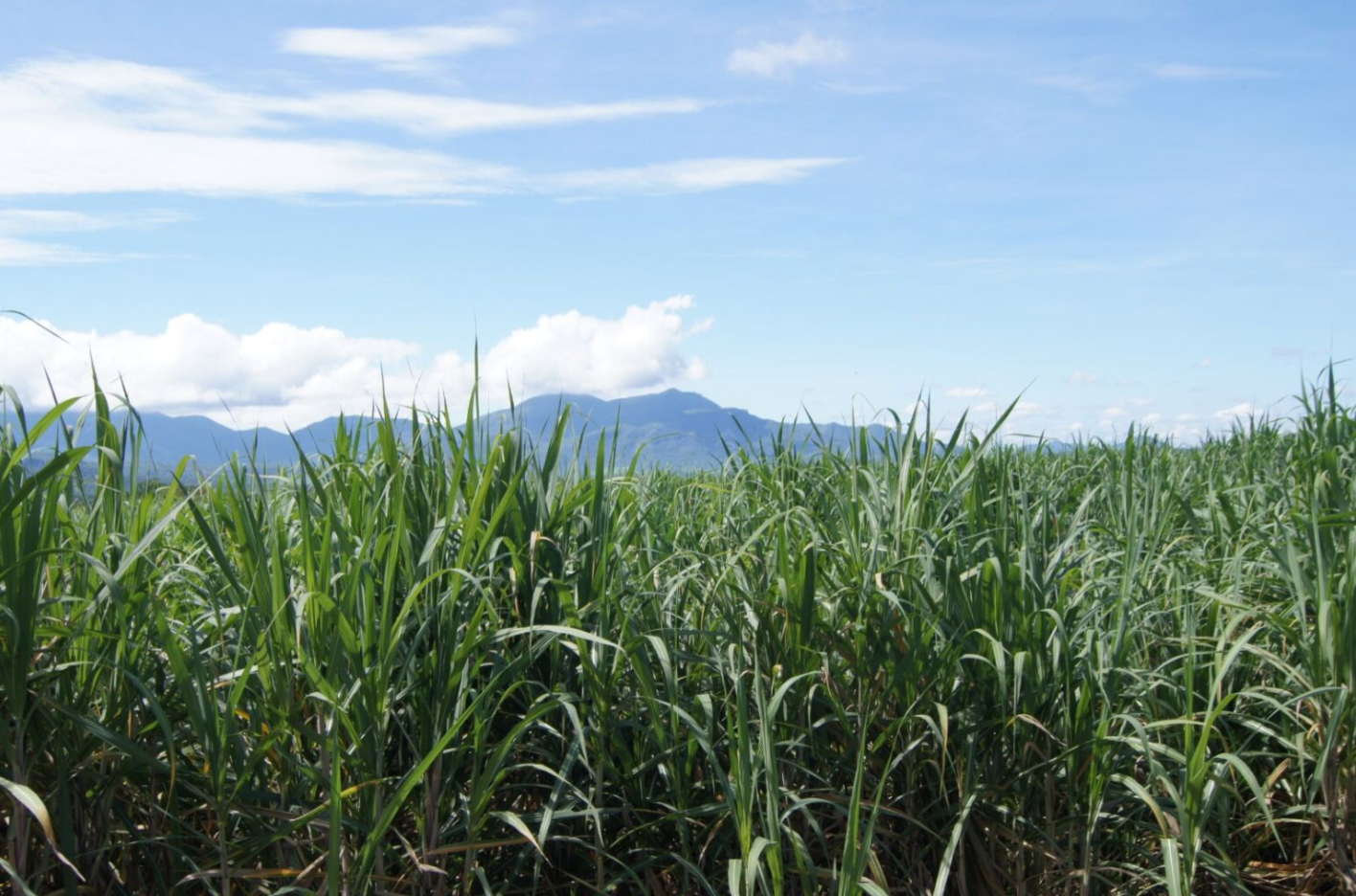
Photo: Fernando Rangel
The subsidy program sounds good on paper. While it has received some pushback (mainly due to its cost of USD$ 2.6 billion), it has the potential to be transformative. If properly executed and targeted, it could become a powerful redistributive tool by helping disadvantaged farmers while creating long-term resilience in the food system.
But after just two 15-minute conversations, one with Santana and one with López, that vision seems distant. The subsidy pool is easily accessible to well-positioned applicants, and far less so by those who need it most. In reality, it seems the policy may be quietly reinforcing the very inequality it set out to fix.
Santana will likely never benefit from the promise he voted for. Two reasons stand in the way. First, the application process is absurdly complex, as if designed to exclude farmers like him. “I would have to leave early and lose a whole day of work,” he says. He doesn’t travel to the city much. It’s almost as if the policymakers never set out to understand the realities of the very people they claim to support.
Second, the system doesn’t ensure fairness. Nothing has been done to prevent the usual suspects (those with deeper pockets and closest to power) from hoarding the benefits. Much of the funding for the subsidy program comes from taxes paid by the agro-industrial sector itself. So, in the end, through the “unofficial way” those who are best positioned to access the subsidy are essentially reclaiming public money they helped fund (only now dressed as a policy to help the poor). What seemed a redistributive initiative, now looks like a closed loop, with the benefits landing back into familiar hands.
Corruption, like climate change, disproportionately hits the poorest too.
As of today, López proudly tells me the company has already secured over 35% of the local subsidy pot. “And next year, we’ll get even more,” he says, proudly.
Santana asks me if I could drive him to a cybercafé and show him how to apply online.
Fernando Rangel is a sustainability student at Columbia University researching water governance, climate adaptation and inequality in rural Mexico.
Views and opinions expressed here are those of the authors, and do not necessarily reflect the official position of the Columbia Climate School, Earth Institute or Columbia University.
Source link
Guest news.climate.columbia.edu