
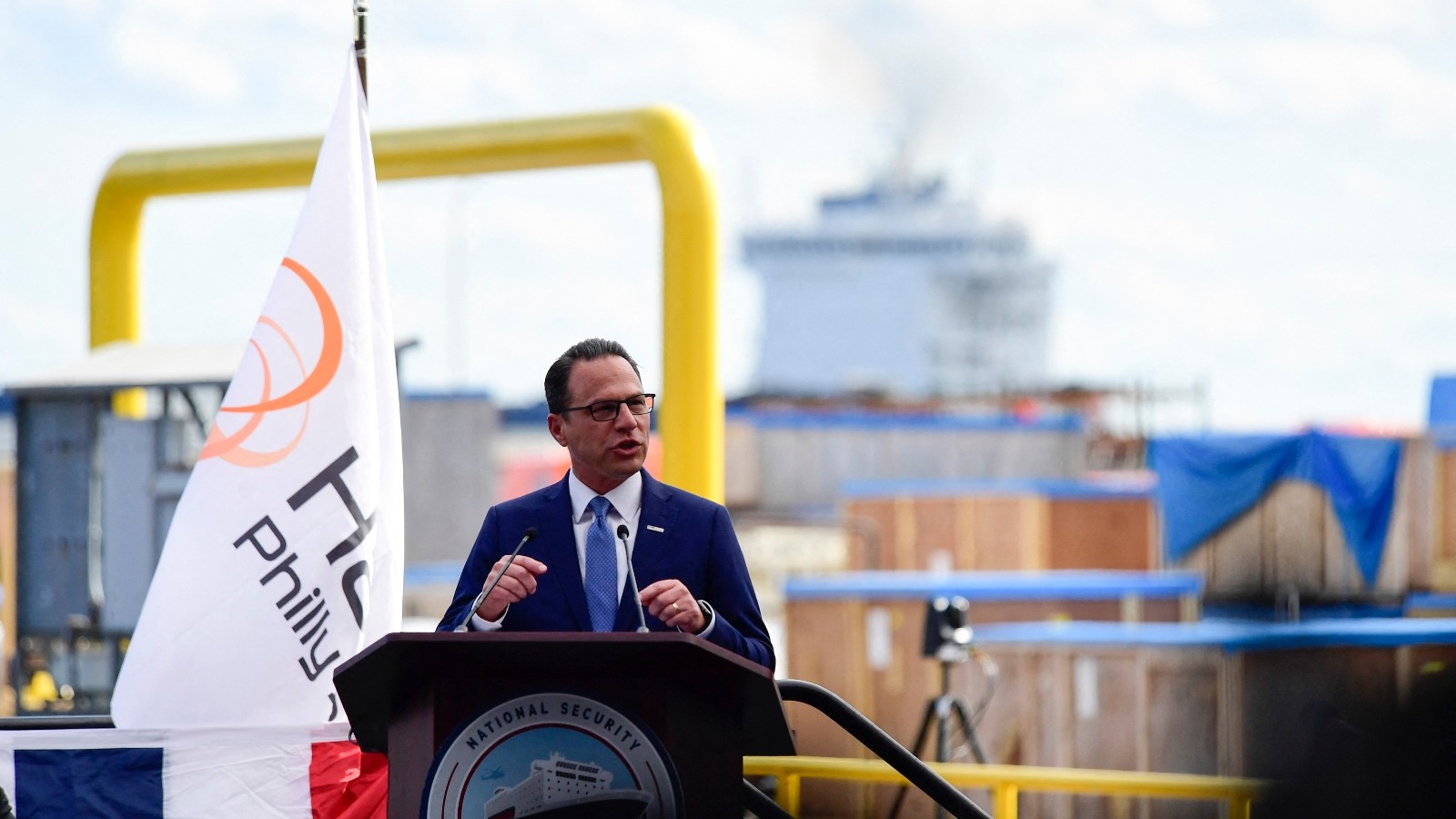
Last month, Pennsylvania Governor Josh Shapiro withdrew from the Regional Greenhouse Gas Initiative, or RGGI (pronounced “Reggie”), a cap-and-trade program that establishes a regional limit on carbon emissions from power plants located in the Northeast.
Here’s how RGGI works: Each year, credits allowing the power plants to emit a certain amount of carbon dioxide, up to the cap, are auctioned off. The proceeds from these auctions go to RGGI member states, which can reinvest them into clean energy and consumer affordability programs. Crucially, the emissions cap gradually lowers over time, theoretically ensuring that total emissions continue on a downward trend.
Secure · Tax deductible · Takes 45 Seconds
Secure · Tax deductible · Takes 45 Seconds
Pennsylvania is a giant within the program, because it has higher power sector emissions than all of the other RGGI states — Maine, New Hampshire, Vermont, Massachusetts, Connecticut, Rhode Island, New York, New Jersey, Delaware, and the District of Columbia — combined, so Shapiro’s exit sent shockwaves through the system. The Democrat withdrew from the program as part of a compromise to convince Republicans in the legislature to pass the state’s budget, which has been delayed since June, forcing schools and public transportation to dip into rainy day funds or take on debt to support services.
As he signed the withdrawal bill, Shapiro said that state Republicans have used RGGI “as an excuse to stall substantive conversations about energy.” (Though Pennsylvania joined the regional pact in 2022, the move was immediately tied up in litigation, which was ongoing at the time of Shapiro’s withdrawal, meaning the state had yet to actually participate in the auctions.)
“Today, that excuse is gone,” Shapiro added. “It’s time to look forward — and I’m going to be aggressive about pushing for policies that create more jobs in the energy sector, bring more clean energy onto the grid, and reduce the cost of energy for Pennsylvanians.”
But some other Democrats and environmental advocates argue that the governor has essentially given away the store. “I would describe it as Faustian, except Faust got so much more out of his bargain with the devil,” Nikil Saval, a Democratic state senator, told Spotlight PA. Jackson Morris, senior state policy director at the Natural Resources Defense Council, said that Shapiro lost a chance to claim credit for a substantial environmental victory during a potential presidential run, which he is rumored to be considering.
Democrats “basically got rolled,” said Morris. “The political calculus of all this is baffling.”
Pennsylvania first moved to join RGGI in 2019 through an executive action by then-governor Tom Wolfe, but the program attracted pushback from Republicans immediately. A 2022 court order prevented the state from formally joining RGGI that year, and then the Commonwealth Court ruled Wolfe’s executive action unconstitutional in 2023. That decision is currently being reconsidered by the state’s Supreme Court, where Democrats retained their majority in elections last month. But Shapiro’s move renders that process moot.
“To add insult to injury here,” said Morris, “we were about to have the answer from the court. And now we never will, because they gave up.”
“It’s not just that we fumbled the ball on the 1-yard line, but then [we] picked it up and ran it into the other end zone,” said Patrick McDonnell, president and CEO of the Pennsylvania environmental group PennFuture. (The governor’s office declined to speak with Grist on the record.)
RGGI has produced about $8.6 billion thus far for participating states. Virginia, fresh off the heels of Democratic Governor-elect Abigail Spanberger’s victory, is currently poised to rejoin the program after being forced out by the current Republican governor, Glenn Youngkin. When Youngkin’s withdrawal was found to be unlawful in court, Spanberger campaigned on returning to the compact.
Some are more cautious in their criticism of Shapiro. “This decision [on RGGI] doesn’t feel final to me,” said Dallas Burtraw, a senior fellow at the research nonprofit Resources for the Future.
In early 2025, Shapiro unveiled his “Lightning Plan,” a jobs-and-energy proposal that included something called the Pennsylvania Climate Emissions Reduction program. Known as PACER, it’s essentially a Pennsylvania-specific version of RGGI — a cap-and-trade program that gradually reduces emissions, creates tradable carbon credits that would (theoretically) be interchangeable with those of RGGI member states, and reinvests the profits toward lowering consumer electricity costs. “Pennsylvania is an elephant compared to the rest of RGGI,” said Burtraw, explaining the reasons that the state would want to create its own program and later link it to RGGI.
“It would have been amazing to see Pennsylvania join RGGI,” he said. “But I think that we might be setting down a pathway that’s turned out for the better.”
Others are less convinced. Joining RGGI was feasible, they say, only because it was implemented through executive action. The odds of anything like PACER making it through the state’s Republican-controlled senate are slim.
“Pennsylvanians need and deserve serious plans to curb greenhouse gas emissions, lower energy bills, and deliver revenue,” said state Senator Saval in a statement to Grist. “So far, senate Republicans have shown little interest in even meager efforts to do any of this. It’s hard to imagine the abrogation of RGGI would help them, as it were, to find religion on this front.”
Editor’s note: The Natural Resources Defense Council is an advertiser with Grist. Advertisers have no role in Grist’s editorial decisions.
Source link
Rebecca Egan McCarthy grist.org
