In-brief analysis
January 29, 2026
Data source: U.S. Energy Information Administration, Hourly Electric Grid Monitor
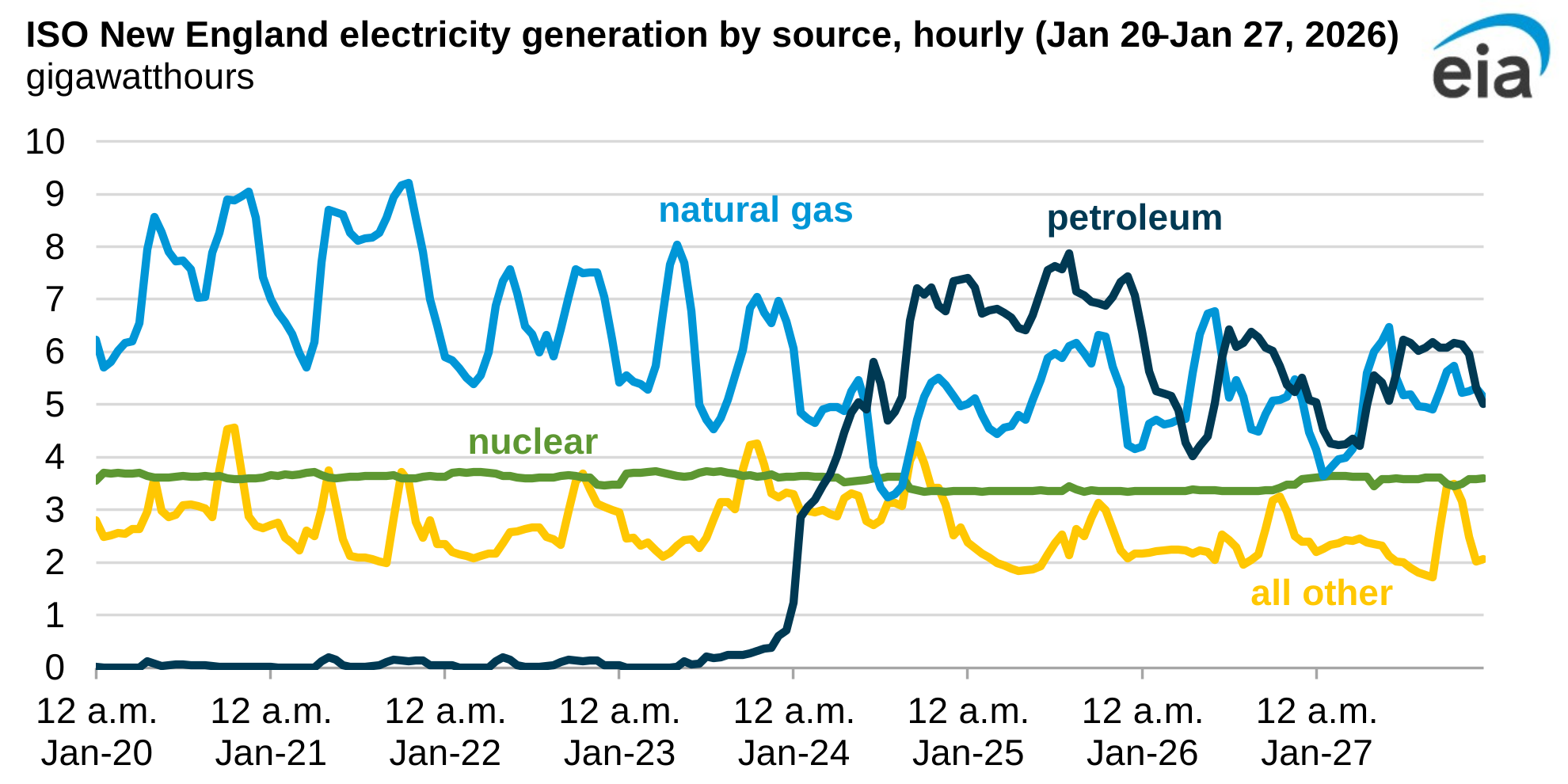
Although petroleum accounts for less than 1% of total U.S. utility-scale electric power generation, regions such as New England rely on oil-fired units during winter periods when cold weather creates high demand. When Winter Storm Fern affected New England this week, petroleum was the predominant energy source starting around midday on January 24 and lasting until early morning on January 26. Since then, petroleum and natural gas have been fluctuating as the primary energy source.
New England’s generating capacity of 35.5 gigawatts (GW) is about 3% of U.S. capacity; however, the region holds a disproportionate 20% of the nation’s total petroleum-fired capacity. Residual oil-fired boilers account for 58%, or 3.2 GW, of New England total petroleum capacity, with the remaining 2.3 GW coming from combustion turbine generators that primarily fire distillate fuel oil (DFO).
Petroleum-fired generation in New England reached almost 8.0 GW between January 25 and 26, exceeding the capacity available from units that predominantly use petroleum, indicating contribution from fuel-switching units. Almost 41% of New England’s 15.1 GW natural gas-fired generating capacity can switch fuels to burn DFO. Operators commonly switch fuel when natural gas is either too costly or unavailable, which can happen if natural gas supplies are contractually obligated to home heating before electricity generation.
Principal contributor: Glenn McGrath
Source link
www.eia.gov