Getting ready for a new baby can feel overwhelming. Excitement and worry often go hand in hand, along with the strong desire to protect someone you haven’t met yet.
Sadly, keeping babies safe from toxic chemicals is more challenging than ever. A 2025 study in Pediatric Research calls chemical pollution “one of today’s most significant threats to the developmental potential of children worldwide.” The study found that persistent organic chemicals can cause pregnancy complications and limit fetal growth. It also showed that exposure to flame retardants and organophosphate pesticides is strongly linked to negative effects on children’s brain development.
A 2025 UC Davis study found that exposure to harmful chemicals is “widespread” among U.S. preschoolers. Using data from the National Institute of Health’s ECHO Cohort, which follows over 60,000 children, researchers found phthalates, parabens, bisphenols, pesticides, flame retardants, and other chemicals in children’s urine. Younger kids had higher levels than older ones, and children from racial and ethnic minority groups faced greater exposure to several types of chemicals.
The lessons of the first several generations of humans living with plastic suggest that new parents take a different approach to raising baby, one that minimizes chemical exposure, especially to plastics that became a staple in baby products beginning in the 1960s.
Why Infants Are Especially Vulnerable
Babies have special risks from chemical exposure that adults do not. Chemicals can disrupt their development in the first few years and raise the risk of health problems later on.
- Immature blood-brain barrier: The first year of life offers toxins easier access to developing neural systems. According to Harvard’s Center on the Developing Child, the protective barrier that restricts chemicals from entering brain tissue “is absent in the fetus and only reaches maturity in the first year after birth.”
- Higher relative exposure: Infants breathe faster than adults and take in more air, water, and food relative to their body weight. The EPA notes that children “drink more water, eat more food, and breathe more air per pound of body weight than adults,” which increases their exposure to contaminants.
- Limited detoxification capacity: Research published in 2025 confirms that “in the first two months of life, the metabolism and renal clearance of toxicants is lower compared to adulthood, leading to higher bioaccumulation of toxicants.”
- Oral exploration: Babies put everything in their mouths, such as toys, fingers, and household objects. This increases how much dust and contaminants like flame retardants and PFAS they swallow.
PFAS (“Forever Chemicals”) and Birth Outcomes
Biomonitoring surveys confirm that between 97% and 100% of Americans have detectable PFAS in their blood. But the impact on moms and their babies is substantially greater than on older children and adults. A December 2025 study published in the Proceedings of the National Academy of Sciences found that pregnant women exposed to PFAS-contaminated drinking water faced dramatically higher risks of adverse birth outcomes:
- 191% higher infant mortality rate in the first year of life
- 168% higher rate of extremely preterm births, before 28 weeks
- 180% higher rate of extremely low birth weight, of under 2.2 pounds
The researchers estimated that PFAS contamination costs the U.S. about $7.8 billion each year because of its effects on infant health. This is much higher than the $3.8 billion annual cost of removing these chemicals from public water supplies.
Heavy Metals in Baby Food
Progress has been made in reducing heavy metal levels in infant foods. In January 2025, the FDA issued final guidance about levels for lead in processed baby foods, the first enforceable standards for heavy metals in most baby food categories:
- 10 parts per billion (ppb) for fruits, vegetables, mixtures, yogurts, and single-ingredient meats
- 20 ppb for root vegetables and dry infant cereals
If baby food has more than these levels, the FDA considers it “adulterated.” For instance, arsenic in infant rice cereal remains a concern, but FDA tests show that manufacturers have significantly lowered these levels since 2011 by choosing their sources more carefully.
Microplastics from Baby Bottles
A 2020 study in Nature Food found that polypropylene baby bottles can release up to 16.2 million microplastic particles per liter when heated for formula preparation. Bottle-fed infants may be exposed to an average of 1.5 million particles per day. North American and European infants are exposed to over 2 million particles daily due to lower breastfeeding rates.
A 2024 review published in the journal Life suggests that microplastic risks may be greater for infants “because they do not have sufficiently developed metabolizing enzymes, have less ability to remove microplastics, and have highly sensitive target organs.”
Scientists are still studying the long-term health effects of microplastics, but new research links them to several serious health problems. A 2024 study in the New England Journal of Medicine found that heart disease patients with microplastics in their carotid arteries were twice as likely to have a heart attack, stroke, or die within three years. Lab studies also suggest microplastics can cross the blood-brain barrier and may play a role in conditions like Parkinson’s and Alzheimer’s. Other research connects microplastic exposure to breathing problems, metabolic disorders, changes in gut bacteria, reproductive issues, and liver disease.
For infants and children, early exposure may increase lifetime risk of obesity, diabetes, and cardiovascular disease. Taking protective measures during the first year is especially important.
#1 Know the Worst Offenders
Understanding common chemical classes helps you make informed choices:
- Flame retardants (PBDEs and OPFRs). Found in polyurethane foam, car seats, crib mattresses, nursing pillows, and changing pads, these chemicals are associated with dverse neurodevelopmental outcomes. While older PBDEs have been phased out, replacement organophosphate flame retardants are now “universally detected in human samples”.
- Phthalates. Used to make PVC flexible and found in many fragrance blends, toys, and personal care products. Research links prenatal phthalate exposure to cognitive and behavioral issues, including hyperactivity in children.
- Bisphenols (BPA and alternatives). While BPA awareness has grown, replacement chemicals like BPS, BPF, and BHPF have nearly identical structures and potential effects. Research shows that young children have higher BPA exposure than older age groups. Avoid plastics numbered 3, 6, or 7.
- PFAS (“forever chemicals”). A family of industrial chemicals, PFAs are commonly used in nonstick cookware, water-resistant clothing, and food packaging; they are also found in contaminated drinking water. PNAS’ 2025 study demonstrated serious effects on birth outcomes from drinking water exposure.
- Volatile Organic Compounds (VOCs). Released from paints, furniture, carpets, and cleaning products, studies confirm that baby crib mattresses can be a significant source of VOC exposure.
#2 Create a Healthier Nursery Environment
Where your baby sleeps is especially important, as infants spend 12 to 17 hours a day sleeping.
- Choose certified organic mattresses. Be sure to choose a mattress made with organic cotton, wool, and latex certified by GOTS (Global Organic Textile Standard) and GOLS (Global Organic Latex Standard). GREENGUARD Gold certification indicates low chemical emissions, and MADE SAFE certification verifies that a product does not contain any of more than 6,500 restricted substances.
- Select solid wood cribs. Composite wood (MDF, particleboard) can off-gas formaldehyde. If your budget requires you to buy composite furniture, air it outdoors for at least a week before use.
- Use zero-VOC or low-VOC paints. Paint the nursery weeks or months before baby arrives. Note that while base paints may be zero-VOC, tints often contain VOCs.
- Invest in HEPA air purification. An air purifier with HEPA and activated carbon filters can remove particles and absorb VOCs. Keep humidity between 35% and 50% to prevent mold growth.
- Choose hard flooring over carpet. Carpets harbor dust mites, flame retardants, and other contaminants. If you have carpet, use a HEPA-filter vacuum weekly.
#3 Reduce Microplastic Exposure
Since 1950, more than 11 billion tons of plastic have been produced. Plastic shards and particles are found almost everywhere on the planet. But you can take steps to keep them away from your baby during the critical early years of their development.
- Let plastic bottles cool down after sterilizing them. High heat causes more microplastics to be released. After boiling, rinse bottles two or three times with room-temperature sterile water before adding formula.
- Consider glass or stainless steel bottles. These materials don’t shed microplastics. Silicone sleeves can protect glass bottles from breaking.
- Prepare formula in non-plastic containers. Mix formula in a glass or stainless steel container, let cool, then transfer to bottles.
- Breastfeed when possible. While PFAS and some other chemicals can be transferred through breast milk, breastfeeding eliminates exposure to microplastics from bottles and remains the recommended approach to healthy feeding.
#4 Filter Drinking Water
Water makes up about 60% of the human body, so it is important to give your baby a healthy start with clean, chemical-free H2O.
- Test your water. Check whether your water system has detected PFAS in EWG’s Tap Water Database, or contact your utility for annual water quality reports.
- Install a water filtration system. Activated carbon filters can remove long-chain PFAS known as PFOA and PFOS. Reverse osmosis systems provide even more comprehensive filtration. Look for NSF-certified filters to reduce your baby’s exposure to PFAS.
- Use filtered water to make formula. The 2025 PNAS study shows that PFAS in drinking water can have serious effects during pregnancy. Filtering water is especially important for pregnant women and when preparing infant formula.
#5 Choose Nontoxic Toys
What will your child spend the most time with during their early years? Toys, books, and you. Ensure that the things you put within their reach are toxin-free or, at a minimum, made with safe materials.
- Look for natural materials. Wood, natural rubber, organic cotton, and silicone are safer choices than plastic for mouthed items.
- Skip vinyl bath toys and books. Flexible plastics often contain phthalates. Natural latex rubber bath toys are a safer alternative.
- Check for product recalls. The Consumer Product Safety Commission has a searchable database where you can look up recalled items.
#6 Limit Baby Care Products
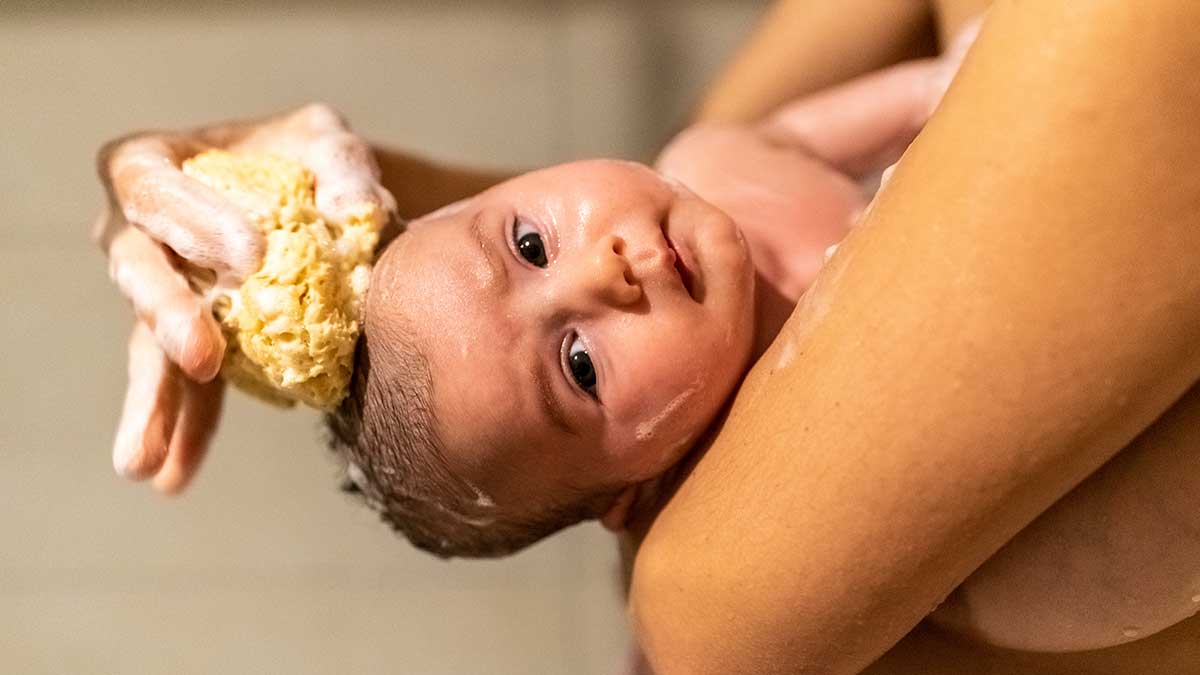
Research published in the journal Pediatrics found that using baby lotions and powders is linked to higher levels of phthalates in babies’ urine. You can lower your baby’s exposure to chemicals by following these simple steps.
- Go fragrance-free. “Fragrance” on labels can hide dozens of undisclosed chemicals, including phthalates. Choose products explicitly labeled “fragrance-free” and “phthalate-free.”
- Use only when necessary. Many babies don’t need daily lotions or powders, except perhaps when they have a rash or dry skin. Simple, unscented products work well when moisturizer is needed.
- Consider DIY alternatives. Coconut oil, shea butter, and other single-ingredient products offer moisturizing benefits without complex chemical formulations. Check out five DIY baby skin care recipes to turn your baby care toward natural ingredients.
#7 Diversify Baby’s Diet
The FDA suggests giving infants and toddlers a varied diet. This helps lower the chance of too much exposure to any one contaminant.
- Don’t rely solely on rice cereal. Rice absorbs arsenic from soil more readily than other grains. Rotate with oat, barley, and multigrain cereals.
- Choose a variety of fruits and vegetables. Different foods accumulate different contaminants. A diverse diet spreads and minimizes exposure.
- Limit fruit juice. Juice can have heavy metals and lots of sugar, but it does not offer much nutrition for babies.
- Wash fruits and vegetables well. The Environmental Working Group says to wash produce for at least 20 seconds to help remove pesticides. Washing does not remove chemicals that are inside the plant, but it helps lower surface residues.
#8 Control Household Dust
Flame retardants, PFAS, and other chemicals are not tightly bound to products. They can move into household dust, which babies often swallow by putting their hands or objects in their mouths.
- Damp-mop floors regularly. Wet mopping picks up dust instead of spreading it into the air.
- Vacuum with a HEPA filter. These filters catch very small particles and keep them from going back into the air.
- Wash hands often. Washing before meals and after playing on the floor helps lower how much dust your baby might swallow.
- Take off shoes at the door. Shoes can bring in outdoor contaminants like lead dust and pesticides.
During Pregnancy
Chemical exposure during pregnancy can affect fetal development because the placenta does not block all harmful substances.
- Avoid renovating or painting during pregnancy, and if necessary, ensure excellent ventilation and use low-VOC products
- Investigate water quality and install filtration before conception, if possible
- A 2024 NIEHS study found that folic acid supplementation may help mitigate some effects of prenatal chemical exposure on children’s liver health
Car Seat Safety
- Look for car seats labeled as flame-retardant-free.
- Air out new car seats outdoors for several days before installing
- Use seat covers made from organic cotton to create a barrier between baby and the treated fabric
Clothing and Textiles
- Wash all new clothing before baby wears it to remove manufacturing residues
- Choose GOTS-certified organic cotton for items that contact skin frequently (onesies, sleepwear, bibs)
- Avoid water-resistant or stain-resistant fabrics, which often contain PFAS treatments
- Use fragrance-free, dye-free laundry detergent
Cleaning Products
- Skip aerosol sprays and harsh chemical cleaners, especially in nursery areas
- Simple soap and water, white vinegar, and baking soda handle most cleaning needs
- Ventilate well during and after cleaning
- Check EWG’s Guide to Healthy Cleaning for product ratings
Small Changes for a Healthier Baby
When protecting your baby from environmental chemicals, small changes can make a big difference. You do not have to change everything at once. Focus on the places where your baby spends the most time and on exposures you can easily control.
Our understanding of the impact of industrial society on human helath is still developing, and regulations are slowly improving. The FDA’s decision on lead levels is a step forward, as is the EPA’s 2024 rule setting PFAS limits in drinking water. But these government actions don’t take place in a vacuum. Parents can push for stronger standards and make informed choices at home.
Editor’s note: This article, originally published on December 2, 2019, was substantially updated in December 2025.
Source link
Earth911 earth911.com