
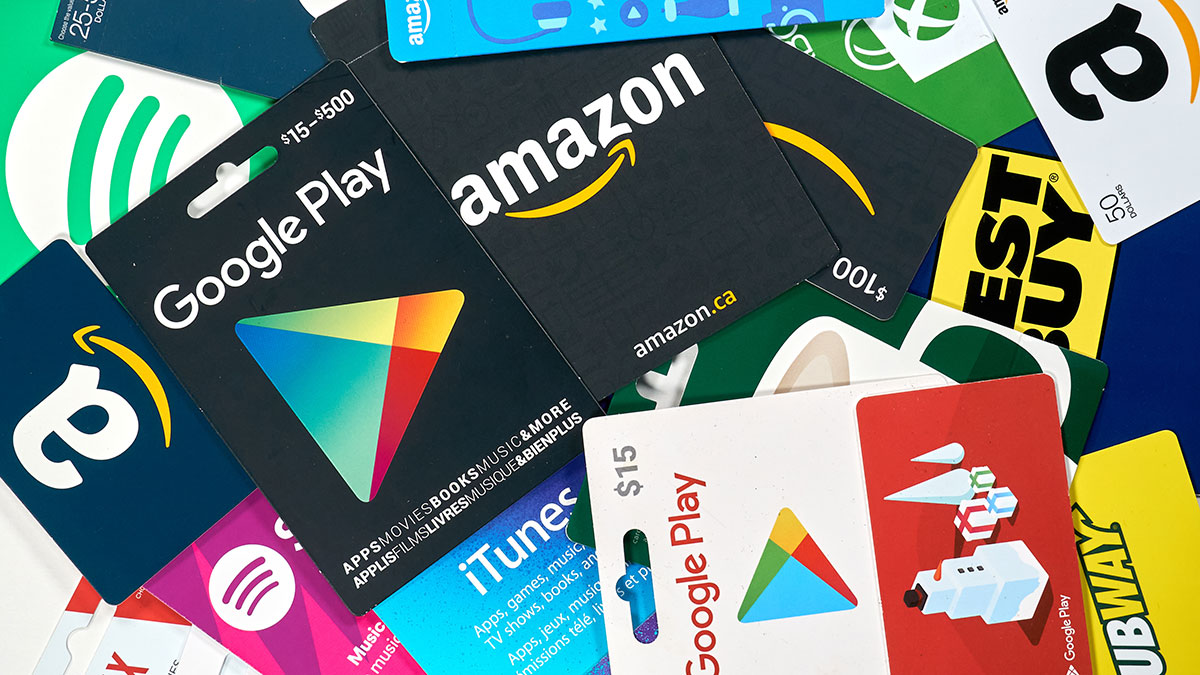
During the holiday season, you’ll likely be giving and receiving loads of gift cards for your favorite shops, restaurants, and online retailers, but can these cards be recycled once the money is gone?
Tossing a single gift card in the trash may not seem like a big deal, but these small bits of polyvinyl chloride (commonly known as PVC, the plastic resin used to make gift cards and other household items like CD cases) can really add up. Nearly 30 billion plastic cards are produced annually, according to the International Card Manufacturers Association. In the United States alone, approximately 10 billion gift cards are sold annually, generating an estimated 50,700 tons of plastic waste. Manufacturing PVC gift cards also generates more than 40,000 tons of CO2 annually.
Retailers, consumer brands, and online services offer gift cards as an alternative to gifts that might be returned. Gift cards remain the most-requested holiday gift for the 18th consecutive year, and 64% of U.S. consumers purchase them during the holiday season.
The environmental impact is significant. More than 70% of gift cards are used and discarded within just six months. Because PVC takes up to 500 years to decompose, gift cards that end up in a landfill will remain a reminder of our wasteful ways for generations to come. Once discarded, plastic gift cards break down into microplastics, which are increasingly found in our food, our drinking water, and our bodies. When incinerated, PVC releases dioxins, potent carcinogens that can bioaccumulate in the food chain.
Amazingly, approximately $23 billion in gift cards go unused each year in the United States, and 47% of American adults have at least one unredeemed gift card at any given time.
While PVC is a common type of plastic, you’re unlikely to find a curbside recycling program that will accept this form of plastic. Research from the U.K. bank NatWest found that confusion about where and how to recycle gift card leads to contamination of millions of tons of recycled plastic because consumers place PVC cards in curbside bins, where they will be mixed with other types of plastic.
However, some retailers are offering sustainable alternatives that greatly simplify the disposal process.
The Zero-Waste Option: Digital Gift Cards
The most effective way to end gift card waste is to eliminate plastic waste entirely.
E-gift cards eliminate the environmental footprint associated with physical card production, packaging, and shipping. Most major retailers, including Amazon, Starbucks, Target, and Walmart, now offer digital alternatives that can be delivered instantly via email or text message. These cards are redeemed with a code displayed on your phone, requiring no physical materials whatsoever. Virtual gift cards now represent nearly half of the total gift card market—48.7% in 2024—as consumers opt for instant, hassle-free, and environmentally friendly options.
Digital gift cards also solve the problem of forgotten or lost cards. Studies show that digital cards are redeemed faster, averaging 16.8 days compared to 35.3 days for physical cards, reducing the likelihood that value goes unused.
Sustainable Physical Gift Card Options
For those who prefer giving a physical card, several sustainable alternatives have appeared in recent years. Major retailers are transitioning away from PVC to paper-based cards that can be recycled with regular paper and cardboard.
Best Buy converted to 100% recyclable paper gift cards in 2021, eliminating an estimated 18 tons of plastic annually. The company’s cards are made from FSC-certified paper that use water-soluble glue and ink, so customers can recycle them with the paper they normally put in their recycle bin at home.
Apple, Amazon, and Starbucks have introduced paper and cardboard cards made using renewable sources and are easier to recycle. Starbucks went a step further by launching its plantable seed gift cards for Earth Day 2022; the card can be placed in the ground to grow wildflowers after the card balance is spent. Visa now offers paper gift cards through select retailers.
Recycling PVC Cards
PVC gift and credit cards may be accepted at your local transfer station, but they cannot be placed in most curbside recycling program bins.
TerraCycle offers paid mail-in programs for PVC cards. The Plastic Cards Zero Waste Pouch, which is large enough to hold about 50 cards, is $48. The Plastic Cards Zero Waste Box, which can take thousands of cards, starts at $167. We recommend getting together with your neighbors, workplace, or a local business to collect enough cards to make this economically feasible.
In the UK, NatWest introduced Reverse Vending Machines that securely shred and recycle plastic payment, gift, and loyalty cards. In pilot programs, NatWest recycled over 35,000 cards to make 3,000 hats and pairs of socks, some of which were donated for use by the homeless. While currently limited to the UK, NatWest’s approach demonstrates what secure gift card collection could look like in the U.S.
Contact your bank to inquire about recycling options for expired payment cards, which use the same PVC material as gift cards.
Card Recycling Alternatives
If you are without a local recycling option, there are plenty of ways to keep gift cards out of the trash.
Some retailers offer the option to reload your gift cards, so you can purchase more credit and re-gift the same card to a different friend or family member. Walmart and Starbucks are examples of national chains that allow you to recharge gift cards indefinitely, keeping the same card in circulation for years.
Most retailers offer electronic gift cards that can be redeemed through online orders or by showing a code on your phone at the store. This is the most sustainable option to consider before purchasing new cards.
While they are not gift cards, hotel PVC room keys should be returned at check-out. The hotel can reprogram the card to use for the next guest, extending its useful life significantly.
If none of these options is available to you, consider these creative ways to repurpose gift cards, credit cards, and reward cards.
Editor’s Note: This article was originally published on December 16, 2013, and was most recently updated in December 2025.
Source link
Earth911 earth911.com
