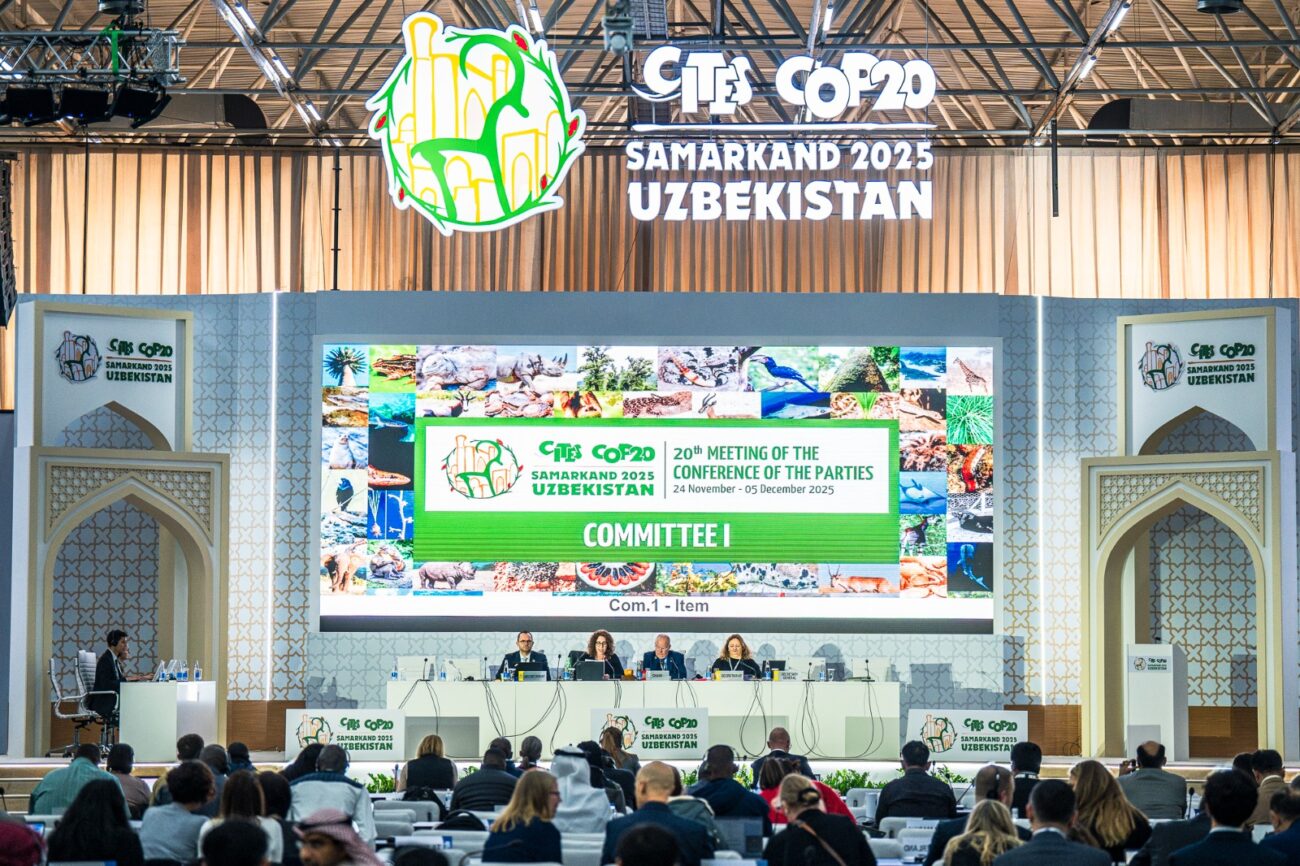
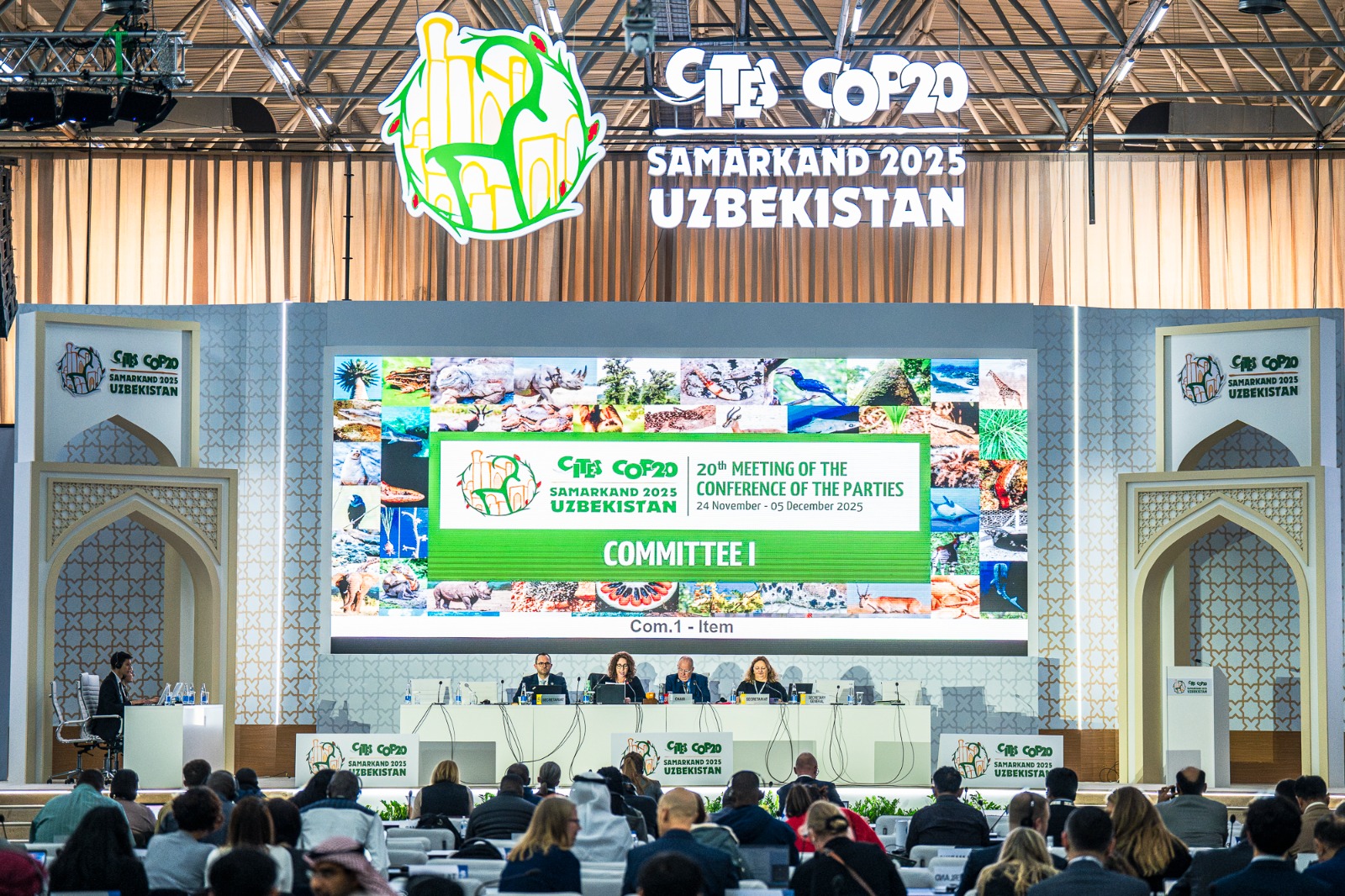
For two weeks in late November and early December, the ancient Silk Road city of Samarkand, Uzbekistan, became the epicenter of global conservation diplomacy. Delegates from around the world gathered for the 20th Conference of the Parties to the Convention on International Trade in Endangered Species of Wild Fauna and Flora—better known as CITES COP20. Their task was monumental: to negotiate international trade rules that determine the future of species ranging from okapi and saiga antelope to sharks, pangolins, eels and many more. Over 3,000 participants from185 countries, including governments, non-governmental organizations, academic institutions and other stakeholders, took part in the negotiations.
Among them were two graduates of Columbia University’s School of International and Public Affairs: Alfred DeGemmis (MPA-EPSM ’16), director of international policy at the Wildlife Conservation Society (WCS) in New York, and Arnaud Goessens (MPA-ESP ’16), director of policy and external affairs at the WCS E.U. Office in Brussels. Both alumni played active roles in complex negotiations, ensuring that decisions taken were grounded in science and data, drawing on the policy training and interdisciplinary perspectives they developed at Columbia University.
CITES remains one of the strongest international agreements dedicated to protecting wildlife from overexploitation. Decisions adopted at COPs—held every three years—translate into real-world measures such as trade restrictions, improved monitoring, compliance measures and, when needed, sanctions for countries that fail to meet their obligations. With global pressures on biodiversity mounting, including due to climate change and habitat loss, COP20 was seen as a crucial moment to reinforce safeguards for species at risk from international commercial trade.
A landmark win for sharks and rays
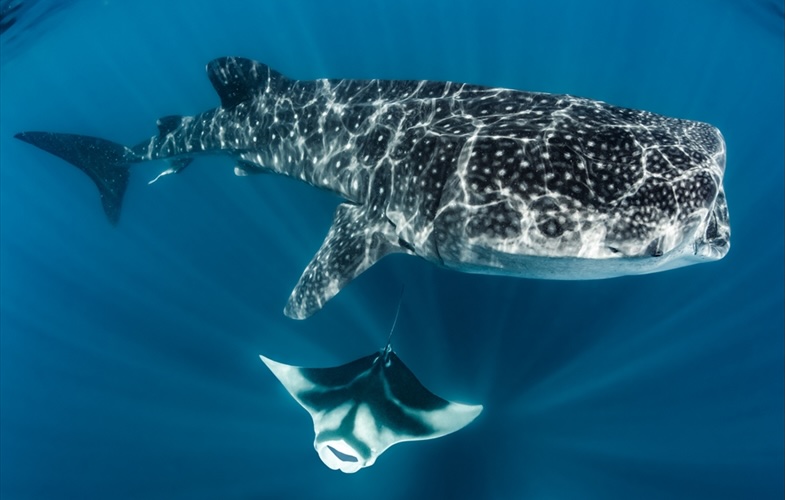
One of the conference’s most significant outcomes involved a sweeping set of new protections for sharks and rays. With populations crashing due to illegal and unsustainable trade in fins, meat and oil, more than 50 countries co-sponsored proposals targeting some of the world’s most threatened species.
All of these proposals were adopted—an unprecedented achievement.
Governments agreed to new Appendix I and II listings and zero-export quotas, including:
- Appendix I (full international commercial trade ban) for oceanic whitetip sharks, manta and devil rays, and whale sharks.
- Zero-export quotas for wedgefish and giant guitarfish, suspending exports of wild-caught specimens.
- Appendix II (regulated trade requiring permits and findings that the trade is both sustainable and legal) for gulper sharks, smoothhound sharks and tope sharks.
Collectively, these measures close long-standing loopholes that have allowed high-risk products—such as fins and gill plates—to circulate widely through global markets. The decision is the most ambitious package of shark and ray protections ever adopted under CITES, covering over 70 species.
Stronger protections for the okapi
Another conservation success emerged with the adoption of Appendix I listing for the endangered okapi (Okapi johnstoni), the giraffe’s only living relative. Found only in the forests of northeastern Democratic Republic of the Congo, the okapi faces escalating threats from poaching and habitat degradation, underscoring the urgency of stronger international protections.
The highest level of protection under CITES will prohibit all international commercial trade in the species, strengthening enforcement efforts across borders and supporting national conservation actions.

A setback for saiga conservation
Not all outcomes were positive.
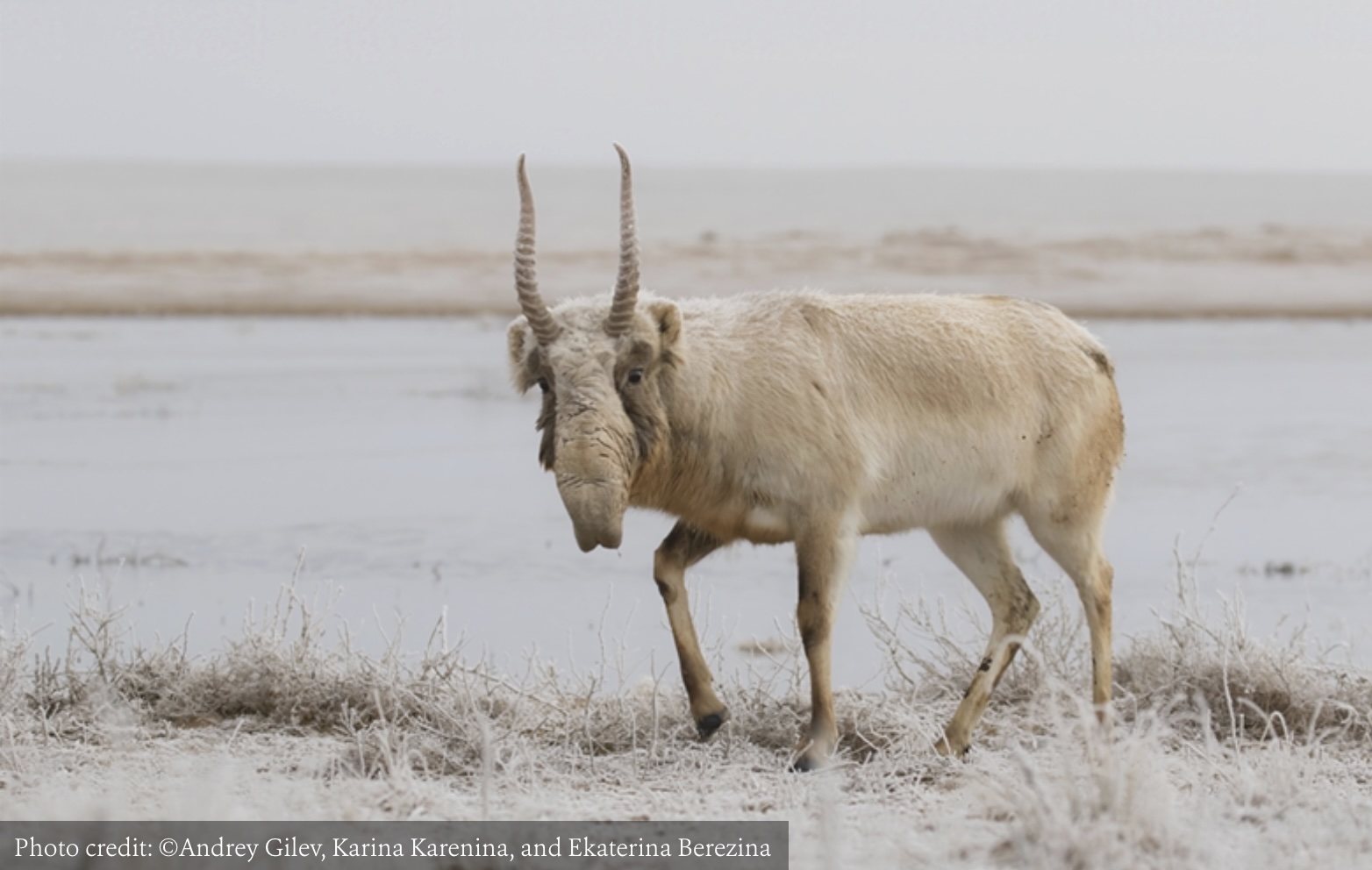
One of the most contentious decisions concerned the saiga antelope, a species that has suffered dramatic population swings from poaching, disease, infrastructure expansion, and climatic extremes.
Delegates voted to reopen international commercial trade in saiga horn from Kazakhstan under new quota controls, while failing to take a precautionary approach. Despite assurances of strict oversight, the move could stimulate consumer demand, strain enforcement systems, and increase poaching, particularly threatening the fragile Mongolian saiga population.
Missed opportunity for eel conservation
Governments also rejected one of the most closely watched proposals that would have listed all currently unlisted Anguillid eels under Appendix II due to their “similarity of appearance.”
American and Japanese eels—both listed as Endangered on the International Union for the Conservation of Nature Red List—are heavily targeted by legal and illegal trade. Traffickers regularly mislabel shipments of juvenile eels, which threatens the fishery that local communities rely on. Because different species are visually indistinguishable in their early life stages, comprehensive listing would have closed dangerous loopholes. An Appendix II listing does not ban international trade, but ensures it is controlled and monitored through a permit system.
The failure of the proposal therefore leaves enforcement more difficult, jeopardizes long-term conservation and risks further pressure on fragile populations, including the critically endangered European eel.
Pandemic prevention overlooked
As the world continues to grapple with the lessons of the COVID-19 pandemic, the issue of emerging disease risks has become impossible to ignore. The wildlife trade—long recognized as a potential pathway for zoonotic spillover—again occupied a central place in conversations about pandemic prevention at COP20. While CITES represents only one piece of the broader One Health framework, it remains a critical mechanism for reducing the risk of diseases jumping from wildlife to people, especially in trade involving birds and mammals.
In this context, Senegal emerged as a leader, introducing a rigorous, science-driven One Health Resolution designed to help countries better identify and mitigate zoonotic risks associated with international wildlife trade.
Despite this momentum and the pandemic’s stark reminder of the costs of inaction, governments ultimately rejected the resolution, missing an important opportunity to strengthen global frameworks against future outbreaks.
Looking ahead
With COP20 now concluded, governments, non-governmental organizations, academic institutions and other stakeholders are already turning their attention to the next CITES COP, scheduled for 2028 in Panama. But the real work begins now. The resolutions and decisions adopted in Samarkand will only have impact if they are fully implemented and enforced on the ground and in the water.
The work ahead remains significant, but the contributions of alumni like DeGemmis and Goessens shows how Columbia-trained policy professionals are shaping global conservation agendas at the highest levels.
Source link
Columbia Climate School news.climate.columbia.edu