

This story is excerpted from Shelter from the Storm: How Climate Change Is Creating a New Era of Migration, available January 6, 2026, from The New Press.
In Guatemala, outside the town of Jocotán, in a house hidden from the main road by a thin wall of vegetation, I met Elena, a slight 38-year-old with bright eyes and dark hair that was just starting to show the first hints of gray. Elena had seven kids whom she spent most of her time caring for, while her husband found unsteady work as a for-hire farmer. Her husband’s job paid enough to get by, just barely, but the family struggled to travel to see a doctor for their 5-year-old daughter, who had an undiagnosed heart issue. The eldest daughter, who was 19, had been going to school but dropped out during the COVID-19 pandemic because they could no longer afford the $40 per month for books, her uniform, and other costs. Meanwhile everything was getting more expensive, Elena complained, and it often did not rain enough to yield a fruitful harvest.
We met in a neighbor’s dirt-floor compound, where chickens and ducks pecked at a trash heap and muddy patches of ground. Behind me, tortillas smoked on the stove in the detached cinder-block kitchen. Nearby, cars and trucks rumbled down the main road heading to the Honduras border a half hour away.
When I asked Elena about the prospect of going to the United States, a shy smile crept across her face. Her husband talks about it, she said, but she knows it’s just a dream. It would cost thousands of dollars to hire a coyote and make the trip, and the only way they could raise that kind of cash would be to put up their land as collateral. Some of her neighbors have made that bet, and sometimes it has worked out, but not always. Migration would be a huge risk. It could take weeks or months for Elena’s husband to travel and establish himself in the United States, assuming he could even get in, during which time Elena would have no source of income. If things didn’t work out and her husband was deported or couldn’t pay off the coyote’s fee plus interest — or worse, if he was injured or killed en route — their land could be swiped from under them, leaving them even worse off than they already were. She would go in a heartbeat, she said, if only it were realistic. And it wasn’t.
Amanda Joy Photographics
We might say that Elena is trapped. Emigrating to the United States would almost surely be transformational for her and her family, even if just one member could establish a foothold there. She would no longer need to worry about going hungry. It could put her family on a path of upward mobility, with better access to health care and education. Elena’s children would probably have a markedly more comfortable life than her own, which is the desire of all parents worldwide. This was exactly the story of hundreds of millions of Americans whose ancestors scraped together their savings to come to the United States, where they suffered abuse and worked hard, benefited from and contributed to its economic growth, and in a few generations had descendants with a profoundly different quality of life. Instead, she and her family are stuck in a rural farming community where the land is drying up and falling apart and where the prices at the market are climbing ever higher.
In the long run, “trapped populations” may be the worst victims of climate change. Migration costs money and can be complicated and, if traveling internationally, usually illegal. Leaving might enable people like Elena to find better-paying jobs elsewhere and send back money that could help protect their homes and families against encroaching climate change.

John Moore / Getty Images
Yet for a million reasons people stay in place, even if doing so is dangerous. Many of them cannot leave. When disaster strikes, people with disabilities, the elderly, and the poor tend to be less likely to be able to evacuate, and therefore account for an outsize number of fatalities. When Hurricane Katrina hit the United States, for instance, about half the dead were 75 years and older. Moreover, there is probably no way that Elena could get to the United States legally, and laws can be difficult things to break, especially when they are backed by the full weight and force of the U.S. government. It also often takes connections to be able to move, which many people do not have. If Elena had a cousin or friend in the United States who would help her out — tell her whom to call, where to stay, how to get a job — her family might have an easier time. Without this social capital, she’s facing an uphill climb.
And of course, it is about 1,000 miles to get from Guatemala to the United States, and even farther for people from Asia or the Pacific Islands. Deserts and oceans are physically difficult to cross, and often deadly. It is a sad fact that many tens of thousands of people migrating for a better life never live to see it. The United Nations has recorded the cases of more than 72,000 migrants who died or disappeared in their journeys from 2014 to 2025, but this is surely a tremendous undercount, given the remote deserts, forbidding jungles, and expanse of oceans that migrants must cross when they have no legal path. There is no telling how many people die every year trying to seek out a better life.
The security-first dogma of Western border policies makes these journeys even deadlier than they would be otherwise. As authorities clamp down, migrants are forced to take even more precarious routes to evade detection, putting themselves at increasing risk of dehydration, assault by criminal groups, and shipwreck. The Mediterranean, by far the deadliest migration corridor worldwide, became even deadlier as Italian and EU officials cracked down on lifesaving search-and-rescue operations in the mid-2010s. On the U.S.-Mexico border, the world’s deadliest land crossing, aggressive security policies have historically not necessarily stopped people from crossing, but they have pushed migrants into more dangerous routes deeper into the desert. As the world gets warmer, remote stretches of the desert become deadlier, increasing the risk of dehydration, heat stroke, and exposure.
If she could migrate away from the Dry Corridor, the data suggest that Elena would be financially better off. Migration, by and large, tends to be good for people. Although the actual act of migrating is difficult and expensive, the economic payoff is great. Worldwide, migration has lifted millions of people out of poverty — probably billions. According to the World Bank, migrants going from a lower-income country to a higher-income country typically see their wages grow between three and six times.
Johan Ordonez / AFP via Getty Images
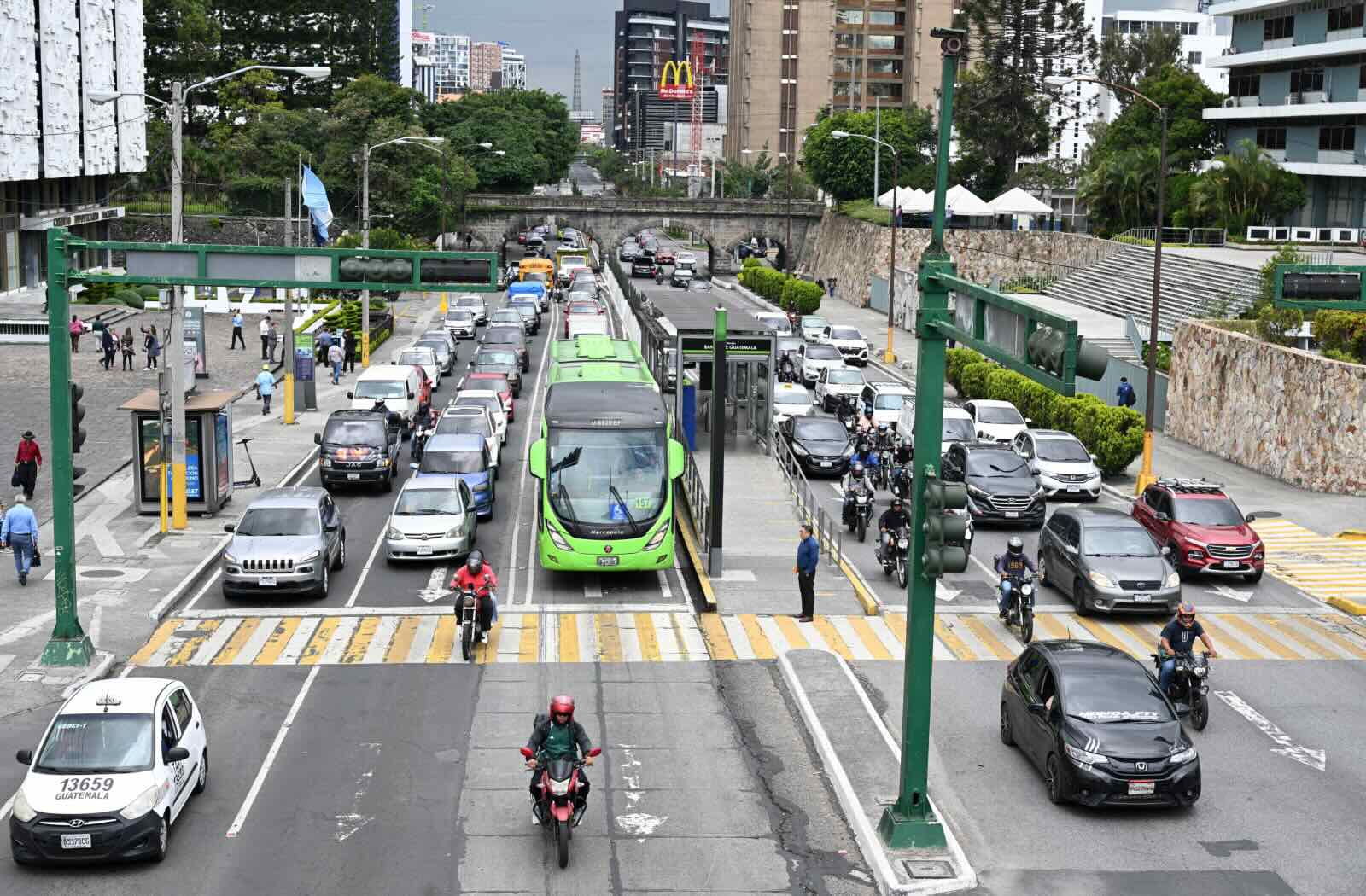
Migrating abroad or just to a higher-income city can not only lift oneself out of poverty, but also provide a foundation to help build resilience in one’s hometown. The money that migrants send back to friends and loved ones in their origin communities can help build new protections against disaster or make it easier to rebuild afterward. As we drove across Guatemala, a future in which more people left home didn’t actually seem all that bad. The U.S. media tends to portray all of Central America as distressingly poor, with tin roofs, unreliable electricity, and barely-there dirt roads. It is anything but.
Even far from Guatemala City, our car glided on smooth asphalt past gleaming strip malls that wouldn’t have looked out of place in a suburban Phoenix subdivision. Throughout Guatemala, grand two- and three-story houses tower over the road, peeking above the trees and looking oddly out of place behind rough-hewn wood shacks selling pineapples and tortillas. My hotel in Chiquimula featured two separate swimming pools, the water shimmering in the midday sun, perched in a lush sprawling yard where teenagers played soccer and flirted while parents lounged under the pergola. Nearby, an entrepreneur offered tourists paragliding adventures and the chance to go sightseeing in a helicopter. My driver, Conrado, showed me TikTok videos of thrill-seekers screaming with joy in a giant swing at a similar adventure attraction not far away.
Much of the money used to invest in this growth comes from one place: “Remesas,” Conrado said simply. Remittances. Money from the United States that migrants send back via Western Union, a mobile phone app, or a range of other services. About three in ten households in northern Central America receive remittances from abroad, typically about $350 per month in Guatemala. That’s only about 5 percent of median U.S. household income but can be a life-changing amount of money in Guatemala that can easily cover expenses or provide a significant down payment on climate protections. In Guatemala, more money comes from remittances than from all foreign exports combined.
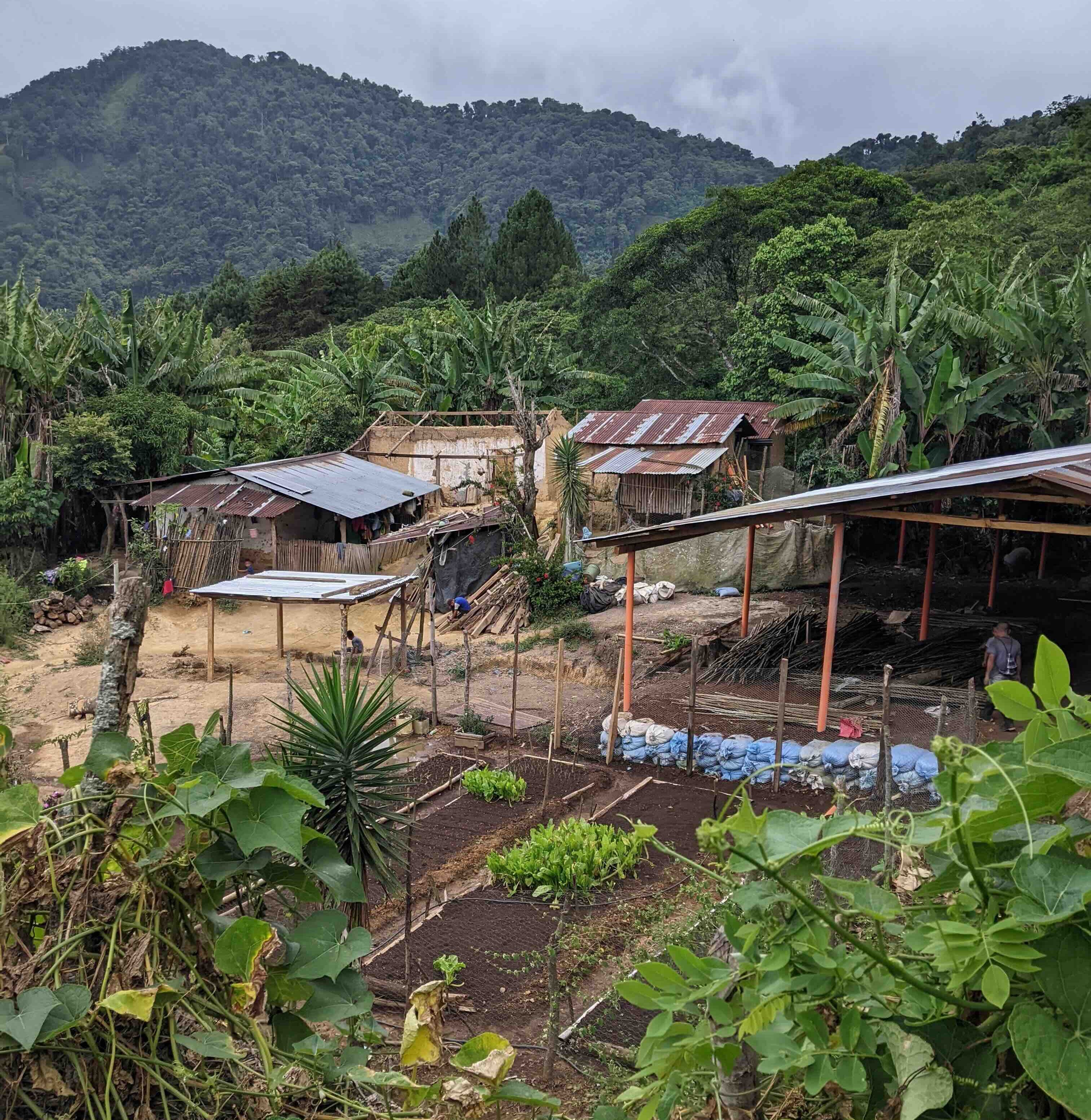
On a hillside in the tiny village of Barbasco, where drought has ravaged farmlands and extreme weather has accelerated erosion, I met a 40-year-old woman with kind eyes named Consuela, who received money from her son in New York. Intense and recurrent hurricanes had split the earth underneath her home, creating a six-inch gash in the dirt floor where one end of the building was beginning a slow march toward the edge of the cliff. Inch by inch and bit by bit, the ground underneath had started to give way and slide downhill. It was a common sight on these hills, where coffee and corn plants perched precariously on steep slopes that threatened to give way with the next storm.
Julian Hattem
Fortunately for her, Consuela was using some of the money sent back by her son to build a new house away from the mountain edge, helping her avoid the collapsing ground. Elsewhere, in Ghana, remittances help farmers invest in irrigation systems and crop rotation. They also help recipients build houses out of concrete rather than mud, so families can withstand landslides and other disasters, and provide access to electricity and telephones that alert them to upcoming disasters and enable them to get help when they need it. In hot, coastal Mexico, remittances help residents — particularly poorer residents — purchase air conditioners to stay cool even in the sweltering summer months. In Bangladesh, some recipients say remittances make up half their household income.
In large part because of these remittances, migration has long been one of the most effective strategies for lifting people out of poverty — not just migrants themselves, but also their families and communities in their homeland.
As the world reckons with climate change that will particularly hurt poor, rural communities in places like Guatemala, migration is not simply a way to escape impending climate disaster but also a strategy to defend against it. Making it easier for people to leave their home can not only help them flee the most dire disasters but also help them earn money to invest in adaptation and resilience strategies. In fact, some economists say governments should actively spend money to encourage people to migrate, at least to urban areas within their own countries, to boost growth. Subsidizing transportation to cities and helping people find jobs or enroll in new training would mitigate the negative impacts of climate change in rural areas, the thinking goes, and help increase the productivity of cities. The biggest climate migration problem may be that there’s simply not enough of it.
From Shelter from the Storm: How Climate Change Is Creating a New Era of Migration by Julian Hattem, to be published on January 6, 2026 by The New Press.
Source link
Julian Hattem grist.org
