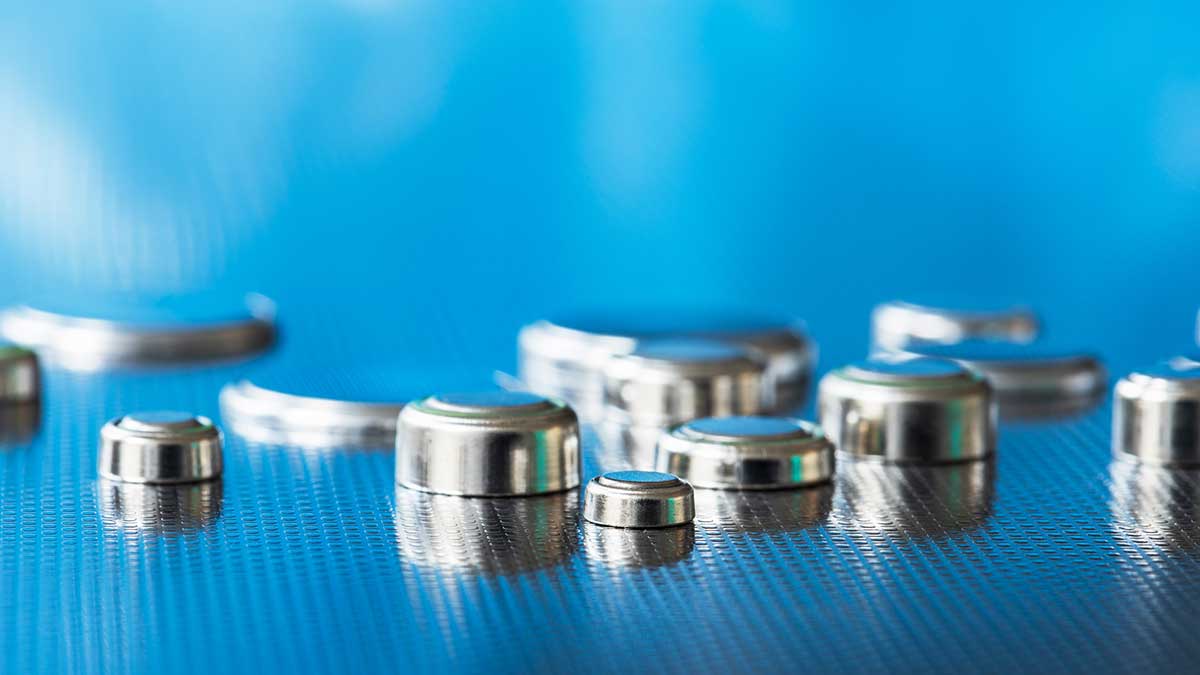
Button cell batteries are the small, flat, round batteries found in watches, hearing aids, car key fobs, calculators, and medical devices. Although they are tiny, these batteries contain valuable materials that can be recovered and can harm the environment if not handled or disposed of correctly.
The main challenge in recycling button cells is their small size and the difficulty of sorting them. They are made in huge numbers and are rarely separated by type at collection points, which makes recovery hard. Most are thrown away with household trash. Lithium cells can cause fires, and all types add small amounts of heavy metals to landfills. Programs like Call2Recycle accept button cells, but not many people use them. This makes consumer education and easy drop-off locations just as important as the recycling technology.
What’s Inside Button Cell Batteries
Button cell batteries are made with different chemistries, including silver oxide, zinc-air, lithium (CR-type), and the older mercury oxide, which is now mostly banned. Each type has its own recycling challenges:
Lithium coin cells (CR series) are the most common type today and are used in watches, key fobs, and small electronics. They contain lithium metal, which can catch fire if it gets wet. These batteries last for years but can cause fires if they are damaged or thrown away incorrectly.
Silver oxide (SR series) batteries are high-quality batteries used in watches and precision instruments. They contain silver, which is valuable and makes recycling worthwhile. Silver oxide batteries keep a steady voltage throughout their life, so they are often chosen for watches.
Zinc-air are primarily used in hearing aids. These batteries activate when a tab is removed, exposing zinc to air. Contains zinc and potassium hydroxide. Widely recycled through hearing aid provider programs.
Alkaline button cells (LR series) use a similar chemistry to single-use AA batteries but are shaped like buttons. They are found in toys, calculators, and small flashlights. These batteries are less valuable for recycling than silver oxide or lithium types.
Button cells made before 1996 may contain mercury. Although these are now rare, they should always be recycled properly and never thrown in the trash.
Why Button Cell Recycling Matters
Valuable Materials
Button cells are increasingly targeted for recycling because of the value of the recoverable materials, given their small size and easy handling. Silver oxide batteries are particularly valuable—silver prices make recovery economically attractive. Lithium coin cells contain materials increasingly in demand for the growing battery industry.
Child Safety
Button batteries are very dangerous if swallowed by children. The American Academy of Pediatrics reports that button battery ingestions have gone up a lot, causing thousands of emergency room visits each year. If swallowed, these batteries can get stuck in the esophagus and cause severe burns in just two hours, which can lead to serious injury Recycling button batteries properly helps keep your home safe. Store used batteries in a secure container out of children’s reach until you can recycle them. Put tape on both sides of the battery to prevent sparks and reduce fire risk.ause fires.
Fire Prevention
Lithium coin cells can start fires if they touch metal objects or other batteries in the trash or recycling bins. If button batteries are crushed in garbage trucks or waste facilities, they can short out and ignite nearby materials. Recycling them through proper programs helps prevent these dangers.
How to Recycle Button Cell Batteries
Professional Replacement Services
For high-end watches, a jeweler or watch repair shop will usually replace the battery and recycle the old one responsibly. Ask if they recycle the old battery—most do, since silver oxide batteries are valuable. Hearing aid providers also usually accept used zinc-air batteries and have recycling programs.
Drop-Off Locations
Retailers: Many stores that sell button batteries will also take them back for recycling. Ask at watch departments, hearing aid centers, or electronics stores.
The Battery Network (formerly Call2Recycle): Use their drop-off locator to find places that accept button cells. Stores like Best Buy, Staples, and many hardware stores participate.
Household Hazardous Waste (HHW) Programs: Many cities and towns have HHW collection events or permanent sites that accept button batteries. You can find your local program using Earth911’s HHW search.
Mail-In Programs
The Battery Network Store sells prepaid mail-in recycling boxes that accept button cells and other types of household batteries.
We Recycle Battery Box offers household battery recycling kits that accept button cells. Prices start at $121.95 and include a prepaid return shipping label.
TerraCycle Regulated Waste provides battery recycling containers that can be used for button cell batteries.
Safe Handling Tips
Take steps to ensure that your button cell batteries make their recycling journey safely:
Tape the terminals: Put clear tape over both sides of the button battery to prevent short circuits during storage and transport.
Store securely: Keep used batteries in a small container with a lid, like a pill bottle or film canister, and store them out of reach of children and pets.
Don’t mix with other batteries: Keep button cells separate from larger batteries to prevent accidental contact and shorts.
Never put batteries in curbside recycling or trash bins: Button batteries can cause fires in garbage trucks and recycling facilities. Always use designated recycling programs.
Act immediately if swallowed: If a child swallows a button battery, call the National Battery Ingestion Hotline at 800-498-8666 right away and go to the emergency room. Do not try to make the child vomit.
What Happens to Recycled Button Batteries
At recycling facilities, button batteries are sorted by type using machines and by hand. Each kind of battery is then processed in a different way:
Silver oxide batteries are processed to recover silver. The silver can be purified and reused in new batteries, electronics, jewelry, or for industrial uses.
Lithium coin cells are recycled using special methods to recover lithium, manganese, and steel parts.
Zinc-air batteries are processed so the zinc can be reused in new batteries or for galvanizing.
State Requirements
Button batteries are included in the Extended Producer Responsibility (EPR) laws being implemented in many states.
As of early 2026, eight states and the District of Columbia have enacted battery EPR laws with “all battery” programs that cover button cells: Vermont (the first, in 2014), California (2022), Washington (2023), Illinois (2024), Colorado and Nebraska (2025), Connecticut (2025), and Minnesota.
These programs require battery producers — not taxpayers — to fund statewide collection and recycling systems, with implementation dates staggered between 2026 and 2029. Check The Battery Network’s state law page for current requirements in your state.
You Are The First Step In The Circular Economy
Despite their small size, button cell batteries deserve careful attention when it comes to disposal. Their valuable materials make recycling economically sensible, while child safety and fire prevention concerns make proper handling essential.
Take advantage of professional replacement services that include recycling, use designated drop-off locations, or choose a mail-in program to ensure these tiny power sources are responsibly managed at end of their useful life.
Source link
Earth911 earth911.com