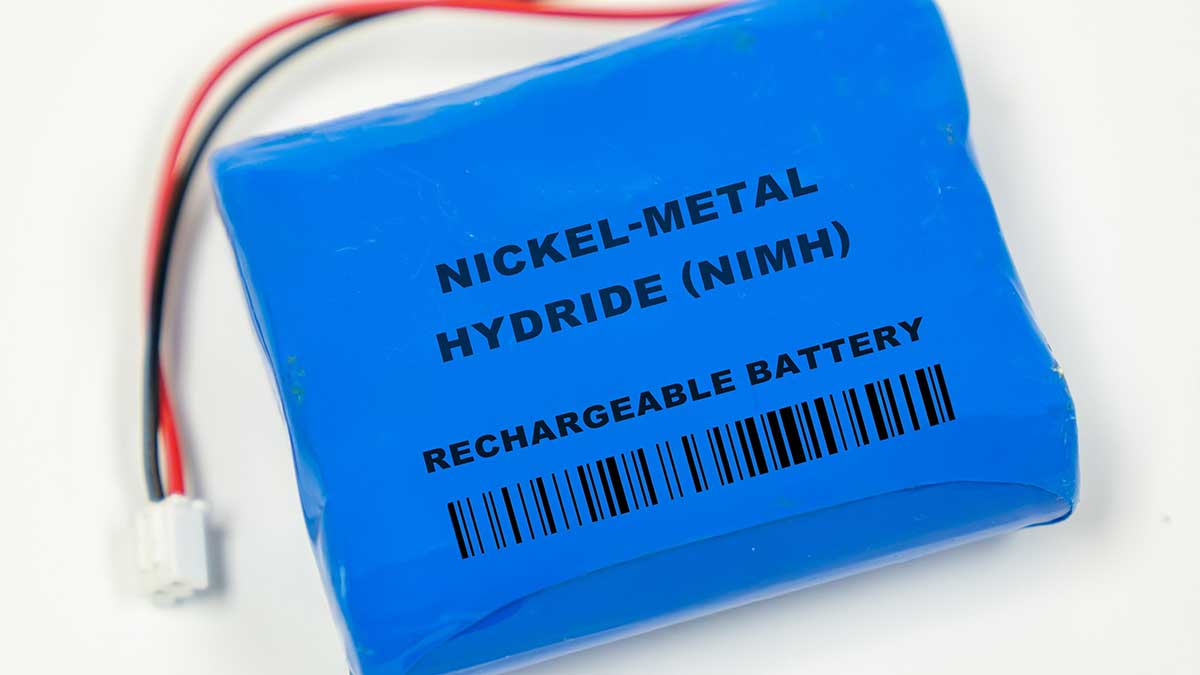
Rechargeable nickel-cadmium (NiCd) and nickel-metal hydride (NiMH) batteries are used in cordless phones, power tools, electric toothbrushes, cordless vacuums, and many other household devices. Unlike single-use alkaline batteries, these rechargeable types have valuable materials inside. NiCd batteries also contain hazardous substances, so recycling them is not only smart but also required by law in many states.
The Battery Network (formerly known as Call2Recycle) reports that over 5.4 million pounds of rechargeable batteries were collected for recycling in the U.S. in 2023. Since 2001, The Home Depot has helped recycle more than 17 million pounds through this program.
Understanding NiCd and NiMH Batteries
Nickel-Cadmium (NiCd) Batteries
NiCd batteries, invented in 1899, were the first rechargeable batteries widely used in consumer devices. They are very durable, can last for up to 3,000 charge cycles, and work well in extreme temperatures and high-drain uses.
- Voltage: 1.2V per cell
- Contains cadmium, a toxic heavy metal classified as hazardous waste
- Subject to “memory effect” if repeatedly partially discharged
- Still used in some power tools, emergency lighting, and industrial applications
Cadmium is highly toxic and can seriously harm the environment if NiCd batteries end up in landfills. When cadmium gets into soil and water, it builds up in the food chain and can harm people’s health, including raising the risk of cancer and kidney damage. Because of this danger, many states require NiCd battery recycling by law.
Nickel-Metal Hydride (NiMH) Batteries
NiMH batteries started to replace NiCd batteries for most consumer uses in the 1990s. They store more energy—about two to three times as much as NiCd batteries of the same size—do not contain toxic cadmium, and are available in standard AA and AAA sizes to directly replace alkaline batteries.
- Voltage: 1.2V per cell (compatible with devices designed for 1.5V alkaline)
- Cycle life: Typically 500-2,000 cycles
- Contains nickel, cobalt, and rare earth elements
- No memory effect (or minimal compared to NiCd)
- They demonstrate a higher self-discharge rate than NiCd, though low-self-discharge versions like Eneloop have recently appeared.
NiMH batteries are seen as more environmentally friendly than NiCd batteries because they do not have cadmium. Still, they contain nickel and rare-earth elements, so it is better to recycle them than throw them away. Most states do not consider them hazardous waste, except California, but recycling helps recover valuable materials and keeps soil and water safe.
Why Rechargeable Battery Recycling Works Economically
Rechargeable NiCd and NiMH batteries have materials that are worth money, unlike single-use alkaline batteries. This makes recycling them a good economic choice.
Both types of batteries contain a lot of nickel, which is valuable. Recycled nickel can be used to make things like stainless steel, cookware, golf clubs, or even new batteries.
Cadmium from NiCd batteries is toxic, but it is also useful in industry. It can be recovered at 99.95% purity and used in new NiCd batteries or other products.
NiMH batteries have rare earth elements. Because they contain lanthanum, cerium, and neodymium in their hydrogen-absorbing alloy, NiMH batteries are becoming more valuable to recyclers, and successful collection means the industry can rely less on mining raw materials.
The steel in battery casings and parts can be recycled and used to make new metal products.
The Mercury-Containing and Rechargeable Battery Management Act of 1996 (the Battery Act) requires manufacturers to provide easy ways for the public to recycle NiCd and small sealed lead-acid batteries. This legal mandate, combined with favorable economics, has created a robust recycling infrastructure.
How to Recycle Rechargeable Batteries
In the United States, recycling rechargeable batteries is free and easy because manufacturers fund these programs as required by law. More than half of the states have laws that require battery recycling or manufacturer support for collection programs.
Drop-Off Locations
The Battery Network runs more than 20,000 collection sites across the country. Major retailers that take part include:
- The Home Depot – accepts rechargeable batteries up to 11 pounds at Call2Recycle bins near store entrances
- Lowe’s – battery recycling available at most locations
- Best Buy – accepts rechargeable batteries at customer service
- Staples and Office Depot – accepts batteries at most locations
- Target – many locations have battery recycling bins
- Wireless carrier stores (AT&T, Verizon, T-Mobile, US Cellular)
Use The Battery Network’s locator or Earth911’s recycling search to find the nearest drop-off location.
Mail-In Programs
The Battery Network Store offers pre-paid mail-in recycling boxes for consumers and businesses. You buy a box, fill it with used rechargeable batteries, and send it back with the prepaid label included.
Power Tool Batteries
You can bring rechargeable battery packs from cordless power tools to any Call2Recycle drop-off location. TerraCycle also offers free recycling for Stanley Black & Decker brands, including DEWALT, CRAFTSMAN, BLACK+DECKER, STANLEY, PORTER-CABLE, IRWIN, LENOX, MAC Tools, and Bostitch.
What Happens to Recycled Batteries?
At recycling facilities, rechargeable batteries go through several steps. First, they are sorted by type, like NiCd, NiMH, or Li-ion, because each needs different processing. Then, a gas-fired thermal oxidizer removes things like plastics and insulation. The gases produced are captured and cleaned in scrubbers to stop pollution.
After cleaning, the batteries are chopped into small pieces and heated until the metals melt. In NiCd batteries, cadmium is turned into vapor and condensed to reach 99.95% purity. Nickel and iron are recovered as alloys that can be used to make stainless steel. The recovered metals are then sent to refiners to be used in new products, including new batteries, helping to close the recycling loop.
Safe Handling and Storage
Batteries store a lot of energy, which can be a fire risk during recycling. The chemicals inside also need to be handled with care.
Tape terminals: Cover battery terminals with electrical tape or place each battery in a separate plastic bag to prevent shorts during storage and transport.
Store in non-metal containers: Keep batteries in plastic or cardboard containers, not metal ones, which could cause a short circuit.
Keep cool and dry: Store spent batteries at room temperature away from heat sources and moisture.
Do not store batteries for too long. While it is safe to keep them for a few months, avoid letting large numbers pile up. Try to take them to drop-off locations regularly.
Never put NiCd batteries in your curbside recycling or trash. Most states treat them as hazardous waste. Any rechargeable battery can cause fires if it is damaged by recycling equipment.
State Requirements
The legal landscape for rechargeable battery recycling varies by state. More than half of U.S. states have laws requiring battery recycling or manufacturer-supported collection programs. Key regulations to know include:
Under federal law, NiCd batteries must be managed as Universal Waste, prohibiting disposal and requiring recycling. Florida, Minnesota, New Jersey, and several other states prohibit disposing of NiCd batteries in municipal solid waste.
States including California, Maine, Maryland, and Minnesota require manufacturers to establish and fund collection programs.
New York requires retailers selling rechargeable batteries to accept used batteries for recycling.
Recharging the Circular System
Rechargeable NiCd and NiMH batteries show how recycling can work well. Valuable materials, laws, and manufacturer-funded programs make recycling free and easy for everyone. This helps recover resources and keeps the environment safe. Use the many drop-off locations at major retailers, and never throw rechargeable batteries in the trash.
Source link
Earth911 earth911.com