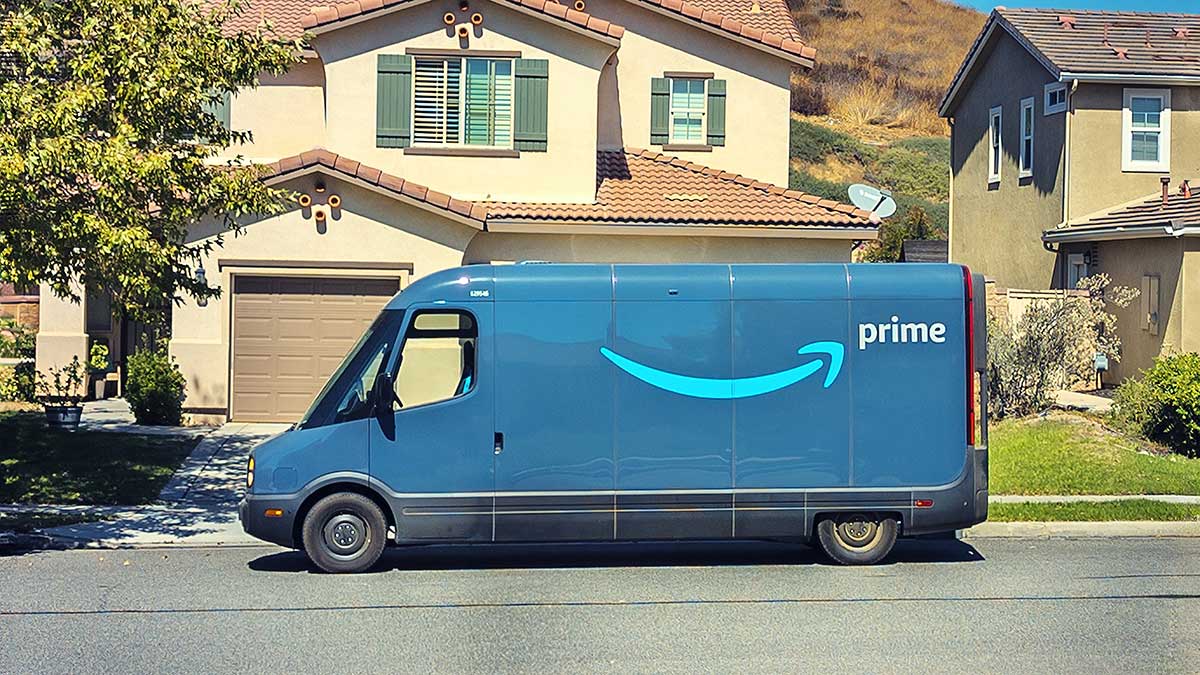
Is it sustainable to shop on Amazon?
This is an important question, since almost everyone is affected by the answer. About 88 million U.S. households, or roughly 80%, get Amazon Prime deliveries. Amazon ships over 1,000 packages every minute worldwide, employs 1.5 million people, and is so deeply part of American consumer life that avoiding it takes real effort. Amazon is here to stay. For shoppers who care about sustainability, the real question is not whether to use the world’s largest retailer, but how to do so thoughtfully and with good information.
The answer is complicated, but that complexity gives you power as a consumer.
Online vs. In-Store Shopping: The Research
The carbon footprint comparison between e-commerce and brick-and-mortar retail is one of the most studied and misunderstood questions in sustainable consumption. The short answer: it depends almost entirely on your behavior.
A well-known 2021 study from the MIT Real Estate Innovation Lab found that, on average, online shopping produces 36% less carbon emissions than shopping in stores. E-commerce was the more sustainable choice in over 75% of the situations the researchers looked at. The study ran 40,000 simulations across four regions, considering factors like what people bought, how far they traveled, how often they returned items, and what kind of transportation they used. The main idea is simple: one delivery van making 100 stops is more efficient than 100 people each driving to the store.
But that advantage erodes rapidly in the real-world. A 2022 study published in Environmental Science & Technology found that when consumers choose fast shipping and return 30% of purchases—behaviors Amazon’s platform actively encourages—online shopping’s carbon advantage disappears. A comprehensive literature review in Business and Society Review confirmed that e-commerce return rates range from 36% to 53%, far higher than the under-10% rates typical of brick-and-mortar retail, particularly in clothing and footwear categories. Seeing products and trying on clothing before you buy is more sustainable than clicking to buy and regretting it later.
Where you live also makes a difference. A 2024 studyfrom China found that online shopping emissions go up by 29% if the store you skip is less than 1.2 miles away, which is typical in crowded cities. But if the store is more than 24.8 miles away, emissions drop by 50% compared to home delivery. In fact, when suburban Americans drive SUVs to big-box stores, online shopping can truly lower emissions.
A University of Michigan study of grocery supply chains found that e-commerce using micro-fulfillment centers, which are small distribution hubs spread out in a region, can cut emissions by 16–54% compared to regular in-store shopping. The study also found that robot deliveries in cities have the smallest carbon footprint, just one-sixth that of driving to the store in an SUV.
A Deloitte study for Simon Property Group, a major mall owner, found the opposite: shopping at malls can be up to 60% more environmentally friendly than shopping online. The reason is that people tend to buy more items per trip at the mall, combine shopping with other errands, and return fewer products. The study is not incorrect; it just looks at different shopping habits.
How you shop matters less than the choices you make while shopping. The most important factors are how many items you buy at once, how far you travel, how often you return things, and how fast you want your delivery. Keep these points in mind as we look at Amazon in particular.
Amazon’s Version
Amazon’s 2024 Sustainability Report discloses that the company’s total carbon emissions reached 68.25 million metric tons of CO₂ equivalent in 2024, up 6% from 2023. Its carbon intensity, the emissions per dollar of gross merchandise sales, fell by 4% to 72.6g CO₂e per dollar because it has increased its use of renewable energy. Amazon matched 100% of its global electricity consumption with renewable energy for the second consecutive year and now operates 621 renewable energy projects globally that generate 34 GW of carbon-free energy, enough to power between 27 and 34 million homes for a year.
Amazon also grew its electric delivery fleet from 19,000 to 31,400 electric vans in 2024, delivering approximately 1.5 billion packages worldwide. The company’s goal is to put 100,000 electric delivery vans on the road by 2030 and install 23,000 EV chargers at 50 delivery stations.
The company reports that it eliminated plastic air pillows from most boxes, which resulted in a 16.4% reduction in single-use plastic delivery packaging globally in 2024. In North America, 56% of fulfillment centers shipped no plastic delivery packaging, and shipments containing single-use plastic packaging dropped from 65% to 37%.
Amazon also reports that it avoided using 4.2 million metric tons of packaging material since 2015 and that it diverts 85% of its business waste from landfill to recycling.
These are genuine investments, but they do not solve everything.
Critics Make The Case Against Amazon’s Green Claims
The other side of the story is found under the rocks that corporate messaging hopes you’ll leave alone. Amazon’s environmental and economic impact has attracted significant scrutiny.
Rising Absolute Emissions
The environmental organization Stand.earth noted that Amazon’s direct (Scope 1) emissions have ballooned 162% since 2019, the same year the company announced its Climate Pledge to reach net-zero carbon by 2040. Total Scope 3 emissions jumped 7% year-over-year in 2024, and Amazon’s overall emissions have risen nearly 40% since the Climate Pledge was announced. As Amazon Employees for Climate Justice wrote, the company “silently removed” its Shipment Zero commitment, its pledge to make 50% of shipments carbon-neutral by 2030, raising questions about whether its commitments are real or aimed at improving public relations.
The Carbon intensity improvements Amazon reported, which mean they do more with relatively fewer emissions per dollar, are real, but they don’t reduce absolute greenhouse gas output. A company that grows revenue by 24% annually while improving its carbon intensity by 4% is still increasing its total emissions substantially. As NYU Stern’s Center for Sustainable Business observed, the Climate Pledge “lacks mechanisms for accountability.”
The Plastic Promise Regulations Can Enforce
Oceana research estimated that Amazon generated 709 million pounds of plastic packaging waste globally in 2021, an 18% increase over the previous year’s estimate, and that up to 26 million pounds may end up in oceans and waterways. A 2024 follow-up report found Amazon’s overall use of plastic packaging in the U.S. during 2022 rose 9.6% rise year-over-year.
Amazon’s plastic mailers and air pillows use film plastics that cannot be recycled through curbside programs. The company directs consumers to store drop-off locations, but an investigation by Environment America and U.S. PIRG found that most of Amazon’s plastic packaging never reaches recycling facilities. Oceana found that at least 41% of the drop-off locations Amazon promotes on its website don’t actually accept Amazon’s plastic packaging.
Amazon has eliminated single-use plastic packaging in India and parts of Europe, but only where government bans required it.
The Carbon Accounting Gap
Amazon’s carbon methodology counts manufacturing emissions only for Amazon-branded products, such as Echo devices, Kindles, Amazon Basics, and Whole Foods Market brands, which represent roughly 1% of the company’s online sales.
The lifecycle emissions of the millions of third-party products that generate roughly 60% of Amazon’s e-commerce sales are excluded. This means Amazon’s reported carbon footprint dramatically understates its true climate impact, a point Ethical Consumer and other analysts have repeatedly made. Amazon’s peers, including Target and Walmart, use broader carbon accounting methodologies that capture the impact of more of the items they sell.
Climate Pledge Friendly: Marketing or Meaningful?
The Climate Pledge Friendly badge on Amazon products can be confusing for shoppers. There are about 55 different certifications, some of which are strict, like Fairtrade and GOTS. Others, such as Amazon’s “Compact by Design,” only look at packaging efficiency, not the product’s overall sustainability. As a result, single-use batteries and disposable wipes can have the same green badge as organic textiles, which can be hard to understand when you are shopping quickly.
A 2025 greenwashing lawsuit alleges that the sustainability logos on Amazon Basics paper products are misleading because the company sources from suppliers who clear-cut old-growth forests.
Badges can help, but you need to click and check which certification each product actually has.
Looking Beyond Carbon To Human Impact
Sustainability is about more than just greenhouse gas emissions. Amazon’s operations raise other concerns that matter to thoughtful shoppers.
Worker safety: A December 2024 U.S. Senate investigation led by Senator Bernie Sanders found that Amazon warehouse workers experienced injuries at nearly twice the rate of workers at comparable facilities, and that the company’s emphasis on speed was directly linked to musculoskeletal injuries. A University of Illinois Chicago study found that 41% of its warehouse workers reported workplace injuries. The Senate report accused Amazon of manipulating injury data by choosing misleading comparison benchmarks. Amazon disputes these findings and cites a 23% reduction in injuries since 2019.
Marketplace integrity: Amazon’s third-party marketplace, which accounts for approximately 60% of e-commerce sales, has proven difficult to police. The U.S. Consumer Product Safety Commission ruled in 2024 that Amazon can be held responsible for defective goods sold by third-party merchants. Products found on the platform have included counterfeit goods, unsafe items such as carbon monoxide detectors that failed to alarm, and expired food. Sustainability-minded consumers cannot verify the origins, manufacturing standards, or environmental claims for many items in Amazon’s vast catalog.
Market power: The FTC and 18 state attorneys general have alleged in a landmark lawsuit, scheduled for trial in October 2026, that Amazon illegally maintains monopoly power through anticompetitive practices, including penalizing sellers who offer lower prices elsewhere, replacing organic search results with paid advertisements, and overcharging sellers. A federal judge ruled in October 2024 that the case can proceed to trial. For local economies, small business owners report that Amazon’s practices have driven independent retailers out of business and hollowed out Main Street commercial districts.
The Speed Trap: How Amazon’s Business Model Can Hurt Sustainability
One of the most important things to understand about sustainability is that Amazon’s main business model—easy purchasing, one-click orders, same-day delivery, and free returns—is built to encourage people to buy more. As UC Davis professor Dan Sperling told Grist, “The concept of Amazon Prime pushes us towards more emissions. It makes the marginal cost of purchases very small, so you have motivation to buy more.”
MIT research shows that when shoppers see environmental impact information in clear, relatable terms, they are up to four times more likely to choose slower delivery and are willing to wait 37% longer on average. However, Amazon has no financial reason to encourage these choices. The platform is set up to promote impulse buying, fast shipping, and easy returns, which reduce the environmental benefits of online shopping. Still, a Morning Consult poll found that 75% of Prime members would accept slower shipping to lower emissions. It seems the company may not be listening to its customers.
The data shows that Amazon’s customers do not actually demand the fast shipping the company provides. A 2023 Consumer Reports survey of 2,097 U.S. adults found that over 80% of Amazon shoppers would pick a slower delivery option if it meant less carbon emissions or less air pollution near warehouses. More than 22% would wait five or more days for greener deliveries. A 2025 McKinsey survey found similar results: 95% of people prefer free shipping with standard delivery instead of paying for faster options, and now value reliability more than same-day delivery.
The Ryder 2025 Consumer Study found that just 29% of online shoppers still expect one-to-two-day delivery, down from 34% the year before. However, Bloomberg reported in 2020 that Amazon rejected an internal idea for a slower, greener shipping option because it worried this would lower sales. The company created the expectation shipping should be fast, taught customers to want it, and now uses that expectation as a reason not to offer the sustainable option many customers actually want.
Perhaps the famously customer-centric company isn’t listening to customers.
Shopping Sustainably on Amazon: A Practical Framework
You do not have to boycott Amazon to be a responsible shopper, although buying less, shopping locally, and supporting independent stores are always good options. If you choose to shop on Amazon and resist the urge to order items you intend to return, you can reduce your shopping-related environmental impact. Here are a few principles to keep in mind to ensure your ecommerce orders don’t add to planetary warming.
Slow Down
Choose the slowest shipping option available. Amazon Day delivery lets Prime members consolidate all weekly orders to a single delivery day. Amazon reports that Prime members in the U.S. saved an estimated 490 million boxes and 450 million trips through delivery consolidation in 2024. Select “fewest possible packages” at checkout. Research from UC Davis confirms that choosing standard over expedited shipping can reduce last-mile CO₂ emissions by approximately 30%.
Buy Deliberately
The most effective way to reduce your impact is to buy less. Think of Amazon’s easy one-click shopping as a habit to manage, not a feature to use freely. Try a 30-day cart rule: add items to your cart, but wait 30 days before buying. Research what you need before you start shopping. Combine your purchases into fewer, larger orders. These habits help cut down on packaging, transportation emissions, and returns.
Minimize Returns
Returns are a major challenge for sustainability. Online return rates of 30–53% create a lot of extra shipping emissions. To avoid returns, read product descriptions, reviews, and sizing guides carefully. For clothes and shoes, measure yourself instead of ordering several sizes. Every returned item goes back through the supply chain, using more fuel and creating more packaging waste. Many returned items are destroyed instead of being resold.
Interrogate the Climate Pledge Friendly Badge
When you see the green badge, click through to see which specific certification backs it. Certifications like Fairtrade, GOTS, FSC, and Cradle to Cradle represent rigorous third-party evaluation. Treat “Climate Pledge Friendly” as a starting filter, not a final answer.
Buy Secondhand and Refurbished
Amazon Second Chance, Amazon Warehouse, and Amazon Renewed offer pre-owned, open-box, and refurbished products at discounted prices. Buying refurbished extends product lifecycles and avoids the manufacturing emissions of new goods, the largest component of most products’ lifecycle carbon footprint. Amazon devices can be traded in for gift cards, keeping electronics out of landfills.
Choose Frustration-Free Packaging
Look for “frustration-free packaging” or the SIPP (Ships in Product Packaging) label, which means the item is shipped in its original packaging without an extra Amazon box. In 2024, 12% of Amazon shipments worldwide used original packaging. If you do get an Amazon box, recycle the cardboard and dispose of any plastic properly. Do not put film plastics in curbside recycling, since they cannot be processed there.
Use Pickup Lockers
Amazon Hub Lockers and pickup points let the company deliver many packages to one place instead of making separate stops. This lowers emissions from the last part of delivery and avoids extra trips caused by missed deliveries.
Every Purchase Is a Vote
Amazon’s record on sustainability includes real investments but also ongoing problems, big promises but also questionable accounting, and true innovations tempered by business practices that encourage overconsumption. This is not just an Amazon issue; it shows the challenge of making commerce sustainable in an economy focused on growth.
What makes Amazon’s situation especially important is its size. With over 68 million metric tons of CO₂e each year, Amazon’s emissions are higher than those of many countries. The choices you make on its platform—what you buy, how quickly you want it, and whether you return it—have effects around the world.
The most important thing you can do is to resist the platform’s relentless pressure to buy more, faster, and with less thought. Buy what you need and only when you need it next week, choosing standard shipping or consolidated delivery. Keep what you buy.
Every purchase you make, no matter where, tells companies what people want. The fact that 80% of Prime members want stronger action on emissions is a message Amazon has not fully answered. Your shopping choices, combined with those of millions of others, can help close the gap between Amazon’s promises and what it actually does. Use your own standards—like environmental impact, worker treatment, local business support, or product quality—and remember that sticking to them is a powerful way to make a difference.
We may not be able to buy happiness, but we can lower our environmental impact.
Source link
Earth911 earth911.com