
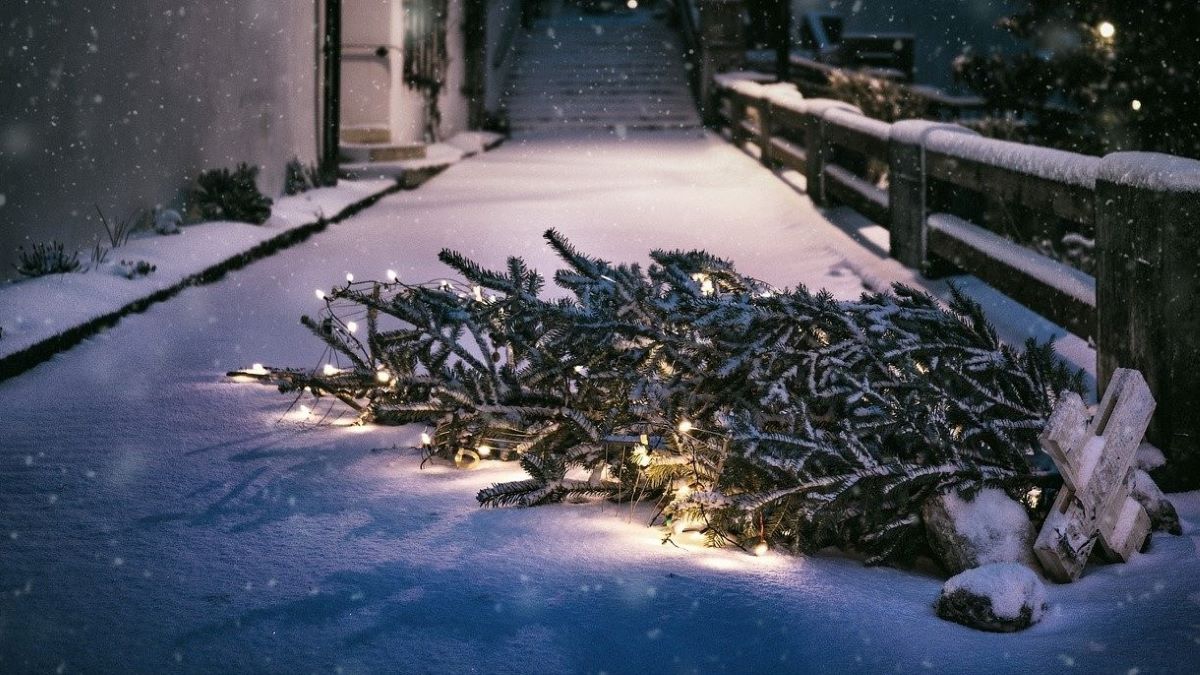
After Christmas is over, the tree starts to look a little sad. How do you dispose of the tree without contributing to more landfilled waste? Christmas tree recycling, or treecycling, is the responsible way to dispose of cut live trees at the end of the holiday season.
1. Ask the Important Question
What happens next to my tree? The truth is that just because someone picks up your tree, it doesn’t mean it won’t end up in a landfill. Unless you ask before the tree leaves your property, how will you know for sure where it’s headed?
2. Be Timely
Are you the neighbor who keeps the Christmas lights up until March? Christmas tree recycling programs run only last a few weeks into January, so plan on taking action immediately after the holiday.
If your curbside collection program accepts trees, it likely only does so for two or three weeks, because it often requires a separate truck to haul this bulky waste. Plus, many yard waste facilities are open for limited hours in January, because there isn’t a lot of yard waste to compost when trees are bare and snow is on the ground. If you’re late on recycling your tree, your curbside program may consider your tree to be “bulky waste” and require an extra fee.
A good rule of thumb is once you flip the calendar to January, start packing up the lights and ornaments and get your tree ready to recycle.
3. Flock Off
The value of recycling Christmas trees is that they are considered organic waste, which means they can be composted or mulched.
But the tree is only organic if you restore it to its original form. In other words, remove all the lights, ornaments, and tinsel. Another recycling nightmare is the “flocked” tree spray-painted white for a more “wintry” feel. Flocking pretty much guarantees that the tree will end up in the landfill, so consider this while you’re dreaming of a white Christmas.
If you’re recycling the tree with a curbside program, make sure it doesn’t block your other bins, because there are typically different trucks that haul each type of waste. Cutting larger trees in half will make them easier to transport.
4. Don’t Be Afraid to Spend
You may be asking yourself: “I’m doing a good thing for the environment, so why should I have to pay for it?” The answer is that it takes money to turn a Christmas tree into something usable, whether it’s mulch or compost. If you’re dealing with a recycler that isn’t paid by taxes, it’s only logical to pay for disposal.
If you are taking your tree to a yard waste facility, you will probably pay a fee based on weight. The posted rates are usually based on per-ton charges, so don’t be discouraged when you see “$20+.” Once your tree is weighed, it will likely cost less than $5 to recycle.
5. Recycle It Yourself
Can’t get your tree to the curb on time or just don’t want to pay fees? There are plenty of responsible ways to dispose of the tree on your own without a treecycling program.
Chop it into firewood and kindling. A standard noble fir tree can be turned into more than 13 pounds of firewood to keep you warm this winter. Just make sure you give it plenty of time to dry first (six months to a year, depending on climate) so that it burns cleaner.
Make your own mulch. Shake off the needles into your yard to use as mulch, then cut and grind the trunk, which can also be used for kindling.
Create a backyard bird sanctuary. Place the Christmas tree in the garden or backyard and use it as a bird feeder and shelter. Strung popcorn or fresh orange slices will attract birds, and the branches provide refuge. Remove all decorations, hooks, and tinsel first.
Find Treecycling Programs Near You
Major City Programs
31. Trees become organic mulch and compost available at Garden-Ville stores.
Editor’s Note: Originally published on Dec. 27, 2010, this article was updated in December 2025. Feature image courtesy of 8moments, Pixabay.
Source link
Earth911 earth911.com
